
Don't Let It Slip with the Best Boise Incontinence Treatment
Why So Many Women Are Still Searching for Real Boise Incontinence Treatment
If you are looking for Boise incontinence treatment options, here is a clear overview of what is available:
Treatment Type | Best For | Invasive? |
|---|---|---|
HIFEM Technology (Freedom+) | Stress & urge incontinence | No |
Pelvic floor physical therapy | Mild to moderate incontinence | No |
Pessary fitting | Stress incontinence, prolapse | No |
Bladder Botox injections | Overactive bladder (OAB) | Minimally |
Sling surgery | Stress urinary incontinence | Yes |
Sacral nerve stimulation | Urge incontinence, OAB | Yes |
ReZūm / HoLEP (men) | BPH-related incontinence | Minimally |
Bladder leakage is more common than most people realize. About 1 in 4 women over the age of 18 in the United States experience urinary incontinence — yet approximately 75% of women with bladder leakage never bring it up with their healthcare provider.
That silence is understandable. These symptoms can feel embarrassing, isolating, and deeply personal.
But here is something worth considering: bladder leakage is not simply a sign that your body is failing you. It is a signal. The pelvic floor, the nervous system, and the bladder are all in constant communication — and when that communication breaks down, symptoms like urgency, leaking, or frequency begin to surface.
Your body isn't failing you. It is asking for support.
Many women who come seeking help have already tried pads, Kegel exercises, medications, or even physical therapy — often without lasting results. That frustration is valid. And it points to something important: most conventional approaches treat the symptom, not the underlying pattern.
Understanding the root cause of why leakage happens — and addressing both the muscular and neurological pathways involved — is what leads to lasting change.
I'm Dr. Kimberly Thompson, DACM, L.Ac., and I have spent years working with women across the Boise area who are quietly navigating bladder control issues while trying to stay active, confident, and fully present in their lives. My approach to Boise incontinence treatment combines advanced non-invasive technology with acupuncture and holistic techniques to address both the muscular and neurological roots of pelvic floor dysfunction — because real results require treating the whole picture.
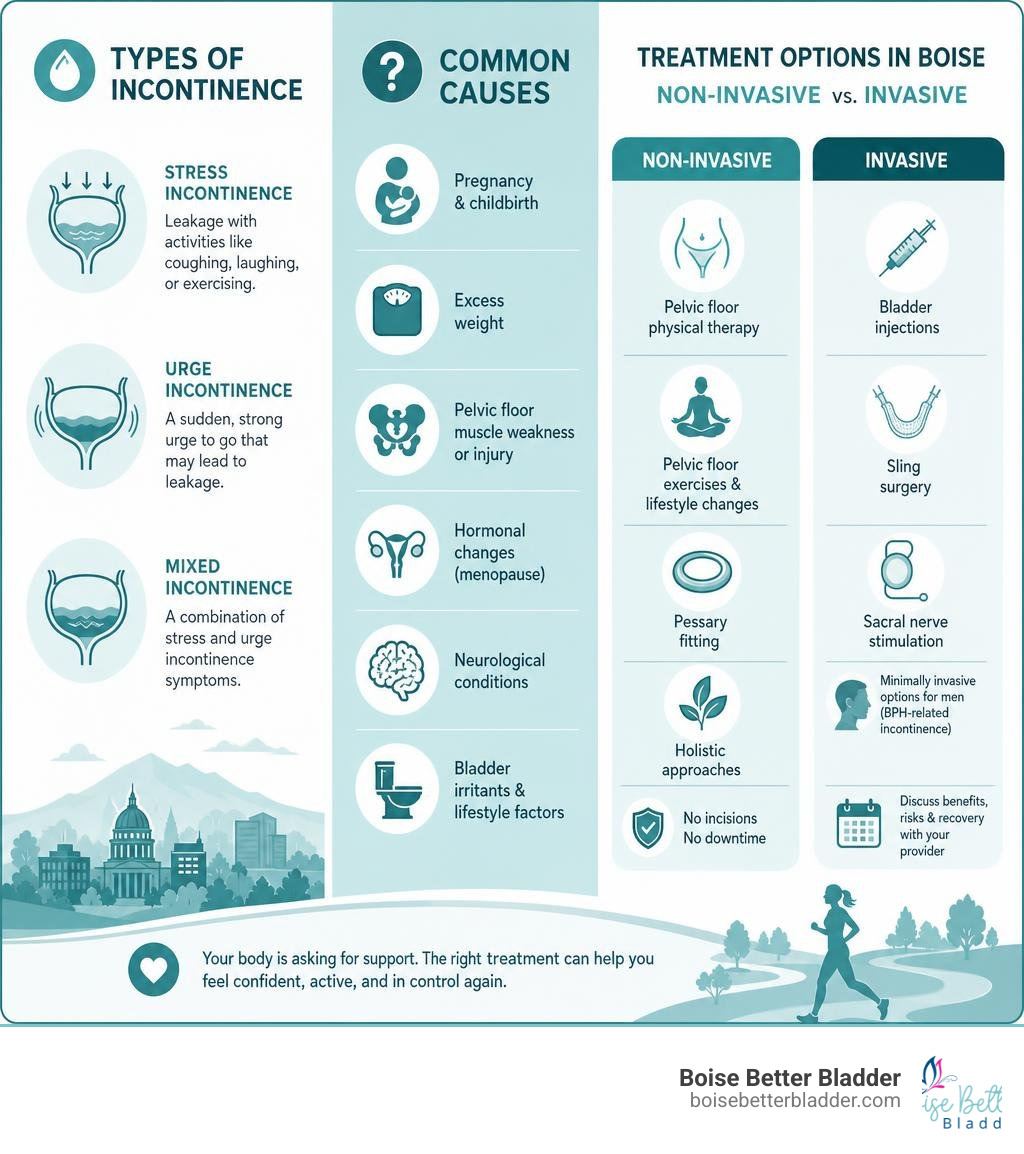
Understanding the Patterns of Bladder Leakage
When we look at bladder control through a clinical lens, we see that the body works in patterns. Bladder leakage is rarely an isolated event; it is the physical manifestation of an underlying imbalance. To find the right Boise incontinence treatment, we must first identify which pattern your body is expressing.
Stress Urinary Incontinence (SUI)
Stress urinary incontinence occurs when physical pressure is placed on the bladder, and the supporting pelvic tissue is too weak to keep the urethra closed. If you experience leaks when you laugh, sneeze, cough, lift heavy grocery bags, or exercise, this is stress incontinence.
The typical explanation is simply "weak muscles." However, this explanation is incomplete. The pelvic floor does not work in isolation; it must coordinate instantly with your diaphragm and deep abdominal muscles to counter sudden changes in pressure. When this coordination is delayed, the physical support collapses, leading to a leak.
Urge Urinary Incontinence (UUI) and Overactive Bladder (OAB)
Urge incontinence is characterized by a sudden, intense, and uncontrollable need to urinate, often followed by involuntary leakage before you can reach the restroom. Approximately 1 in 3 U.S. adults aged 40 or older experience symptoms of overactive bladder.
This pattern is fundamentally a neurological communication breakdown. The bladder muscle (the detrusor) contracts prematurely because it receives hyperactive, misfired signals from the nervous system. The brain receives a panic signal that the bladder is full, even when it is only partially filled.
Mixed Urinary Incontinence
Many women do not fit neatly into one category. Mixed incontinence is a combination of both stress and urge patterns. You might experience leaks when coughing, but also struggle with sudden, urgent trips to the bathroom. This pattern signals a multi-layered imbalance where both the structural support of the pelvic floor and the regulatory communication of the nervous system are compromised.
Symptoms as Signals
Whether your leaks began after a vaginal delivery, during the transition into menopause, or gradually over the years, these symptoms are signals. During pregnancy and childbirth, the pelvic tissues—specifically the levator ani muscle—undergo extreme stretch and potential micro-tearing. If you are navigating these changes, seeking specialized Postpartum Incontinence Help can help you understand how to guide your body back into balance rather than simply waiting for things to "tighten up" on their own.
The Limitations of Traditional Boise Incontinence Treatment
When women in the Treasure Valley begin looking for a Boise incontinence treatment, they are often guided down a highly predictable path. Unfortunately, this path is frequently paved with passive symptom management rather than active, root-cause healing.
The Cost of Passive Management
The most common initial "solution" is the use of pads, liners, and protective undergarments. While these tools provide a temporary safety net, they do not restore bladder function. Research shows that women with severe urinary incontinence spend an average of $900 annually on routine, passive incontinence care. Over a decade, that is $9,000 spent simply managing leaks without ever addressing the reason they are occurring.
The Limitations of Bladder Medications
When lifestyle changes are deemed insufficient, oral medications are often prescribed. However, these prescriptions are only designed to address urge incontinence and overactive bladder; they are entirely ineffective for stress urinary incontinence. Furthermore, many women find the side effects—such as dry mouth, constipation, and blurred vision—difficult to tolerate, leading to high discontinuation rates.
The Structural Band-Aid: Vaginal Pessaries
A vaginal pessary is a removable silicone device fitted by a specialist to physically support the bladder neck or pelvic organs. While a pessary can be a helpful non-surgical option for pelvic organ prolapse or severe structural SUI, it acts as a mechanical prop. It must be professionally removed, cleaned, and reinserted in a clinic every three months to maintain hygiene and prevent tissue irritation. It does not rebuild the pelvic floor; it simply holds the organs in place while it is worn.
To truly heal, we must move beyond temporary patches. If you want to understand why your pelvic muscles are struggling to hold support, exploring the fundamentals of Understanding Weak Pelvic Floor Treatment is an essential step in shifting your care from management to restoration.
Restoring the Pelvic Floor: Physical and Neurological Pathways
To understand how we restore bladder control, we have to look at the pelvic floor as an active, living system. It is not a static hammock; it is a dynamic group of muscles, nerves, and connective tissues that must contract, relax, and communicate in perfect harmony.
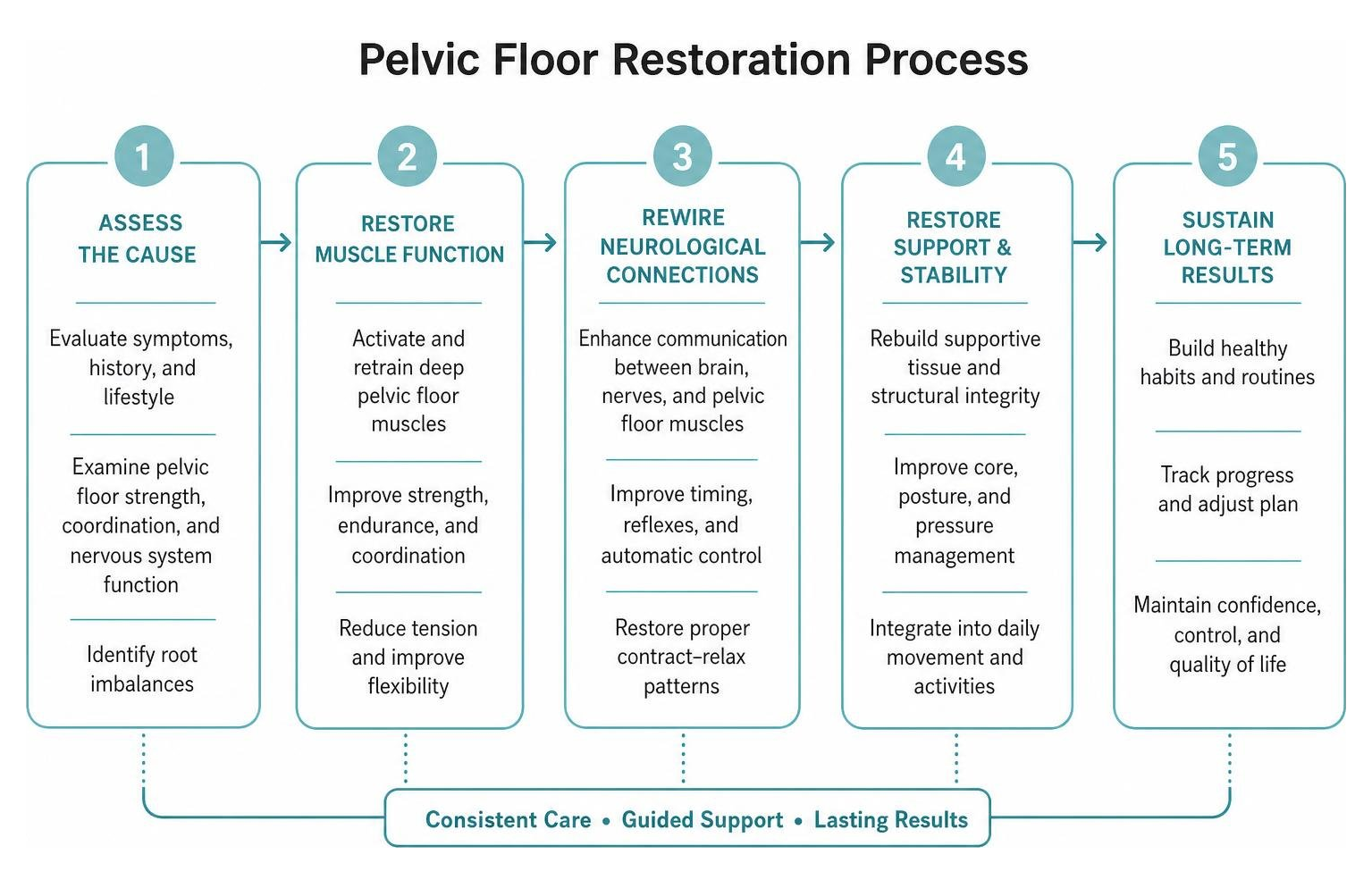
The Limitations of Traditional Pelvic Floor Physical Therapy
Many women are referred to pelvic floor physical therapy as a first step. While manual therapy and guided pelvic exercises can be highly beneficial, traditional therapy has limitations. Many patients find the internal physical exams and manual manipulations uncomfortable or highly clinical.
Furthermore, performing voluntary Kegels requires a high level of existing muscle awareness. If a muscle is severely weakened or disconnected from the nervous system, it is incredibly difficult to isolate and contract it effectively. Many women accidentally contract their glutes, inner thighs, or abdominal muscles instead, which can actually increase downward pressure on the bladder.
The Interconnected System: Spine, Posture, and Bowels
The body works in patterns, and the pelvic floor is deeply connected to your posture and digestive health.
The Levator Ani and Core Coordination: The levator ani is the primary muscle group supporting your pelvic organs. It works in tandem with your deep core, hips, and lower back. If you have chronic lower back pain, your pelvic floor muscles may overcompensate, becoming chronically tight and weak.
Posture: Sitting or standing with a slouched, tucked pelvis shifts the weight of your abdominal organs directly onto your bladder, making it much harder for your pelvic floor to maintain control.
Chronic Constipation: Constipation is a major contributor to pelvic floor dysfunction. The repetitive straining required to pass stool stretches and weakens the pudendal nerve, which is the primary nerve pathway responsible for bladder and pelvic muscle coordination.
If you have tried traditional exercises without success, it is often because the coordination between these systems is missing. You can explore targeted, evidence-based approaches through Pelvic Floor Physical Therapy Boise or learn how to safely engage your body at home with Pelvic Floor Exercises for Women.
Advanced Non-Invasive Technologies for Bladder Control
At Boise Better Bladder, we believe in utilizing advanced, clinically proven technology to accomplish what the body cannot easily do on its own. Our signature program combines FDA-cleared neuromuscular stimulation with holistic healing to restore both the physical strength and the neurological pathways of the pelvic floor.

High-Intensity Focused Electromagnetic (HIFEM) Technology
Instead of struggling to perform hundreds of manual exercises, our patients sit fully clothed on our advanced Freedom+ chair. This technology utilizes High-Intensity Focused Electromagnetic (HIFEM) energy to penetrate deep into the pelvic floor.
A single 30-minute session delivers the equivalent of 25,000 supramaximal contractions. These are deep, intense muscle contractions that are physically impossible to achieve through voluntary Kegel exercises alone. This rapid stimulation does two vital things:
Rebuilds Muscle Density: It thickens and strengthens the levator ani and pelvic muscles, restoring the physical support structure beneath your bladder.
Retrains Muscle Memory: It re-educates the muscles, rebuilding the neurological pathway between your brain and your pelvic floor so your body remembers how to automatically contract when you cough, sneeze, or laugh.
The Power of Holistic Acupuncture Integration
While HIFEM technology rebuilds the physical muscle, we integrate holistic acupuncture techniques to address the neurological and energetic roots of bladder dysfunction.
Tibial Nerve Stimulation: By utilizing specific acupuncture pathways near the ankle, we can gently stimulate the tibial nerve. This nerve shares a root pathway with the nerves controlling the bladder. This stimulation acts as a "reset button" for the nervous system, calming hyperactive bladder signals and dramatically reducing the sudden, panicked urges of overactive bladder.
Improving Local Circulation: Acupuncture helps dilate blood vessels, directing oxygen-rich blood and vital nutrients to the pelvic tissues. This accelerates the healing of postpartum micro-tearing and counteracts the tissue thinning associated with menopause.
This dual-action approach—combining deep muscular rebuilding with targeted nervous system regulation—is why our patients see lasting results without ever needing to undergo uncomfortable internal exams or invasive procedures. You can read more about how we apply these therapies by visiting our guides on Pelvic Muscle Therapy and Acupuncture Pelvic Floor.
Why Women Seek Non-Surgical Alternatives to Invasive Procedures
When conservative treatments fail, conventional medicine often presents two primary options: surgical sling procedures or bladder Botox injections. While these interventions can be appropriate in specific clinical scenarios, they carry significant risks and limitations that every woman should carefully weigh.
The Risks of Surgical Sling Procedures
A sling procedure is an outpatient surgery where a synthetic mesh or biologic tissue sling is surgically implanted to cradle and support the urethra.
The Clinical Reality: In a clinical study of 113 women who received the Altis® sling, 90.4% reported feeling "much better" after two years. However, surgery carries inherent risks, including mesh erosion, chronic pelvic pain, urinary tract infections, and difficulty urinating.
The Pregnancy Factor: A crucial risk factor to consider is that future pregnancies can completely undo the physical support provided by a surgical sling, causing stress incontinence to return.
The Temporary Relief of Bladder Botox
For overactive bladder, Botox is injected directly into the bladder muscle via a cystoscope to paralyze or relax the hyperactive muscle tissue.
The Clinical Reality: Patients receiving Botox often see a 50 to 75 percent reduction in daily leakage episodes, with 1 in 4 experiencing a complete stop.
The Catch: Botox is a temporary block. It does not heal the nervous system; it simply numbs the communication. The effects last only 6 months, requiring patients to return for invasive, in-office bladder injections 2 to 3 times every single year. Additionally, there is a risk of temporary urinary retention, meaning some patients must use a catheter to empty their bladder until the Botox partially wears off.
Comparing Your Options
To help you make an informed decision, let us look at how these approaches compare:
Feature | Drug / Surgical Options | Holistic Non-Invasive Restoration (Our Program) |
|---|---|---|
Invasiveness | High (Surgery, cystoscopy, needles) | None (Fully clothed, external stimulation) |
Pain & Downtime | 6 weeks recovery (no lifting, no intimacy) | Zero downtime; return to daily life immediately |
Primary Mechanism | Artificial support (mesh) or nerve numbing | Natural muscle rebuilding & nerve regulation |
Longevity | Slings can fail; Botox requires bi-annual repeat | Long-term muscle memory with simple maintenance |
Treats Root Cause | No (Manages physical structure or blocks signals) | Yes (Restores cellular health, circulation, & strength) |
If you are looking for a gentle, lasting way to calm an irritable bladder without the cycle of repeat injections, exploring our dedicated guide on Overactive Bladder Treatment can help you find a path forward.
Frequently Asked Questions About Bladder Health
What are the primary causes of pelvic floor weakness and bladder issues?
The pelvic floor is a highly sensitive muscle group that is deeply affected by hormonal and physical transitions throughout a woman's life.
Pregnancy and Childbirth: The physical weight of carrying a child during the third trimester, combined with the stretching of the levator ani muscle during vaginal delivery, can stretch and weaken pelvic tissues.
Menopause and Estrogen Loss: Estrogen is vital for maintaining the thickness, elasticity, and blood flow of the vaginal and urethral tissues. During menopause, declining estrogen levels lead to tissue thinning (atrophy) and a weakened urethral seal, which often triggers both SUI and OAB. You can learn more about navigating these hormonal patterns in our guide on Menopause Bladder Issues.
How does advanced non-invasive boise incontinence treatment compare to traditional Kegels?
Traditional Kegels rely entirely on your ability to voluntarily isolate and contract your pelvic floor. If your muscles are severely weakened or if you have lost neurological connection to the area, performing a proper Kegel is incredibly difficult.
Our advanced HIFEM technology bypasses voluntary control entirely. By delivering 25,000 supramaximal contractions in a single, comfortable 30-minute session, we can stimulate the entire pelvic floor uniformly. This builds deep muscle density and rapidly retrains muscle memory far beyond what is possible with manual exercises. Discover how this works to rebuild your core foundation by reading about Pelvic Muscle Strengthening.
Who is the ideal candidate for specialized boise incontinence treatment?
If you are a woman experiencing bladder leaks when you laugh, sneeze, or exercise, or if you struggle with sudden, uncontrollable urges that disrupt your day, you are likely an excellent candidate.
Our program is designed for women who want to avoid surgery, medications, or uncomfortable internal physical therapy. However, because we use high-intensity electromagnetic energy, there are a few contraindications. You are not a candidate if you have metal implants in the pelvic or hip area (such as copper IUDs, pacemakers, or artificial joints), if you are currently pregnant, or if you have an active bleeding disorder.
To complement your sessions, we also teach you how to support your bladder at home through proper hydration, high-fiber dietary adjustments to prevent constipation, and gentle Weak Pelvic Floor Exercises.
Conclusion: Reclaiming Your Freedom and Vitality
At Boise Better Bladder, we know that bladder leakage is more than just a physical inconvenience. It is a condition that quietly chips away at your confidence, dictating where you can travel, what clothes you can wear, and whether you can comfortably run, play with your children, or enjoy an active lifestyle.
But remember: your body is not failing you. These symptoms are simply signals that your pelvic floor and nervous system have lost their cooperative rhythm.
We invite you to step away from the endless cycle of pads, medications, and invasive worries. Our team is dedicated to providing a compassionate, non-surgical, and deeply respectful environment right here in the Boise, Meridian, Eagle, Nampa, and Caldwell areas. By combining the physical power of advanced HIFEM technology with the neurological balancing of holistic acupuncture, we help you address the root cause of your symptoms so you can reclaim your confidence and your freedom.
If you are ready to stop managing leaks and start truly healing, we invite you to take the first step. Visit Boise Better Bladder today to schedule a private consultation and experience a complimentary demo of our Freedom+ technology. Let us help you listen to your body's signals and guide it back into perfect balance.
