Why Pelvic Muscle Strengthening Matters for Your Health
Why Pelvic Muscle Strengthening Matters for Your Health
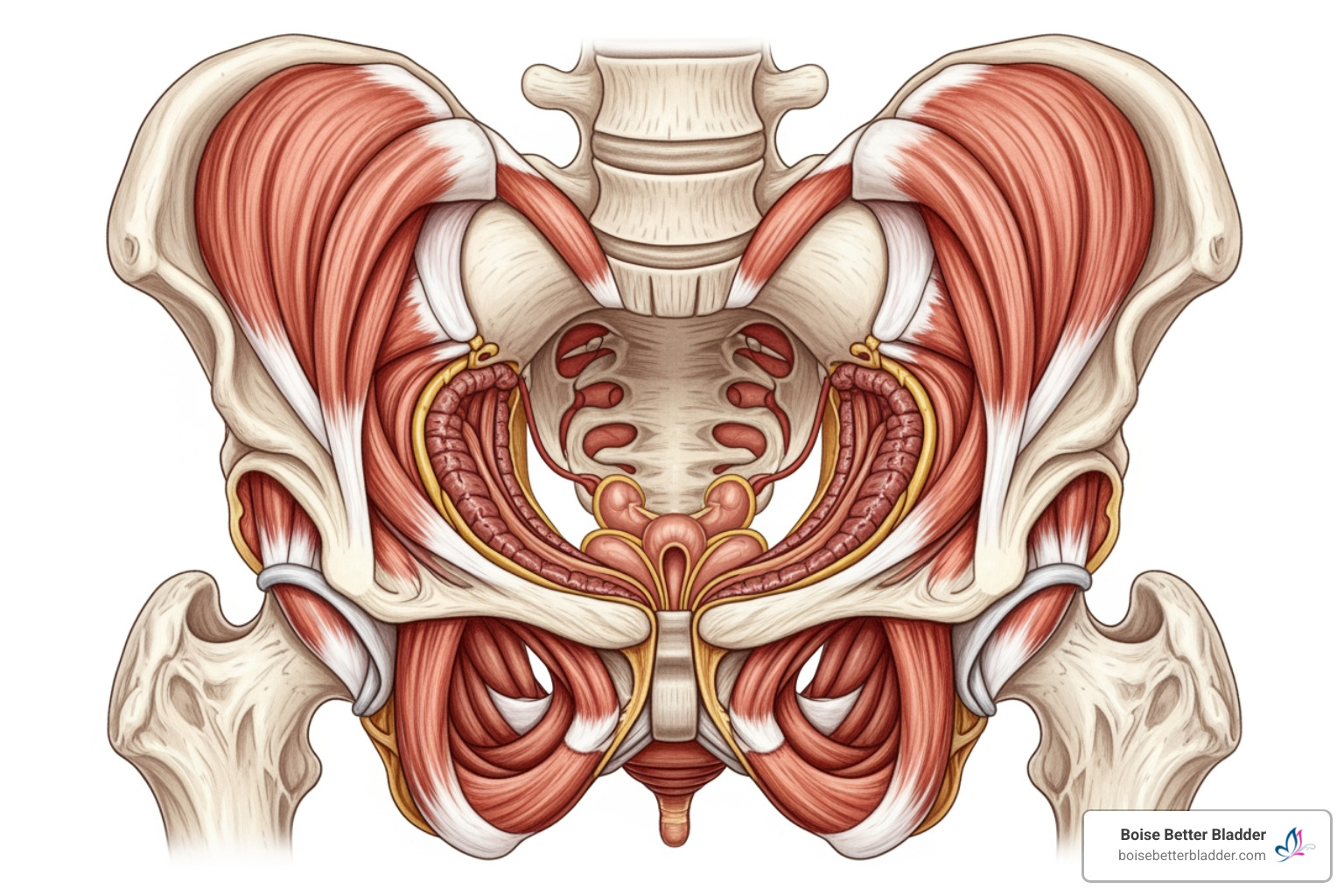
Pelvic muscle strengthening is a series of targeted exercises designed to strengthen the muscles at the base of your pelvis, which support your bladder, bowel, and reproductive organs. These muscles control critical functions like urination, bowel movements, and sexual function.
And yet…
No one really talks about them.
In my Treasure Valley clinic, pelvic floor issues rarely walk in the front door loud loudly. They usually arrive quietly.
A nervous laugh.
A whispered confession.
Sometimes tears.
"I just can't trust my bladder anymore."
"I don't go on walks unless I know where the bathrooms are."
"I thought this was just part of getting older."
If you leak when you cough, sneeze, laugh, or jump, you’re not alone. About 50% of women in the U.S. experience incontinence at some point, and many men struggle with bladder control as well—especially after prostate surgery or as they age.
Here's the part I want you to hear clearly:
Common? Yes.
Normal? No.
You don’t have to live in pads.
You don’t have to avoid travel, exercise, or social events.
And you don’t have to accept bladder issues as “just aging.”
Your pelvic floor works like a hammock of muscles supporting your organs. When those muscles weaken—due to pregnancy, childbirth, surgery, aging, or chronic strain—they can’t do their job properly. That’s when leaks, urgency, discomfort, and loss of confidence begin to show up.
The good news?
Pelvic muscle strengthening works—and when done correctly, it can be life-changing.
Quick At Home Guide to Pelvic Muscle Strengthening:
What it does: Strengthens muscles that support pelvic organs and control bladder/bowel function
Key exercises: Kegels, bridge pose, squats, pelvic tilts, bird-dog
How often: 3 sets of 10 repetitions daily
Results timeline: 4-6 weeks for initial improvement, 3 months for major changes
Who benefits: Anyone with incontinence, pelvic pain, or weakness from aging, pregnancy, surgery, or chronic conditions
Understanding the Power of Pelvic Muscle Strengthening
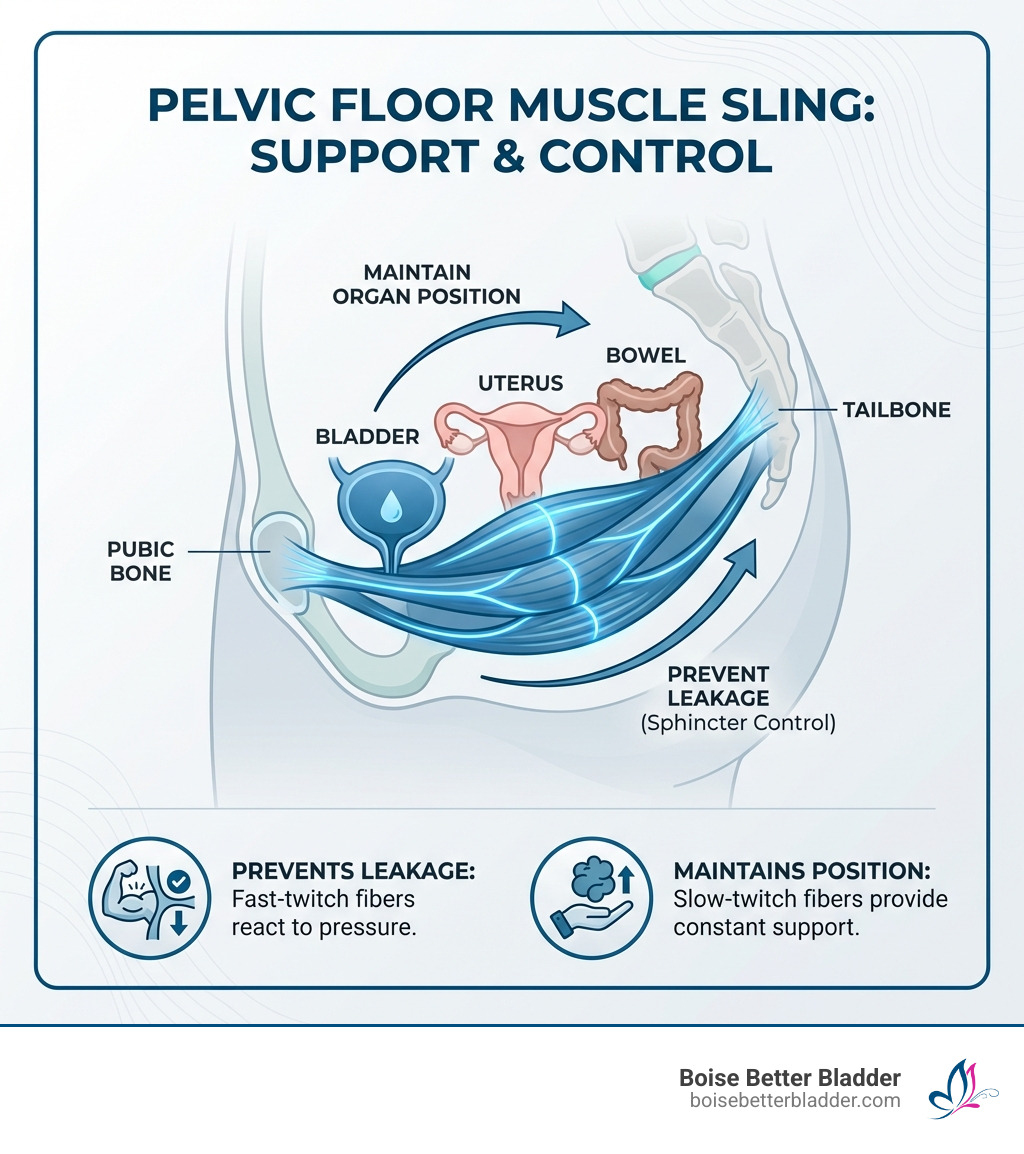
Your pelvic floor is a muscular sling stretching from the pubic bone to the tailbone. This “hammock” supports the bladder, uterus (in women), prostate (in men), and bowel. It also acts as a gatekeeper—helping you hold urine, pass stool, and maintain sexual function.
These muscles are made up of:
Slow-twitch fibers (endurance and support)
Fast-twitch fibers (quick response during coughing, sneezing, laughing, or jumping)
When the pelvic floor weakens or stops firing correctly, symptoms begin to appear:
Urinary or fecal leakage
Pelvic organ prolapse
Urgency or frequency
Pain with intimacy
Lower back or hip instability
This is why pelvic muscle strengthening isn’t just about bladder control—it’s about quality of life. For more details, see Scientific research on pelvic health.
Benefits of Pelvic Muscle Strengthening
When pelvic health is prioritized, patients in Boise and the surrounding areas often experience:
Improved bladder and bowel control, reducing leaks and urgency
Increased confidence in daily activities and social situations
Enhanced sexual function, including sensation and performance
Support during pregnancy and postpartum recovery
Improved prostate health following surgery
Stronger core stability, protecting the low back and hips
Reduced risk of pelvic organ prolapse
A Real Boise Better Bladder Story
Mary is 67 and lives in Meridian.
She came into my office carrying a large purse—and inside it was a collection of pads. She laughed about it, but her eyes told a different story.
Mary leaked when she laughed.
She leaked when she stood up.
She leaked on the short walk from her car to the front door.
Her doctor told her, “Welcome to aging.”
But when we evaluated her pelvic floor, the issue wasn’t just weakness—it was poor neuromuscular communication. Her pelvic muscles weren’t responding when they needed to.
We created a personalized plan combining pelvic muscle strengthening with advanced neuromuscular retraining to help her muscles relearn how to contract, lift, and respond at the right time.
Six weeks later, Mary walked into the clinic smiling.
“I forgot my pads at home,” she said.
“And I didn’t need them.”
What Mary regained wasn’t just bladder control—it was confidence, freedom, and trust in her body again.
Risk Factors for Weakened Pelvic Muscles
Aging:Natural loss of muscle tone and elasticity
Pregnancy and childbirth: Stretching and pressure on pelvic tissues
Obesity: Increased strain on pelvic structures
Chronic coughing or constipation: Repetitive downward pressure.
High-impact activities or heavy lifting
Surgery or trauma, including prostate and hysterectomy surgery
The earlier these patterns are addressed, the better the outcome.
How to Identify and Engage Your Pelvic Floor
One of the biggest challenges I see in practice is that many people are doing Kegels–but doing them incorrectly.
Some bear down instead of lifting.
Some clench their glutes.
Some hold their breath.
And many can’t feel their pelvic floor at all.
That’s not failure.
That’s a neuromuscular disconnect—and it’s fixable.
Identifying Muscles for Women
Briefly stop urine flow once to identify the muscles (not as a habit)
Imagine lifting a tampon or preventing gas
Feel an internal lift away from the chair you’re sitting on
Avoid clenching the buttocks or thighs
Identifying Muscles for Men
Briefly stop urine flow to locate the muscles
Tighten around the anus and lift upward
Imagine lifting the area between the testicles and anus
The movement should always feel internal and upward.
For holistic health insights, see the Mayo Clinic Guide to Holistic Health. Relax your belly and thighs while focusing on the internal lift.
Step-by-Step Guide to Pelvic Floor Exercises
Consistency and proper technique matter more than intensity. After our patients finish their 6 week Boise Better Bladder Signature Program, we begin teaching how to master personal at home Kegels, we also offer maintenance programs where you can sit on our Freedm+ HIFEM chair and the kegels are done for you.
Mastering the Kegel Technique
1. Long Squeezes (Endurance):
Contraction: Gently lift the pelvic floor like an elevator.
Hold: Aim for 10 seconds while breathing normally.
Relax: Fully release for 10 seconds.
Sets: 10 repetitions.
2. Short Squeezes (Rapid Response):
Contraction: Quick, strong lift.
Hold/Relax: 1 second each.
Sets: 10 repetitions.
These two types of contractions train your pelvic floor for both support and rapid response.
Additional At Home Exercises
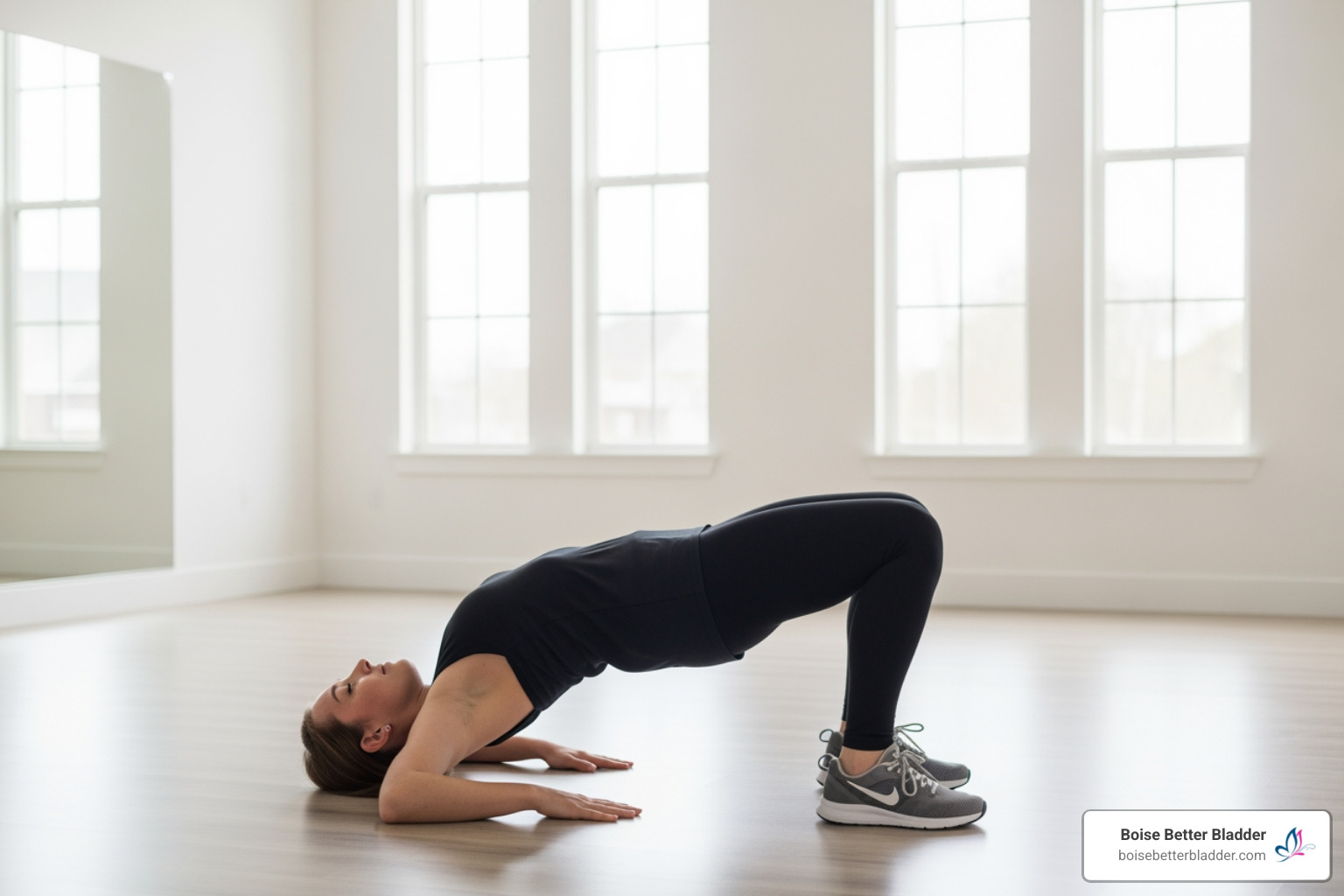
Bridge Pose: Strengthens hip, glute, and pelvis. Lie on your back with knees bent. Lift hips while engaging the pelvic floor. Hold 10-15 seconds. Repeat 10-15 times.
Squats: Reinforces pelvic floor engagement during movement. Engage the pelvic floor while lowering and rising. Aim for 3 sets of 10-15.
Pelvic Tilts: Improves awareness and control. Flatten your lower back into the floor, tilting the pelvis up. Repeat 10-15 times.
Bird-Dog: Enhances deep core stability. On hands and knees, extend the opposite arm and leg while maintaining a stable core and pelvic floor.
Maximizing Your Routine
Practice daily
Attach exercises to habits like brushing your teeth
Progress from lying down to standing
Avoid overdoing it—fatigue can worsen symptomsOvercoming Challenges and Advanced Alternatives
Common Mistakes to Avoid
Holding your breath
Clenching the glutes or thighs
Bearing down instead of lifting
Being inconsistent
If you’re unsure whether you’re doing exercises correctly, guidance makes a huge difference.
Advanced Pelvic Health Alternatives
Modern Solutions for Pelvic Health
For significant weakness, we offer advanced solutions in Boise to amplify your results:
Biofeedback: Uses sensors to provide real-time visual or auditory feedback on your contractions.
Electrical Stimulation: Gently stimulates muscles to contract, helpful for those with very weak floors.
"The Knack": Contracting the pelvic floor immediately before a cough or sneeze to prevent leaks.
HIFEM Technology: This FDA-approved, non-invasive method uses electromagnetic energy to induce 25,000 supramaximal contractions in 30 minutes. It strengthens muscles and triggers collagen production, improving bladder control and intimate function. More info about how it works.
Acupuncture: Improves nerve and muscle communication, offering a holistic approach to pelvic healing.
Think of it this way:
Kegels are like bodyweight squats at home.
HIFEM is like a personal trainer doing 25,000 perfect reps for you—while you relax, fully clothed.
Frequently Asked Questions about Advanced Pelvic Health
We address common concerns from our patients in Boise, Meridian, and Eagle regarding their pelvic muscle strengthening journey.
How long does it take to see results?
Most people notice improvement within 4–6 weeks, with significant changes by 3 months. Maintenance is required to sustain pelvic health for years to come.
Can pelvic floor issues cause low back or hip pain?
Yes. The pelvic floor is part of the deep core. Weakness can contribute to instability, SI joint pain, piriformis syndrome, low back pain, hip pain, and postural instability.
Are pelvic floor exercises different for men and women?
While the squeeze and lift technique is the same, the anatomical focus differs for men and women. Our Boise Better Bladder Signature program differentiates and modifies the automated Kegels for both genders to benefit sphincter control and core stability.
Conclusion
Pelvic muscle strengthening isn’t just about stopping leaks—it’s about restoring trust in your body.
Here at Boise Better Bladder, we serve Boise, Meridian, Eagle, and surrounding Idaho communities with non-invasive, surgery-free pelvic health programs tailored to each individual. By combining advanced technology with holistic care, we help patients regain strength, control, and confidence—without shame or embarrassment.

We hope this extensive guide has empowered you with a deeper understanding of pelvic muscle strengthening and its profound impact on your overall health and well-being. From understanding the intricate anatomy of your pelvic floor to mastering the correct exercise techniques and exploring modern alternatives, you now have the knowledge to take control of your pelvic health.
You don’t have to live around your bladder anymore.
Ready to Take the Next Step:
