Stop the Leak with Professional Pelvic Health Programs
When Your Body Sends Signals You Can No Longer Ignore

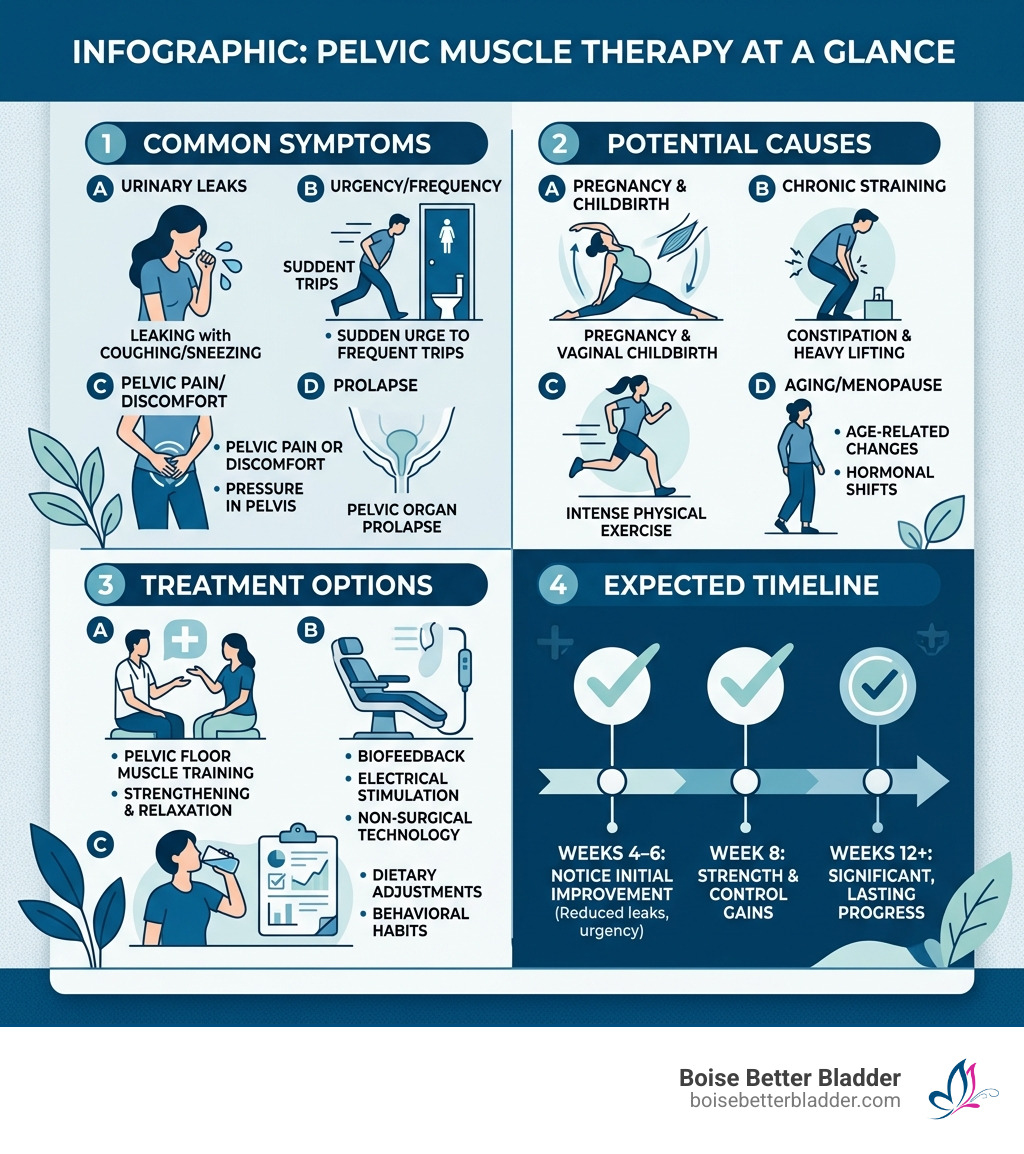
Pelvic muscle therapy is a specialized form of treatment that strengthens, relaxes, or retrains the muscles supporting your bladder, bowel, and reproductive organs — helping you regain control over leaks, urgency, and pelvic pain.
What you need to know at a glance:
Question Quick Answer What is it? Targeted therapy for the pelvic floor muscles Who is it for? People of all ages and genders — especially women experiencing leaks, urgency, or pelvic pain What does it treat? Urinary incontinence, pelvic pain, prolapse, constipation, sexual dysfunction How long does it take? Most people notice improvement in 4–6 weeks; major changes within 3 months Is it invasive? No — therapy ranges from guided exercises to non-invasive technology
Many women I speak with have been told the same thing: "This is just part of getting older." They've tried Kegel exercises, maybe even formal physical therapy — and still, the leaks continue. They plan outings around restroom locations. They pack extra pads. They quietly stop doing the things they love.
Here's what I want you to understand: your body isn't failing you. These symptoms are signals — patterns your body is using to communicate that something in your pelvic foundation needs attention.
The pelvic floor is a group of muscles at the base of your pelvis. Think of it as a hammock supporting your bladder, bowels, and reproductive organs. When those muscles lose their strength, coordination, or balance — for any number of reasons — symptoms follow. And symptoms that are ignored tend to progress.
The good news is that this is treatable. Not just managed — treated. And the path forward often doesn't require surgery or medication.
I'm Dr. Kimberly Thompson, DACM, L.Ac., and I've spent years helping women identify the root-cause patterns behind pelvic floor dysfunction using an integrative approach that combines advanced technology with whole-body care — including pelvic muscle therapy at its core. In this guide, I'll walk you through exactly how the pelvic floor works, why it breaks down, and what a truly effective treatment pathway looks like.
The Anatomy and Patterns of Pelvic Floor Dysfunction
As we look at the body through the lens of education and pattern recognition, we must first understand the foundation. The pelvic floor is not just a single muscle; it is a complex, multi-layered group of muscles and connective tissues known collectively as the levator ani.
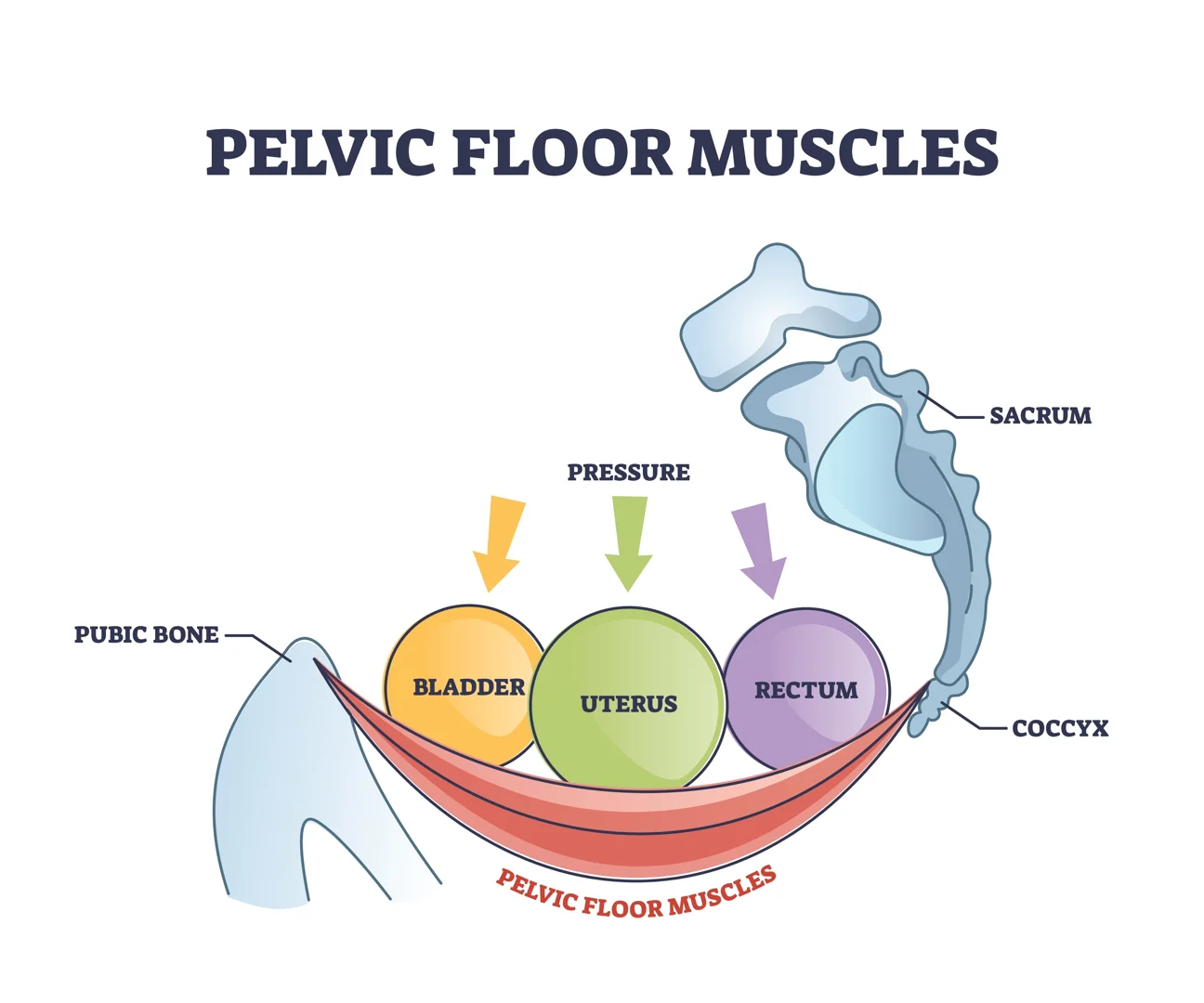
These muscles stretch like a supportive hammock from your pubic bone in the front to your tailbone in the back. Their role is vital to your daily life:
Organ Support: They hold the bladder, uterus, and rectum in their proper anatomical positions.
Sphincter Control: They wrap around the openings of the urethra and anus, allowing you to control when you go to the bathroom.
Core Stability: They work in tandem with your diaphragm and deep abdominal muscles to stabilize your spine and manage internal pressure.
When this "hammock" is functioning correctly, you don't even think about it. But when the communication between your nervous system and these muscles is disrupted, the foundation begins to sag or tighten excessively. You can find more info about how the body works to see how these systems integrate.
Identifying Hypotonic vs. Hypertonic Patterns
In clinical practice, we often see that pelvic floor dysfunction falls into two primary patterns. Understanding which pattern your body is expressing is the first step toward effective pelvic muscle therapy.
Hypotonic (Low Tone): This is characterized by muscle weakness. The hammock has become overstretched or thin, often due to childbirth, aging, or hormonal shifts. This pattern frequently leads to stress incontinence (leaking when you cough or sneeze) and pelvic organ prolapse.
Hypertonic (High Tone): This is a pattern of excessive tension. The muscles are "stuck" in a contracted state and cannot relax. This can cause pelvic pain, urgency, and difficulty emptying the bladder or bowels.
The goal of therapy is not always "strengthening" in the traditional sense; sometimes, the goal is coordination—teaching the muscles how to contract and relax at the right time. You can review scientific research on pelvic floor muscle training to understand how these exercises have been traditionally utilized.
Common Symptoms as Body Signals
Symptoms are signals. They are your body’s way of asking for help. If you are experiencing any of the following, your pelvic floor may be out of balance:
Urinary Leaks: Leaking when sneezing, laughing, or exercising.
Urgency: A sudden, overwhelming need to use the bathroom, even if your bladder isn't full.
Pelvic Pain: Discomfort in the pelvic region, lower back, or hips.
Constipation: Straining or a feeling of incomplete evacuation, which affects up to half of people with long-term pelvic dysfunction.
Frequency: Feeling the need to go to the bathroom more than 8 times in a 24-hour period.
“Symptoms are signals.” When we recognize these patterns early, we can intervene before they significantly diminish your quality of life.
The Evolution of Pelvic Muscle Therapy
For decades, the standard approach to pelvic health was limited. If a woman experienced leaks, she was told to do "Kegels" on her own. If that failed, she might be referred to traditional physical therapy.
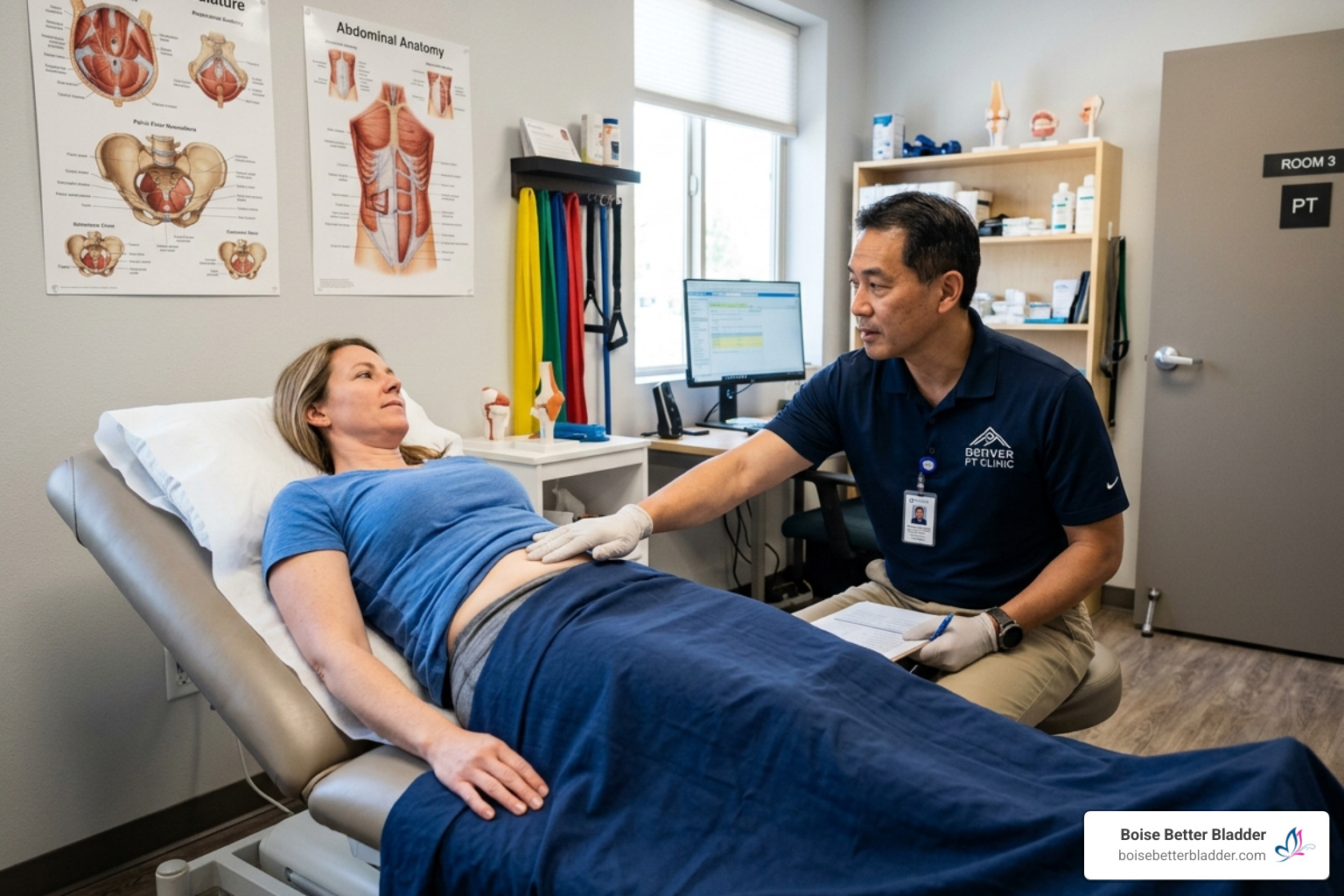
Traditional pelvic muscle therapy typically involves several components:
Manual Therapy: A therapist uses hands-on techniques to release trigger points or improve soft tissue mobility.
Guided Exercises: Learning to isolate the pelvic floor without compensations from the thighs or abdominals.
Education: Adjusting fluid intake, bathroom habits, and posture.
While these methods are evidence-based, they often require a significant time commitment—usually 6 to 12 sessions over several months—and may involve internal examinations that some find uncomfortable. You can read more about pelvic floor exercises: MedlinePlus Medical Encyclopedia for a breakdown of these traditional movements.
Why Traditional Pelvic Muscle Therapy Isn't Always Enough
In our Boise and Meridian clinics, we often see patients who have "tried everything." While traditional therapy is valuable, it has limitations:
The Fatigue Factor: It is physically difficult to perform the number of repetitions required to rebuild a severely weakened pelvic floor.
Inconsistency: Life gets in the way. Many patients struggle to maintain a home exercise program for the 3 to 4 months required to see major changes.
Neuromuscular Gaps: If the nerves aren't communicating clearly with the muscles, "squeezing" harder won't solve the problem.
“Your body isn’t failing you.” Sometimes, the tools you were given just weren't powerful enough to reach the root cause.
The Role of Biofeedback and Coordination
One of the most effective traditional tools is biofeedback. This involves using sensors to provide a visual graph of muscle activity. Statistics show that over three-quarters of people with pelvic floor dysfunction gain better muscle control when biofeedback is included. It helps "re-train" the brain to recognize when the muscles are actually working, bridging the gap between intention and action.
A New Pathway: Integrating Technology and Holistic Care
As we move into April 2026, the field of pelvic health has evolved. We now have the ability to address muscle weakness and nerve communication more efficiently than ever before.
At Boise Better Bladder, we utilize a signature program that moves beyond traditional limitations. We combine FDA-cleared HIFEM (High-Intensity Focused Electromagnetic) technology with holistic clinical expertise.
HIFEM technology is a breakthrough in pelvic muscle therapy. While sitting fully clothed in a specialized chair, the technology delivers electromagnetic pulses that trigger supramaximal contractions. To put this in perspective: a single 30-minute session provides the equivalent of 25,000 Kegel exercises.
This isn't just about "strength"; it's about restoring the neuromuscular patterns of the entire pelvic floor. You can learn more about our clinical approach and how we've helped women across the Treasure Valley.
The Role of Acupuncture in Pelvic Muscle Therapy
As a clinician, I look at the body as a series of interconnected pathways. While technology handles the "heavy lifting" of muscle strengthening, we use acupuncture to address the root-cause environment.
Acupuncture helps by:
Improving Circulation: Enhancing blood flow to the pelvic organs and muscles to support tissue repair.
Calming the Nervous System: Reducing the "fight or flight" response that often contributes to overactive bladder and pelvic tension.
Nerve Communication: Helping the body’s electrical signals reach the pelvic floor more effectively.
“The body works in patterns.” By combining muscle rehabilitation with nervous system support, we create a foundation for long-term results rather than just temporary relief.
Restoring Function Without Surgery or Medications
Many of our patients come to us because they want to avoid the risks of surgery or the side effects of medications. Whether the dysfunction was triggered by postpartum recovery, the hormonal changes of menopause, or the natural process of aging, our goal is restoration.
Our non-invasive approach is designed to be comfortable and efficient. Most patients see a noticeable difference in their control and confidence within just a few weeks. You can read patient success stories from women in Eagle, Nampa, and Caldwell who have reclaimed their freedom.
Frequently Asked Questions about Pelvic Health
Who can benefit from pelvic muscle therapy?
Pelvic health is important for everyone, but our program is specifically designed for women of all ages. This includes:
Postpartum Women: Addressing diastasis recti and bladder leaks after childbirth.
Menopausal Women: Supporting tissues through hormonal shifts that cause thinning and weakness.
Active Individuals: Helping those who experience leaks during running, jumping, or heavy lifting.
Seniors: Maintaining independence and preventing the embarrassment of urgency and accidents.
How long does it take to see results?
The body requires time to rebuild tissue and re-establish nerve pathways.
4-6 Weeks: Most people notice an initial improvement in control and a reduction in "near misses."
12 Sessions: This is often the "sweet spot" where significant muscle coordination is restored.
3 Months: This is the timeline for major, long-term physiological change.
Can I perform these exercises at home?
Yes, and we encourage it! However, we recommend a professional evaluation first. Doing Kegels incorrectly—such as holding your breath or tensing your abs—can actually increase pelvic pressure and worsen symptoms. We teach our patients how to integrate "functional" contractions into their daily lives, like engaging the pelvic floor before standing up from a chair or lifting a grocery bag.
Conclusion: Listening to Your Body’s Signals
The leaks, the pain, and the constant worry about the nearest bathroom are not just "annoyances"—they are your body’s way of telling you that the pelvic foundation needs support.
“Your body isn’t failing you.” It is simply communicating.
By moving away from the "wait and see" approach and embracing a combination of modern technology and holistic care, you can restore the strength and coordination you thought was gone. Whether you are in Boise, Meridian, or anywhere in the Treasure Valley, you don't have to manage symptoms forever. You can resolve them.
We invite you to stop listening to the "normalcy" of dysfunction and start listening to the potential for healing. If you're ready to regain your confidence and your freedom of movement, we are here to help you understand the patterns and find the pathway back to health.
