Understanding Acupuncture for Pelvic Floor Health
Understanding Acupuncture for Pelvic Floor Health
Have you ever felt like your body was trying to tell you something… but no one had really explained what it meant?
Maybe it started with a few little leaks when you coughed or sneezed. Maybe it became that constant urge to find the bathroom “just in case.” Maybe you’ve been doing your best to push through it, but deep down, you know something is off.
Many of the patients who come to Boise Better Bladder tell us the same thing:
They thought it was just part of getting older.
They thought it was something they simply had to live with.
Or they assumed surgery or medications were the only options available.
The good news is that pelvic floor care has changed dramatically in recent years—and many people are surprised to discover how much improvement is actually possible.
At Boise Better Bladder in Meridian, Idaho, our signature treatment is the Freedom+ machine (25,000 automated Kegels in just 30 minutes) because it does an incredible job of strengthening and retraining the pelvic floor.
For some patients, pelvic floor acupuncture therapy can be a powerful companion to Freedom+ treatment—especially when symptoms involve layers of muscle tension, inflammation, nervous system stress, or deeper imbalances affecting how the pelvic floor functions.
In other words, sometimes the pelvic floor needs more than just strength—it needs balance.
A Note from Dr. Kimberly
After working with pelvic floor conditions for many years, I’ve noticed something important.
Most people don’t talk about bladder leaks when they first start.
They quietly adjust their life around it.
They stop laughing as freely.
They make mental notes of every bathroom.
They avoid long car rides, travel, or exercise classes.
I created Boise Better Bladder because I wanted people to know something simple:
Peeing your pants may be common — but it doesn’t have to be your normal anymore.
Bladder leaks, urgency, and pelvic floor problems affect millions of people. For years many were told to simply live with it.
But the truth is, the world of pelvic floor care has changed dramatically.
When ancient medicine meets modern technology, we now have tools that can strengthen, retrain, and support the pelvic floor in ways that simply didn’t exist before.
And for many people, improvement happens far faster than they ever expected.

Acupuncture pelvic floor therapy is one of the ways we support bladder control and pelvic floor health at Boise Better Bladder—helping patients get back to laughing, traveling, and living confidently again.
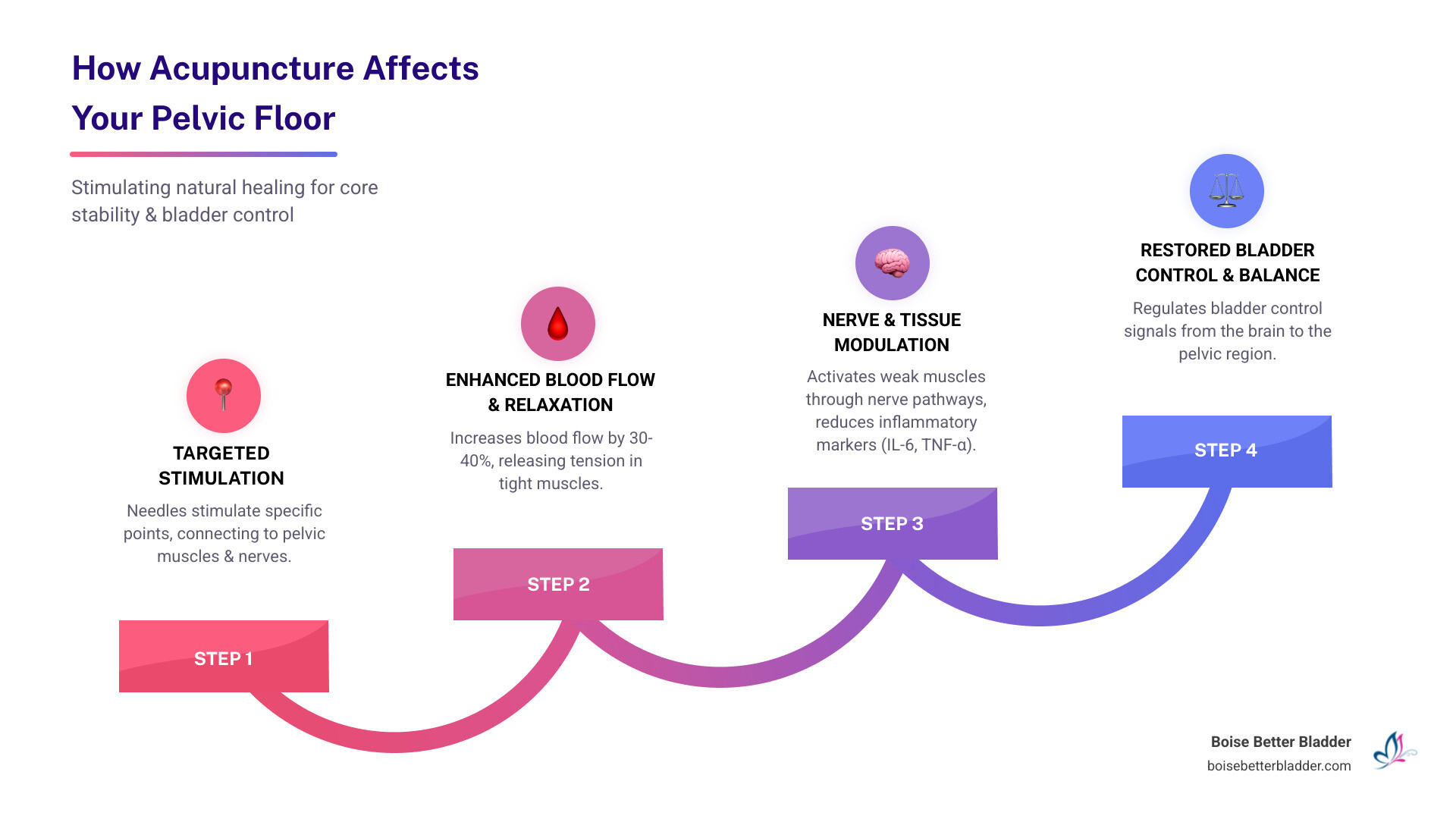
How Acupuncture Supports the Pelvic Floor
Relaxes tight muscles that cause pelvic pain and urgency
Strengthens weak muscles that lead to bladder leaks and urgency
Improves blood flow so the tissues can heal more effectively
Reduces inflammation in the pelvic region
Regulates nerves that control bladder and bowel function
In simple terms, acupuncture helps restore balance to the pelvic floor.
Nearly 1 in 3 women will experience pelvic floor dysfunction at some point in their lives. For some, it begins with small leaks when coughing or sneezing. For others, it shows up as urgency, pelvic discomfort, or a feeling that something just isn’t working the way it used to.
The pelvic floor is a group of muscles that supports the bladder, bowels, and reproductive organs. When these muscles become too tight or too weak, symptoms like urinary incontinence, pelvic pain, or discomfort with intimacy can begin to appear.
Many people are told that pelvic floor exercises alone will solve the problem. And sometimes they do help. But pelvic floor issues are often more complex than simple muscle weakness. Research shows that stress urinary incontinence affects 27.6% of women globally, with rates peaking in the 50–59 age group. When pelvic floor muscle training does not fully resolve symptoms, acupuncture can offer a valuable complementary path forward.
This ancient practice works by stimulating the body’s natural healing response. It helps muscles relearn how to contract and relax properly, increases circulation to tissues that need repair, and helps calm the nervous system when stress has kept the body in a constant state of tension.
Researchers are beginning to measure real physical changes from acupuncture—not just symptom relief.
Using ultrasound imaging, studies have shown that acupuncture can influence the position and function of pelvic structures. Other studies suggest that combining acupuncture with pelvic floor exercises may improve outcomes significantly compared to exercises alone.
At Boise Better Bladder, Freedom+ remains the cornerstone of our treatment approach. The technology performs thousands of pelvic floor contractions in a single session, helping retrain muscles that may have been weak for years.
Acupuncture can be an incredibly helpful companion to that process. While Freedom+ strengthens the muscles, acupuncture can help regulate nerves, reduce inflammation, improve circulation, and release tension patterns that may be interfering with healthy pelvic floor function.
Whether you’re dealing with bladder leaks that affect your confidence, pelvic pain that disrupts daily life, or simply want to strengthen your core and support long-term pelvic health, understanding how acupuncture supports the pelvic floor can open new possibilities for healing.
What Happens When the Pelvic Floor Stops Working the Way It Should
The pelvic floor is a hammock-like group of muscles and tissues at the base of your pelvis. It supports the bladder, bowels, and reproductive organs, playing a vital role in continence, core strength, and sexual function. When this system is out of balance, it can result in pelvic floor dysfunction (PFD).
Pelvic floor dysfunction can occur when muscles become too weak, too tight, or simply stop coordinating the way they should. One of the most common results is stress urinary incontinence—leaking urine during activities like coughing, sneezing, laughing, or exercising.
Research suggests that more than a quarter of women experience stress urinary incontinence at some point in their lives, with rates increasing during the 50–59 age range. Clinical trial on electroacupuncture for SUI.
One of the most important things I want patients to understand is this:
Symptoms are often signals.
Many of my patients tell me something similar once they begin treatment.They didn’t realize how much bladder symptoms had quietly changed their life.
One woman told me:
“I didn’t notice how much I was planning my life around bathrooms until I didn’t have to anymore.”
That moment—when life starts feeling normal again—is incredibly powerful.
Leaks are a signal.
Urgency is a signal.
Pelvic pain is a signal.
These symptoms are often the body’s way of communicating that the muscles, nerves, connective tissues, or circulation in this area are not working together the way they should.
Common Symptoms in Women and Men
Many people live with these symptoms quietly for far too long. But these symptoms are treatable.
In women, pelvic floor dysfunction may show up as:
• Bladder leaks when laughing, coughing, exercising, or sneezing.
• Chronic pelvic pain or discomfort during intimacy.
• A sensation of heaviness or pelvic organ prolapse.
• Frequent urges to urinate or difficulty fully emptying the bladder
• Bowel issues such as constipation or difficulty with bowel movements.
In men, pelvic floor dysfunction can appear as:
• Urinary leakage, particularly after prostate surgery.
• Rectal pressure or pelvic discomfort.
• Sexual dysfunction, including pain during sex or difficulty maintaining erections
Root Causes of Pelvic Floor Dysfunction
Pelvic floor dysfunction rarely develops from just one cause. More often, it builds gradually over time as the pelvic muscles and connective tissues experience repeated strain.
Common contributing factors include:
Childbirth trauma: vaginal delivery can stretch or injure pelvic muscles and nerves
Hormonal changes: pregnancy, menopause, or birth control can affect tissue elasticity
Chronic straining: long-term constipation places repeated pressure on the pelvic floor
Aging: muscles and connective tissues naturally lose strength over time
Surgery: hysterectomy or prostate surgery can affect pelvic nerve function
Obesity: excess weight increases pressure on pelvic support structures
Structural issues: posture problems or scoliosis can alter pelvic alignment
This is also why the right treatment plan is not always the same for every patient.
Some pelvic floors are weak and underactive. Others are tight, guarded, and unable to relax. Some people are dealing with a combination of both.
That’s why pelvic floor care is never one-size-fits-all. A thoughtful, individualized approach makes all the difference.
How Acupuncture Helps Restore Balance in the Pelvic Floor
At Boise Better Bladder, our signature treatment is the Freedom+ machine because it helps strengthen and retrain the pelvic floor in a powerful, non-invasive way.
But in some cases, strengthening the muscles is only part of the solution.
That’s where acupuncture pelvic floor therapy can be incredibly helpful. Acupuncture allows us to support deeper layers of healing that influence how the pelvic floor muscles, nerves, and tissues work together.
In simple terms, acupuncture helps restore balance to the system. More info about how it works.
Many people assume pelvic floor problems always mean the muscles are weak.
But in reality, some pelvic floors are actually too tight, guarded, or unable to relax properly. Others may be weak and underactive. And many people experience a combination of both.
This is why treatment must be individualized.
Some patients need strengthening.
Others need muscle relaxation and nervous system support.
Many benefit from a combination of therapies working together.
That’s where a thoughtful, multi-faceted treatment approach can make such a difference.
What the Research Is Beginning to Show
For many years, acupuncture was understood primarily through traditional Chinese medicine. Practitioners could see that it worked—patients improved—but modern science did not always explain why.
That is beginning to change.
Researchers are now studying how acupuncture affects the pelvic floor using modern imaging tools. One method, called transperineal ultrasound, allows scientists to observe how pelvic structures move and respond in real time.
Some studies have shown measurable changes in pelvic floor positioning and function immediately after acupuncture treatment.Research on immediate structural changes via ultrasound.
Other clinical trials have looked specifically at stress urinary incontinence, the type of bladder leakage that happens during activities like coughing, sneezing, or exercise. One large clinical trial published in the Journal of the American Medical Association (JAMA)found that electroacupuncture significantly reduced urinary leakage in women with stress urinary incontinence compared with control groups. Clinical trial on electroacupuncture for SUI.
In other words, researchers are beginning to document what many practitioners have observed for years: acupuncture can influence the muscles, nerves, and connective tissues involved in bladder control.
Why This Matters for Patients
One of the most important things patients deserve to know is that we are not simply guessing.
The understanding of pelvic floor health has advanced dramatically over the past decade. Today we are combining the wisdom of traditional medicine with modern diagnostic tools that allow researchers to measure real physiological changes in the body.
This growing body of research helps us better understand how therapies like acupuncture influence circulation, nerve signaling, and muscular coordination in the pelvic floor.
And as the science continues to evolve, we are learning more and more about how to support pelvic floor healing in measurable, evidence-based ways.
Acupuncture Compared to Traditional Approaches for Pelvic Floor Health
Why Combining Treatments Often Works Better
Many pelvic floor conditions respond best when multiple therapies work together.
Research has shown that combining acupuncture with pelvic floor muscle training can significantly improve outcomes compared to exercises alone. One study on postpartum stress urinary incontinence found success rates of over 90% when acupuncture was combined with pelvic floor therapy.
This is one of the reasons integrative care can be so effective. When treatments support both the muscles and the nervous system, the body often responds more efficiently. Study on integrative pelvic floor therapy efficacy.
How Acupuncture Supports the Healing Process
Acupuncture can support the healing process in several ways:
•Reducing risk: A safe, non-drug option for people who want to avoid medications or surgery
•No downtime: Treatments fit easily into a normal schedule
•Supporting symptom relief: Helpful for ongoing pelvic pain, urgency, or plateaued progress with other therapies
•Improving overall well-being: Many patients report better sleep, reduced stress, and improved energy
Who Can Benefit from Pelvic Floor Acupuncture
Pelvic floor dysfunction can affect people at many stages of life, but certain life events and lifestyle factors make these symptoms more common.
Acupuncture pelvic floor therapy can be especially helpful for people whose pelvic floor muscles have been affected by childbirth, hormonal changes, aging, or years of physical strain on the body. Take the pelvic health quiz to assess your needs.
Postpartum Recovery
Pregnancy and childbirth place significant stress on the pelvic floor. It’s estimated thatabout one in three women experience stress urinary incontinence after giving birth.
Acupuncture can help support postpartum recovery by:
• restoring muscle tone after the pelvic floor has been stretched during pregnancy and delivery
• improving circulation so tissues heal more efficiently
• supporting pelvic organ stability, which may reduce prolapse symptoms
• helping regulate the nervous system during a time of major hormonal and emotional change
Staying Active as We Age
Many of the patients we see simply want to stay active and keep doing the things they love.
Golf.
Pickleball.
Bike rides along the greenbelt.
Camping trips.
Long walks and travel adventures.
These activities rely on a strong and coordinated pelvic floor. When those muscles become weak or overly tense, symptoms like bladder leaks, pelvic discomfort, or core instability can start to appear.
Acupuncture can help support active adults by:
• improving circulation to pelvic tissues
• helping muscles coordinate better with the core and diaphragm
• calming nervous system tension that contributes to urgency or discomfort
• supporting recovery so people can stay active with confidence
For many patients, this kind of support allows them to return to the activities that make life fun again.
Frequently Asked Questions About Pelvic Floor Acupuncture
Do all Boise Better Bladder patients receive acupuncture?
No. The Boise Better Bladder Signature Program is built around our Freedom+ technology, which strengthens and retrains the pelvic floor using functional magnetic stimulation.
For many patients, strengthening the pelvic floor and improving nerve communication through the Freedom+ treatments is enough to restore better bladder control.
However, some patients have more advanced pelvic floor conditions that involve additional factors such as muscle tension, nerve irritation, inflammation, or long-standing dysfunction. In these cases, pelvic floor acupuncture may be recommended as a supportive therapy.
What can I expect during a pelvic floor acupuncture session?
If acupuncture is part of your care plan, treatment is gentle and relaxing.
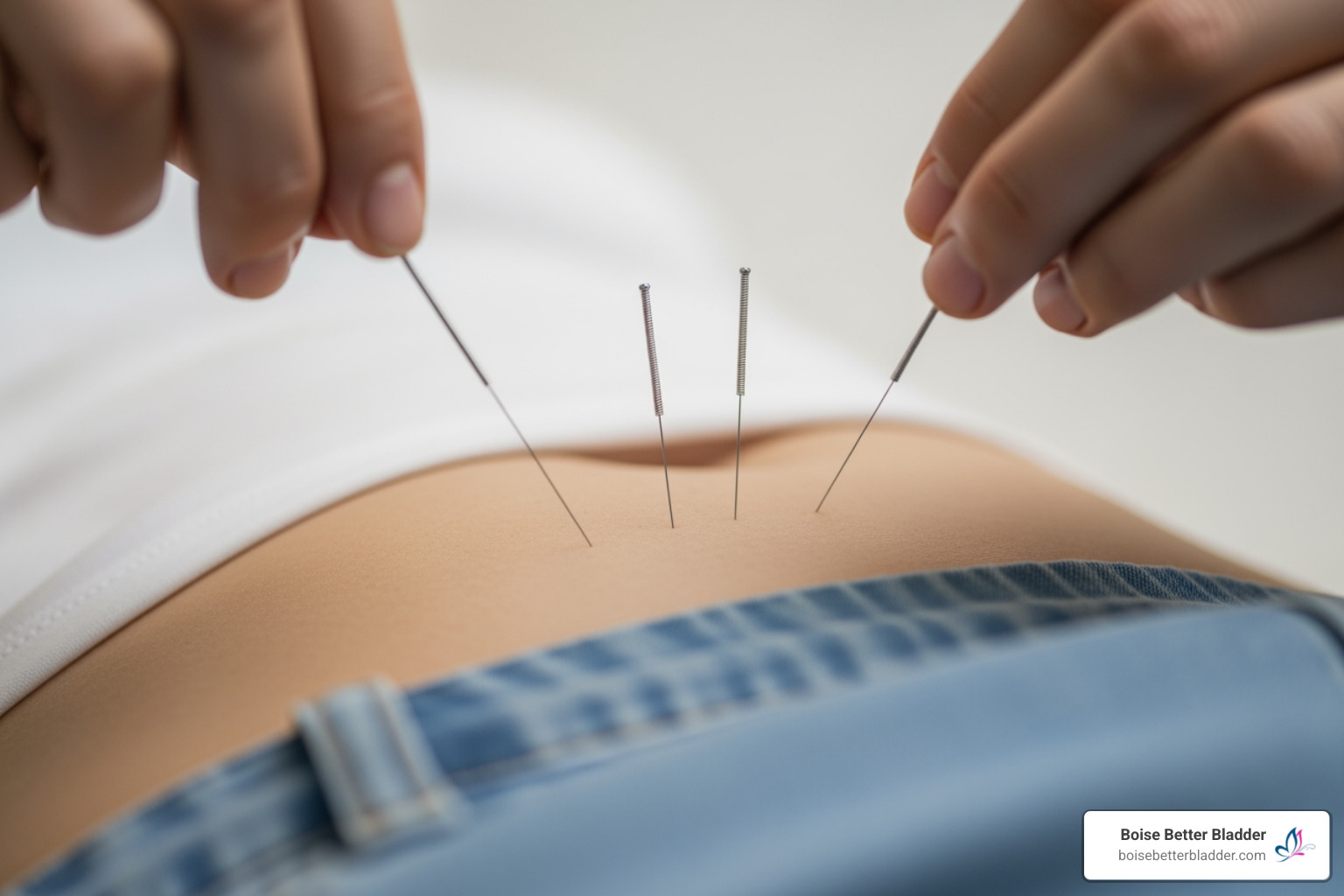
Very fine acupuncture needles are placed in specific points on the abdomen, hips, legs, or ankles that influence pelvic floor muscles and nerve pathways. Internal needles are rarely necessary.
Most patients rest comfortably for about 20–30 minutes, allowing the body to respond to the treatment. Afterward, the needles are removed painlessly and normal activities can usually be resumed right away.
Is pelvic floor acupuncture safe?
Yes. When performed by a licensed acupuncturist, acupuncture is considered very safe.
We use sterile, single-use needles and follow strict safety standards. Side effects are uncommon and usually limited to minor bruising.
Because acupuncture is a non-medicated therapy, it also avoids the drug interactions or systemic side effects that can occur with some medications.
How many acupuncture treatments are usually needed?
When acupuncture is recommended as part of pelvic floor care, iit is typically used alongside the Freedom+ treatment program.
The exact number of sessions depends on the individual condition. Some patients only need occasional treatments to help calm tension or improve nerve signaling, while others may benefit from a short series of treatments as the pelvic floor heals.
Our goal is always to use the least amount of treatment necessary while helping the body regain healthy pelvic floor function.
Conclusion
The pelvic floor plays an important role in our daily lives, yet many people don’t think about it until symptoms begin to appear.
Bladder leaks, urgency, pelvic discomfort, and changes in core strength can quietly affect confidence, independence, and the ability to enjoy the activities we love.
At Boise Better Bladder, our Freedom+ Signature Program is designed to strengthen and retrain the pelvic floor in a powerful, non-invasive way. By improving both muscle strength and nerve communication, many patients experience meaningful improvement in bladder control and pelvic floor function.
In some cases, pelvic floor acupuncture can be a helpful companion to that care—especially when tension, inflammation, nervous system imbalance, or long-standing dysfunction are part of the bigger picture.
Together, these therapies allow us to support pelvic floor healing from multiple angles while helping the body restore healthy coordination and balance.
Most importantly, we want people to understand something simple:
Bladder leaks may be common — but they do not have to be your normal anymore.
If you’re experiencing incontinence, pelvic discomfort, or changes in bladder control, it may simply be your body asking for the right kind of support.
Sometimes healing begins with something as simple as understanding what your body has been trying to say.
And occasionally… it even feels a little bit like magic.
If you’re curious whether the Boise Better Bladder approach might be right for you, we invite you to come learn more.
TTake the next step toward a healthier, more confident you and discover how our Freedom+ program may help restore pelvic floor strength and bladder control.
Book your Boise Better Bladder consultation here.
Cheers,
~Dr. Kimberly
