
Why Overactive Bladder Treatment Is Worth Understanding Before You Decide
Why Overactive Bladder Treatment Is Worth Understanding Before You Decide
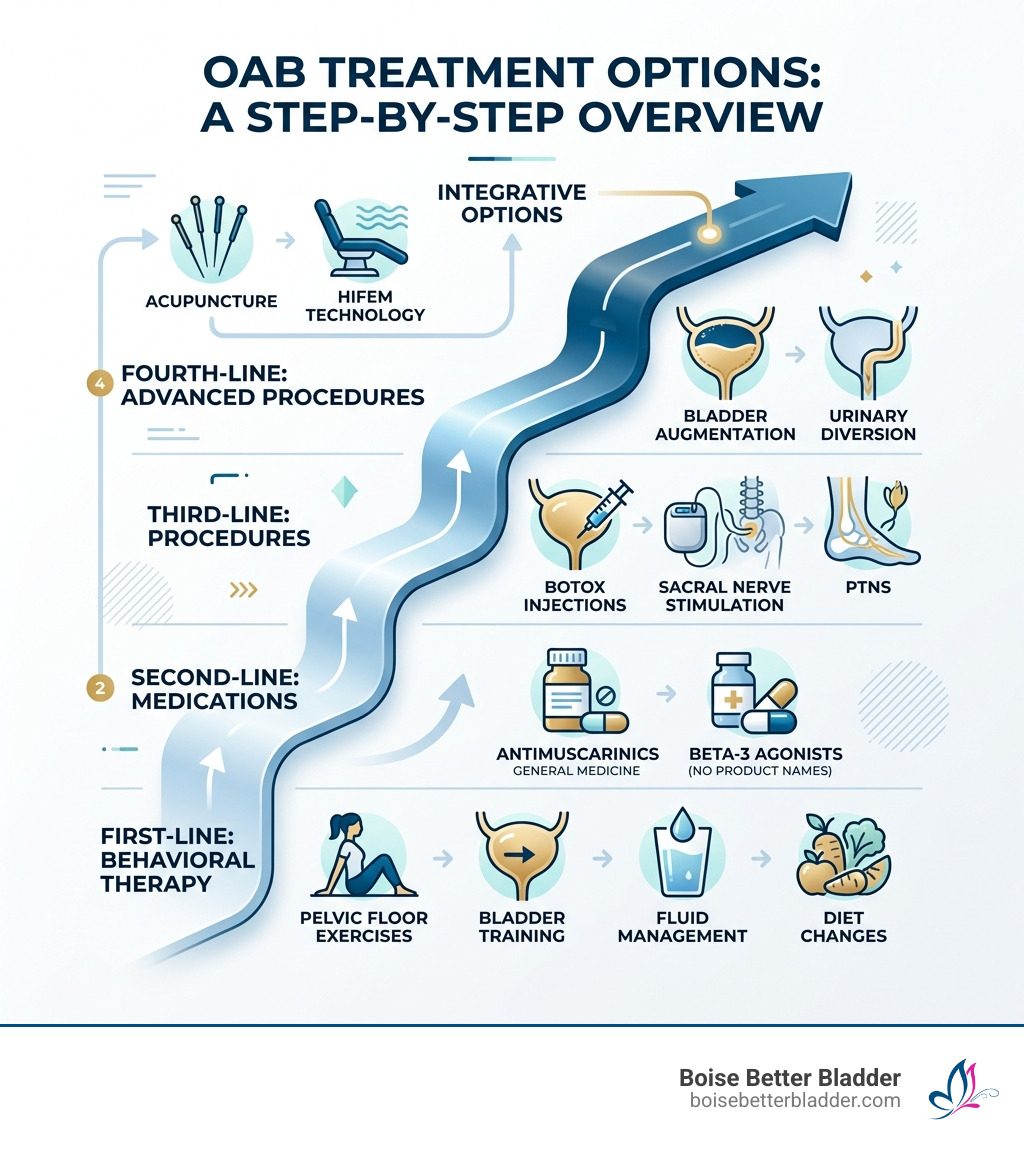
Overactive bladder treatment ranges from simple lifestyle changes to advanced clinical procedures. Here is a quick overview of your main options:
Treatment Level Examples First-line (Behavioral) Bladder training, pelvic floor exercises, fluid management, diet changes Second-line (Medication) Antimuscarinics (e.g., Oxybutynin, Tolterodine), beta-3 agonists (e.g., Mirabegron, Vibegron) Third-line (Procedures) Botox injections, sacral nerve stimulation, percutaneous tibial nerve stimulation (PTNS) Fourth-line (Surgical) Bladder augmentation, urinary diversion Integrative options Acupuncture, HIFEM pelvic floor technology
Most clinical guidelines recommend starting with behavioral strategies and only moving to medications or procedures if needed.
If you have been quietly managing leaks, planning your day around restroom access, or avoiding activities you used to love — you are not alone. OAB affects up to 40% of older women and 30% of older men. And yet, many people are told it is simply a normal part of aging and something they just have to live with.
That is not the whole story.
Your bladder is not broken. It is sending signals — and understanding why it is sending them is the first step toward lasting relief. The urgency, the frequency, the nighttime interruptions — these are patterns. And patterns can be understood, addressed, and often resolved.
This guide walks you through the full spectrum of treatment, from foundational behavioral changes to advanced options, so you can make informed decisions about what is right for your body.
I'm Dr. Kimberly Thompson, DACM, L.Ac., and I have spent years working with women who came to me after conventional overactive bladder treatment left them frustrated, unheard, or still struggling. My approach combines advanced pelvic floor technology, acupuncture, and whole-body assessment to address not just the symptoms — but the patterns driving them.
Understanding the Patterns of Overactive Bladder
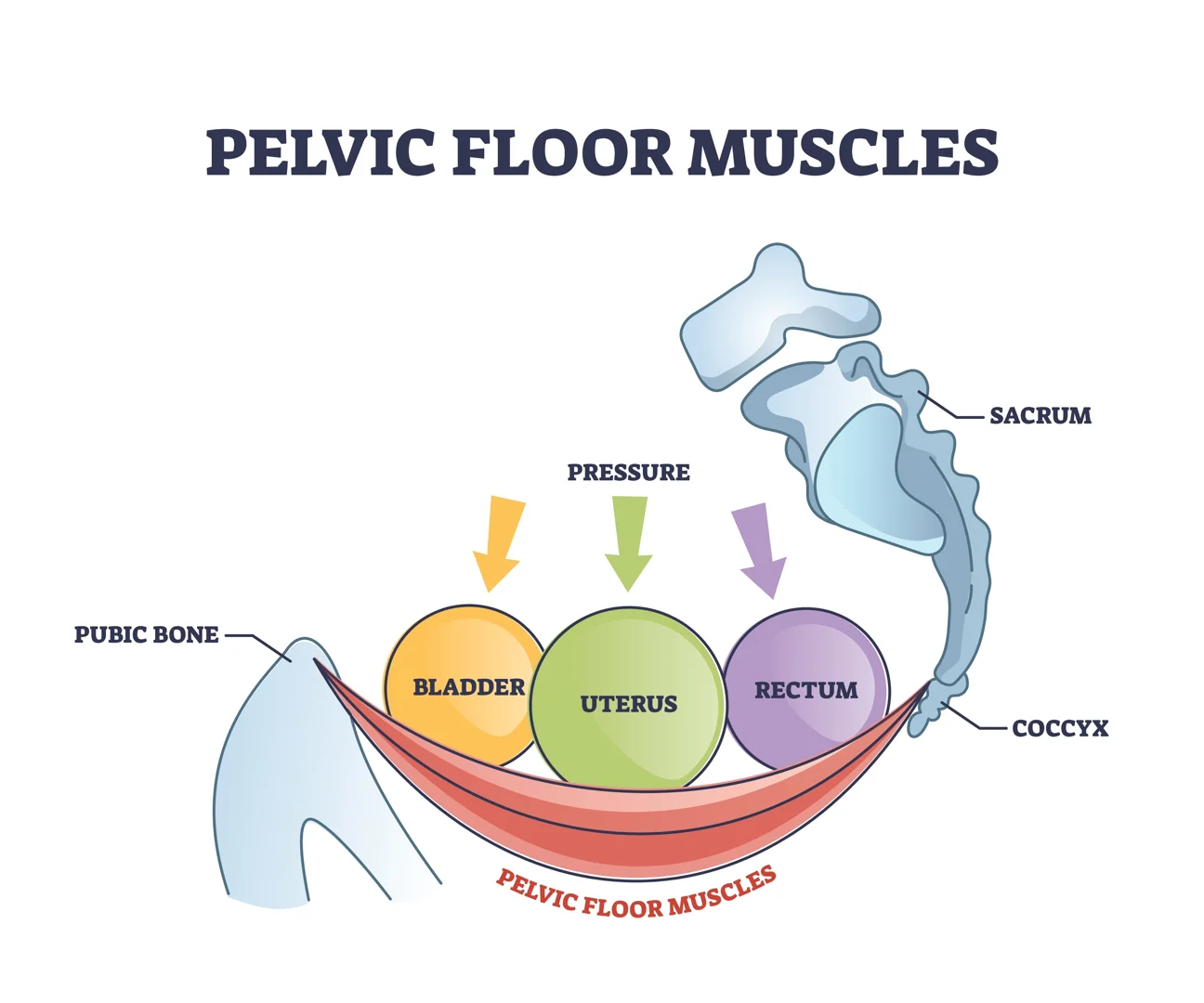
To understand overactive bladder treatment, we must first understand how the bladder is designed to function. The bladder is essentially a hollow muscular balloon made of the detrusor muscle. In a balanced state, this muscle stays relaxed while the bladder fills, and the pelvic floor muscles stay contracted to keep the "exit" closed.
When the bladder is full, the nervous system sends a signal to the brain. You then make a conscious decision to find a restroom, at which point the brain signals the detrusor muscle to contract and the pelvic floor to relax.
In the case of OAB, this communication loop becomes "noisy." The detrusor muscle may contract involuntarily even when the bladder isn't full, or the nerves may send "full" signals prematurely.
The body works in patterns. When these signals become disorganized, we see the following shifts in behavior:
Feature Normal Pattern OAB Pattern Frequency 6–8 times per 24 hours 8+ times per 24 hours Urgency Gradual build-up of sensation Sudden, "must go now" command Nocturia 0–1 times per night 2+ times per night Control Sufficient time to reach a bathroom Frequent leaks before reaching a bathroom
Recognizing the Need for Overactive Bladder Treatment
The primary signals of OAB are urgency, frequency, and nocturia. Urgency is that sudden, compelling desire to pass urine that is difficult to defer. Frequency is defined as needing to urinate more than eight times in a 24-hour period. Nocturia involves waking up more than once a night to urinate, which significantly disrupts restorative sleep.
If these signals are present, it is important to rule out other temporary causes like a urinary tract infection (UTI) or bladder stones. However, for many, these symptoms persist for years. You can learn more about the clinical symptoms and causes of OAB to see how they align with your experience.
The Impact of Hormonal and Life Changes
For women in Boise and Meridian, life transitions often play a major role in bladder health. During menopause, declining estrogen levels lead to a condition known as Genitourinary Syndrome of Menopause (GSM). Because estrogen receptors are located throughout the bladder, urethra, and pelvic floor, a lack of this hormone can cause tissues to become thinner, drier, and less elastic.
Similarly, the physical strain of childbirth can stretch or weaken the pelvic floor muscles and the nerves that control them. Over time, these structural changes contribute to a loss of coordination. At our clinic, we focus on how these changes affect your quality of life and how to restore that lost function.
First-Line Behavioral Strategies and Lifestyle Adjustments
In our clinical experience, the most sustainable overactive bladder treatment starts with retraining the brain and the bladder to communicate more effectively. These are often called "behavioral therapies."
Bladder Training: This involves scheduled voiding. If you currently feel the urge every hour, we might set a goal to wait 1 hour and 15 minutes, gradually increasing the interval over 6 to 8 weeks.
Fluid Management: Many people stop drinking water altogether to avoid leaks. Paradoxically, concentrated urine can irritate the bladder lining, making urgency worse. We recommend 6–8 glasses of water a day, while limiting intake 2–3 hours before bed.
Managing Constipation: A full rectum puts direct pressure on the bladder. Increasing fiber and staying hydrated helps keep the bowels regular, which in turn gives the bladder more "breathing room."
Strengthening the Foundation with Pelvic Floor Exercises
You have likely heard of Kegel exercises. When done correctly, they strengthen the muscles that support the bladder. However, many women find it difficult to isolate these muscles or perform enough repetitions to see a change.
Biofeedback can be helpful to ensure you are engaging the right muscles. Another technique is "quick flicks"—performing several rapid pelvic floor contractions when a sudden urge hits. This sends a neurological signal to the bladder muscle to relax. You can explore more info about how it works to understand the mechanics of muscle-nerve coordination.
Identifying and Managing Bladder Irritants
Certain foods and drinks act as "triggers" that irritate the bladder lining or act as diuretics. While everyone is different, common culprits include:
Caffeine (coffee, tea, energy drinks)
Alcohol
Carbonated beverages (even sparkling water)
Artificial sweeteners
Spicy foods and acidic fruits (citrus, tomatoes)
Symptoms are signals. If your urgency spikes after your morning latte, your bladder is giving you a clear piece of data about its current sensitivity.
Understanding the Spectrum of Care: Beyond Symptom Management
When behavioral changes aren't enough, many people turn to the next levels of the medical "ladder." It is important to distinguish between treatments that mask symptoms and those that address why the symptoms started.
Navigating the Treatment Landscape: Symptom Management vs. Root Cause
In the journey to manage OAB, many individuals first explore approaches designed to directly manage symptoms. These often aim to calm bladder muscle activity or modify nerve signals. While these methods can offer temporary relief for some, it's important to recognize that they primarily address the signal rather than the deeper patterns contributing to the symptoms.
Medications: Antimuscarinics and Beta-3 agonists are common. They work by relaxing the bladder muscle. However, they can come with side effects like dry mouth, constipation, or blurred vision.
Botox Injections: This involves injecting botulinum toxin directly into the bladder muscle to "paralyze" some of the overactive contractions. This is a temporary measure, usually lasting about six months.
Nerve Stimulation: Procedures like PTNS (Percutaneous Tibial Nerve Stimulation) or Sacral Neuromodulation use electrical pulses to "reset" the nerve signals between the bladder and brain.
The body works in patterns. True, lasting balance often comes from understanding and addressing these underlying patterns. For a detailed look at the medical standards, you can review the AUA Clinical Guidelines for OAB.
When to Look Deeper: Seeking Root Cause Solutions
If you find yourself navigating side effects, or if your symptoms persist despite conventional treatments, it's a signal that your body might be asking for a different approach. This is where understanding the root cause becomes paramount.
Your body isn’t failing you. It is simply stuck in a pattern of over-communication or weakness. If pads and pills feel like a "band-aid," it may be time to look at the structural and neurological foundation of your pelvic health.
Restoring Balance: A Holistic View of Pelvic Health
At Boise Better Bladder, we believe that overactive bladder treatment should be comfortable and restorative. We don't just want to stop the leaks; we want to restore the strength and coordination that allows you to live without worry.
Integrating Modern Technology with Whole-Body Healing
Our signature program in Boise and Eagle integrates two powerful modalities to address the root cause of OAB:
HIFEM Technology: We use FDA-cleared High-Intensity Focused Electromagnetic technology. While you sit fully clothed in a specialized chair, the device delivers the equivalent of 25,000 Kegel exercises in just 30 minutes. This goes far beyond what manual exercises can achieve, deeply strengthening the pelvic floor and "re-educating" the muscles.
Holistic Acupuncture: We use specific acupuncture techniques to calm the nervous system and improve circulation to the pelvic organs. This helps "turn down the volume" on those urgent bladder signals and supports the body's natural healing process.
By combining muscle strengthening with improved nerve communication, we support long-term results—not just temporary relief. Many of our patients see a 75% reduction in pad use and a significant increase in their quality of life. You can read more info about patient experiences from women in our Idaho community who have found success with this non-invasive approach.
If you are curious about how this might feel, we offer a free demo of our services so you can experience the technology for yourself.
Bringing It All Together
Managing an overactive bladder is not just about "holding it longer." It is about restoring the delicate balance between your muscles, your nerves, and your brain.
Symptoms are signals. When we listen to those signals and address the underlying weakness or nerve irritation, the body can return to a state of ease. Whether you start with a bladder diary or seek advanced HIFEM therapy, the goal is the same: to give you back your freedom and confidence.
At Boise Better Bladder, we are here to help you navigate these patterns with clinical clarity and empathy. Your journey to better health starts with understanding that your body is capable of change.
How long does it take to see results from treatment?
While behavioral changes and medications can take 4 to 8 weeks to show full effect, many patients using our HIFEM Signature Program report noticeable improvements in urgency and control within just a few weeks.
Is overactive bladder a normal part of aging?
No. While OAB is more common as we age due to hormonal shifts and muscle changes, it is a treatable medical condition. You do not have to accept leaks or frequent bathroom trips as an inevitable part of getting older.
When should I seek professional help for my symptoms?
If your bladder habits are dictating your schedule, interrupting your sleep, or causing you to avoid social situations, it is time to seek an evaluation. Early intervention can prevent the muscles from weakening further. You can start your journey to better bladder health by learning more about our non-invasive process today.
