
Menopause and Your Bladder: Why It Happens and How to Fix It

When we look at the female anatomy, we see a beautiful, complex system of interdependence. The bladder doesn't sit in isolation; it rests upon the pelvic floor and is neighbors with the uterus and vaginal wall. In clinical terms, we often look at the "bladder trigone"—a triangular region at the base of the bladder that is incredibly sensitive to hormonal shifts.
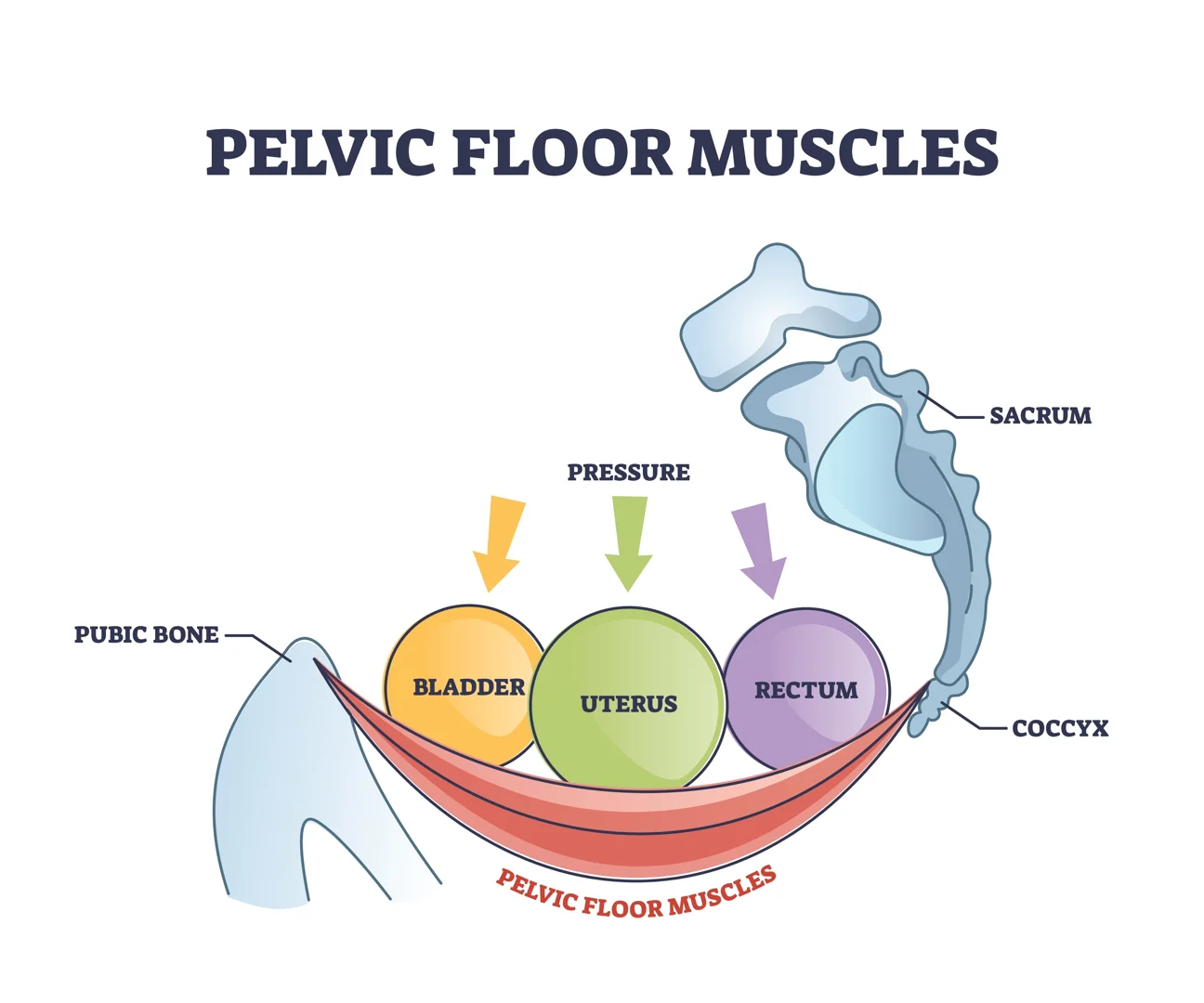
The reason menopause bladder issues are so prevalent is that the tissues of the lower urinary tract are among the most estrogen-sensitive in the entire female body. Estrogen receptors are densely packed into the bladder lining, the urethra, and the pelvic floor muscles. These receptors act like tiny docking stations; when estrogen levels are high, they signal the body to maintain blood flow, collagen production, and tissue thickness.
As we transition into menopause, the decline in estrogen causes these "docking stations" to go quiet. According to scientific research on bladder health during menopause, this leads to a predictable pattern of decline. The urethral sphincter—the "gatekeeper" that keeps urine in—thins out. The bladder lining becomes more irritable. The pelvic floor muscles, which provide the structural foundation for the bladder, lose their snap and elasticity.
At Boise Better Bladder, we focus on How It Works by recognizing that these aren't just "old age" problems; they are structural and hormonal changes that require a targeted response to restore the body's natural coordination.
The Role of Estrogen Decline
The drop in estrogen does more than just cause hot flashes; it initiates a process known as urogenital atrophy, or more modernly, Genitourinary Syndrome of Menopause (GSM).
Think of estrogen as the "moisturizer and structural support" for your internal tissues. When it leaves:
Collagen Loss: The "glue" that keeps tissues plump and stretchy dissolves, leading to sagging and weakness in the pelvic floor.
Vaginal pH Shifts: In our younger years, the vagina is acidic (pH 3.5–5.0), which keeps bad bacteria away. Without estrogen, the pH rises, making the environment more hospitable to the bacteria that cause UTIs.
Mucosal Lining: The lining of the urethra and bladder thins, making it feel like you have a UTI even when you don't (this is often called "sterile cystitis" or urgency).
Your body isn't failing you; it is reacting to a change in its internal chemistry.
Why Menopause Bladder Issues Start in Perimenopause
Many women are surprised to find that menopause bladder issues often begin in their early to mid-40s, long before their final period. This is the perimenopause phase, characterized by hormonal fluctuations rather than a steady decline.
During this time, the nervous system can become "twitchy." One month estrogen is high, the next it is low. This inconsistency disrupts the communication between the brain and the bladder. You might notice early warning signs like:
Needing to "map" bathrooms when you go shopping.
A slight leak only when you have a very full bladder and sneeze.
Waking up once a night when you used to sleep through.
We often see women in our Boise and Meridian locations who feel frustrated because their doctors told them they were "too young" for menopause symptoms. However, testimonials from our patients show that early intervention is key. If we can strengthen the pelvic floor and stabilize nerve communication early, we can often prevent the more severe symptoms that arrive in postmenopause.
The Three Patterns of Urinary Incontinence
In my practice, I find it helpful to categorize menopause bladder issues into three distinct patterns. Understanding which pattern your body is following allows us to choose the right tools for restoration.
Identifying Stress Incontinence Patterns
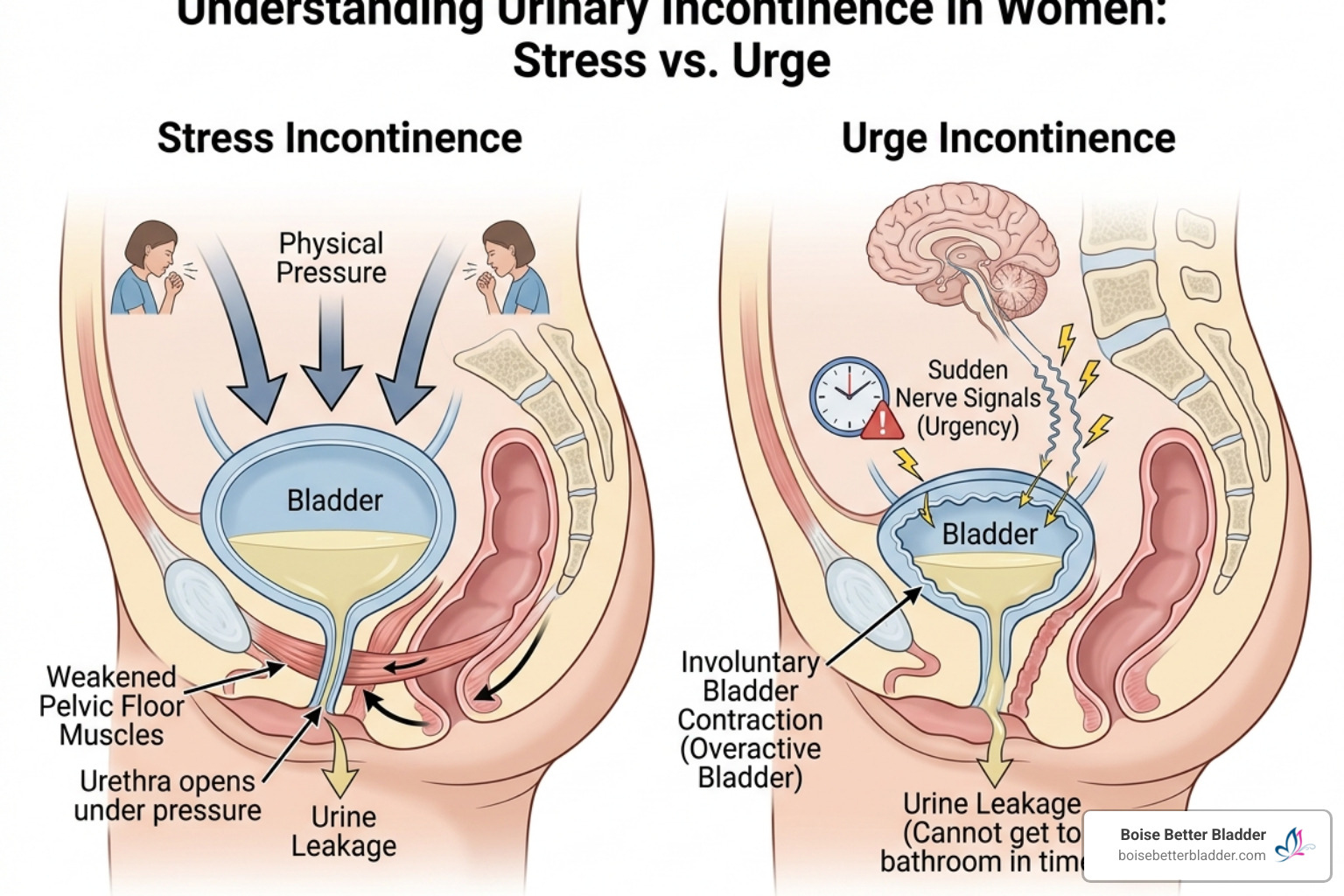
Stress incontinence is a mechanical issue. It happens when the "closing pressure" of the urethra is weaker than the "downward pressure" from the abdomen. When you cough, laugh, jump, or lift something heavy, that physical stress pushes urine past a weakened pelvic floor.
The root cause here is often a loss of urethral sphincter integrity and pelvic floor muscle mass. These muscles have simply lost the strength to "brace" against sudden movement. It is the most common type of incontinence, affecting roughly 40% of menopausal women with bladder issues.
Recognizing Urge Incontinence and Menopause Bladder Issues
Urge incontinence (often part of Overactive Bladder or OAB) is more of a communication issue. It’s that sudden, overwhelming "I have to go NOW" feeling that often results in a leak before you reach the door.
In this pattern, the detrusor muscle (the muscle that wraps around the bladder) becomes unstable. Because of the low-estrogen environment, the nerves in the bladder wall become hypersensitive. They send "Full!" signals to the brain when the bladder is actually only 20% full. This leads to:
Frequency: Going more than 8 times a day.
Nocturia: Waking up multiple times at night, which disrupts your sleep and impacts your mental health.
Many women experience Mixed Incontinence, which is a combination of both mechanical weakness and nerve urgency. If this sounds like you, you can Book an Appointment for a specialized evaluation to see which pattern is dominant.
Restoring the Foundation: Treatment and Relief
The standard advice for menopause bladder issues is usually "do your Kegels" or "take this pill." But for many women, traditional Kegels are hard to do correctly, and medications often come with side effects like dry mouth or constipation.

At Boise Better Bladder, we look at the root cause. If the muscles are weak and the nerves are misfiring, we need to address both.
Our approach in the Treasure Valley combines:
HIFEM Technology: This FDA-cleared technology uses High-Intensity Focused Electromagnetic energy to stimulate the pelvic floor. In one 30-minute session, it triggers the equivalent of 25,000 supramaximal Kegel exercises. It does the work for you, reaching deep muscle fibers that are difficult to activate on your own.
Holistic Acupuncture: We use specific techniques to "calm" the nervous system and improve circulation to the pelvic organs. This helps reset the communication pathways between the brain and the bladder, reducing that "emergency" urge feeling.
Symptoms are signals. When we listen to them and provide the right support, the body can regain its balance. You can experience this for yourself with our Free Demo Offer Home.
Non-Hormonal Pathways to Recovery
While hormone replacement therapy (HRT) can be helpful for some, many women seek non-hormonal options due to medical history or personal preference.
Bladder Training: This involves "timed voiding." Instead of going every time you feel a tiny urge, you gradually extend the time between bathroom trips to "stretch" the bladder's capacity and retrain the brain.
Circulation Improvement: Tissues need blood flow to heal. Both acupuncture and HIFEM increase local circulation, bringing oxygen and nutrients to the atrophic tissues.
Biofeedback: Learning to feel which muscles are actually working is vital.
For those in the Boise area, there is a great guide for women in Boise that explores how these pelvic health foundations impact your daily life.
Lifestyle Adjustments for Menopause Bladder Issues
The body works in patterns, and sometimes our habits reinforce the wrong ones. Small shifts can make a big difference in managing menopause bladder issues:
Identify Bladder Irritants: Caffeine, alcohol, carbonated drinks, and artificial sweeteners can "tickle" the bladder lining, making urgency worse.
Hydration Balance: Many women stop drinking water to avoid leaks, but this makes urine concentrated and irritating, which actually increases urgency. Aim for 1.5 to 2 liters of water, spread throughout the day.
Weight Management: Research shows that losing even 5-8% of body weight can significantly reduce the pressure on the pelvic floor.
If you have questions about your specific irritants or habits, Contact Us.
Frequently Asked Questions about Menopause Bladder Issues
Is it normal to leak urine during menopause?
It is very common, but it is not normal. Just because many women experience it doesn't mean you have to accept it as a permanent part of your life. Up to 50% of postmenopausal women deal with some form of incontinence, but it is a treatable condition.
Does vaginal estrogen help with bladder control?
Yes, for many women, localized vaginal estrogen (creams, rings, or tablets) can be very effective. Unlike oral estrogen, which can sometimes worsen incontinence, local estrogen stays in the pelvic tissues and helps thicken the urethral and bladder lining. It is often used in conjunction with pelvic floor strengthening for the best results.
Can menopause cause frequent UTIs?
Absolutely. As mentioned earlier, the rise in vaginal pH and the thinning of the tissue make it easier for bacteria to travel up the urethra. Roughly 10-15% of women over 60 experience recurrent UTIs (two or more in six months) directly linked to these hormonal changes.
Conclusion: Bringing It All Together
Menopause bladder issues are a complex pattern of hormonal, mechanical, and neurological changes. When estrogen declines, the structural foundation of your pelvic health shifts. But remember: your body isn't failing you. It is simply communicating that the old ways of maintaining balance are no longer sufficient.
By recognizing the root cause—whether it's the thinning of tissues, the weakening of the pelvic floor, or the misfiring of nerve signals—we can create a pathway back to confidence. Whether through lifestyle changes, bladder retraining, or advanced technology like the HIFEM program we offer here in Boise, Meridian, and Eagle, you have options.
The body works in patterns. Once you understand the pattern, you can change the outcome.
If you are ready to stop "mapping" bathrooms and start living with confidence again, we invite you to learn more about How It Works and take the first step toward a stronger foundation.
