
Gentle Herbs and Daily Habits to Calm an Overactive Bladder
Natural Bladder Control Remedies: Where to Start
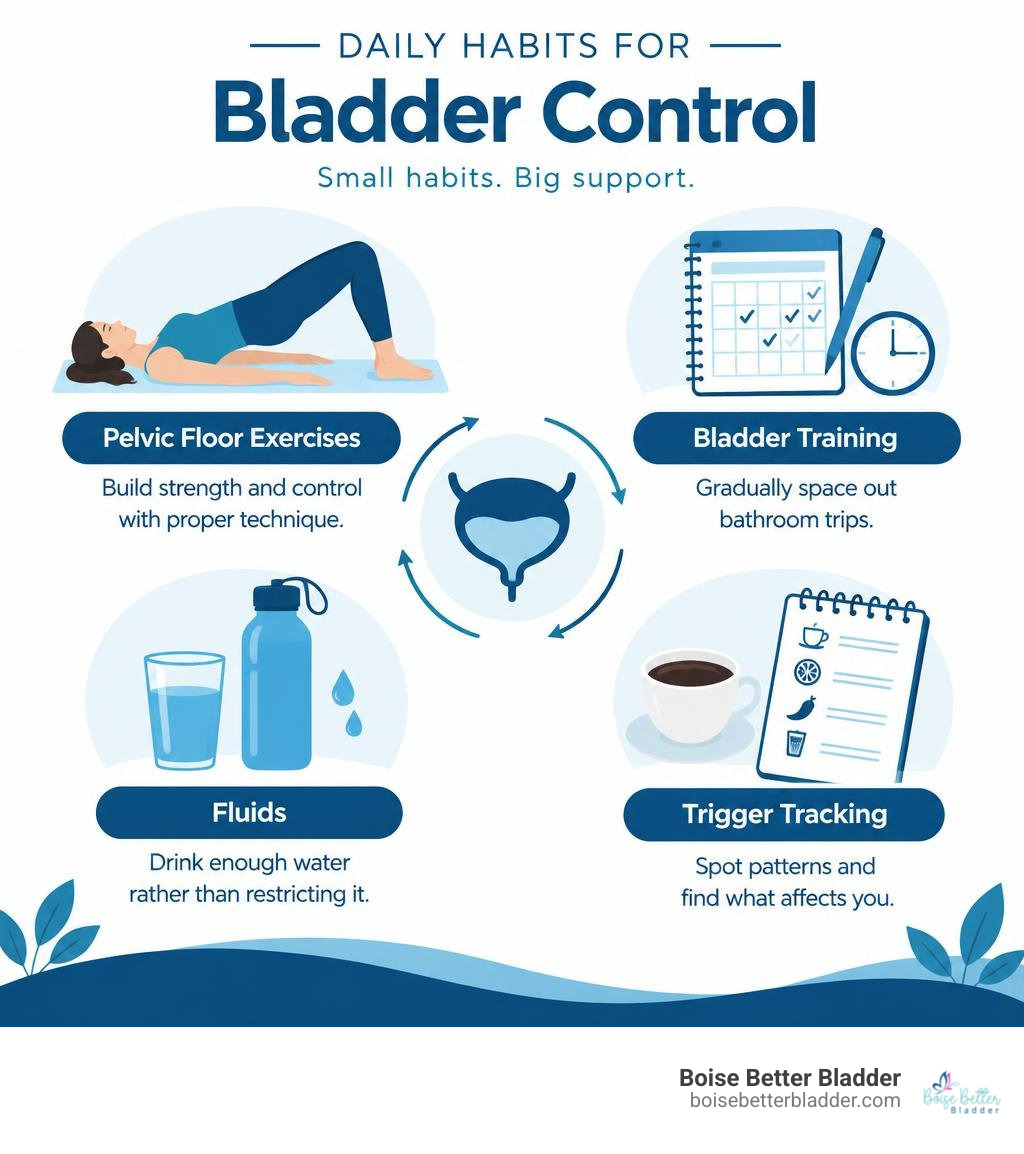
Start with the habits that have the strongest evidence: practice pelvic floor exercises with good technique, use a bladder diary to gradually space out bathroom trips, and see whether cutting back on caffeine eases urgency. Drink enough water rather than restricting it, and address constipation if it is adding pressure. Herbs such as pumpkin seed extract have shown early promise, but the evidence is limited, so check with a clinician before trying a supplement.
Leaks and sudden urges are not simply a sign of aging. They can reflect patterns in how the bladder muscle, pelvic floor, and nervous system work together. Your body isn't failing you.
I'm Kimberly Thomspon, a licensed acupuncturist with a doctorate in acupuncture and Chinese medicine. I've worked with hundreds of women facing bladder and pelvic floor concerns, and I use that experience to help them weigh natural bladder control remedies with care.
Understanding the Root Causes of Bladder Urgency and Leaks
Many people believe that sudden urinary urges or leakage are simply the result of drinking too much liquid or having a "weak bladder." While common, this explanation is incomplete. Bladder control depends on a continuous feedback loop among the brain, the spinal cord, the pelvic floor musculature, and the bladder wall itself.
Overactive bladder (OAB) presents a high prevalence of 16–18% worldwide, and lower urinary tract symptoms (LUTS) impact over 50% of the global adult population. At the center of these symptoms is detrusor overactivity—involuntary contractions of the muscular wall of the bladder during the filling phase. When neuromuscular miscommunication occurs, the brain interprets standard bladder filling as an immediate emergency.
Symptoms are signals. In our clinic, we evaluate several underlying pathways that cause this disruption:
Myogenic Excitability: Increased sensitivity and spontaneous twitching of the detrusor muscle cells, which lowers the threshold for an urge.
Altered Urothelial Signaling: The inner lining of the bladder (the urothelium) communicates chemical signals to nearby sensory nerves. Irritation or inflammation can amplify these signals, causing urgency even when the bladder contains only a small amount of urine.
Hormonal Shifts: Declining estrogen levels often trigger menopause bladder issues, as estrogen helps maintain mucosal thickness, elasticity, and circulation throughout the urethra and pelvic floor.
Mechanical and Structural Stress: Excessive intra-abdominal pressure from straining, chronic coughing, or structural changes after childbirth can destabilize the bladder neck. Women navigating postpartum incontinence help often experience this temporary loss of pelvic support.
Addressing these symptoms requires looking beyond quick fixes to find an effective overactive bladder treatment strategy that calms the nervous system and restores muscular support.
Evidence-Based Natural Bladder Control Remedies and Herbal Extracts
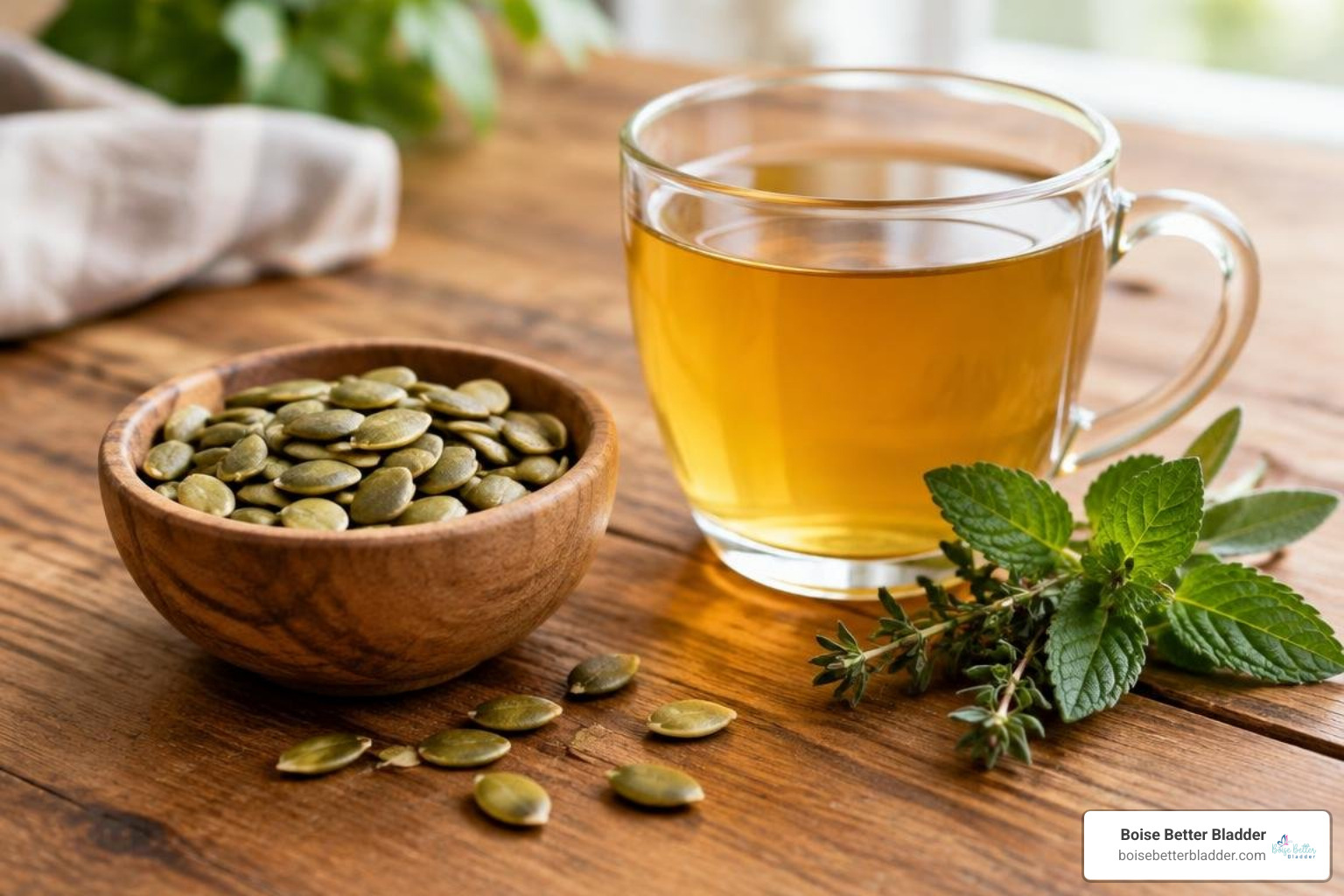
When people search for natural bladder control remedies, they often look for botanical extracts that can soothe irritated tissues and quiet overactive nerve pathways. Plant-based compounds interact with the body through several distinct physiological mechanisms, including muscarinic receptor modulation, regulation of transient receptor potential (TRP) channels, and reduction of localized oxidative stress.
Scientific reviews on medicinal plants and natural products for treating overactive bladder have identified dozens of single-herb agents and formulations that demonstrate anti-spasmodic or uroprotective properties (Chen et al., 2024). The body works in patterns, and these botanical therapies help restore balance across these neuromuscular networks.
Herbal Teas and Botanicals as Natural Bladder Control Remedies
Several botanicals have demonstrated meaningful clinical and preclinical results for bladder soothing:
Pumpkin Seed Oil (Cucurbita pepo): Rich in phytosterols and essential fatty acids, pumpkin seed oil helps increase bladder compliance and reduce detrusor pressure, helping to calm sudden urinary frequency.
Green Tea (Camellia sinensis): Containing high concentrations of epigallocatechin gallate (EGCG), green tea provides potent antioxidant and anti-inflammatory support for the bladder lining. However, because it contains mild amounts of caffeine, researching how drinking herbal and green tea for bladder problems affects your individual system is key; moderate, decaffeinated options are often best.
Capsaicin (Capsicum annuum): In clinical studies on neurogenic hyperreflexic bladder, intravesical capsaicin treatment demonstrated clinical or urodynamic symptom improvement in 84.3% of patients, increasing peak bladder capacity from 106 milliliters to 302 milliliters by desensitizing overactive C-fiber sensory nerves.
Bearberry (Arctostaphylos uva-ursi) and Cranberry (Vaccinium macrocarpon): While cranberry proanthocyanidins help prevent bacterial adherence, bearberry contains arbutin, which exerts mild antimicrobial and soothing properties that reduce mucosal irritation. Further research into the use of herbal supplements for overactive bladder continues to explore these combined plant actions.
Traditional Formulations and Targeted Supplements
Traditional medical systems have long used multi-herb blends to address complex constitutional imbalances:
Gosha-jinki-gan (GJG): A traditional Japanese Kampo blend of ten herbs. Clinical trials studying doses of 7.5 mg daily have noted significant reductions in daytime frequency and improved bladder capacity via central nervous system and peripheral nerve pathways.
Ganoderma lucidum (Reishi): In clinical evaluations, 6 mg of this medicinal mushroom extract daily improved lower urinary tract symptoms and International Prostate Symptom Scores (IPSS) by inhibiting 5-alpha reductase and calming smooth muscle spasms.
Bu-Zhong-Yi-Qi-Tang & Ba-Wei-Di-Huang-Wan: Classical Traditional Chinese Medicine formulas used to tonify pelvic energy, strengthen connective tissue, and regulate fluid metabolism.
Acupuncture Integration: Pairing herbal protocols with acupuncture for pelvic floor function supports nerve conduction, regulates sacral nerve pathways (S2–S4), and reduces autonomic nervous system stress.
Magnesium Glycinate & Vitamin D3: Magnesium helps prevent detrusor muscle spasms, while maintaining healthy vitamin D levels is crucial; deficiency is associated with up to a 45% higher risk of urinary incontinence in older women.
Daily Habits and Behavioral Retraining for Bladder Health

Herbal supports work best when paired with daily behavioral conditioning. About 70% of women who use home remedies, targeted exercises, and behavioral therapies report they are satisfied with their results. Behavioral therapies re-educate the neurological pathways that govern voiding reflex loops.
Step-by-Step Retraining and Pelvic Muscle Strengthening
Bladder retraining restores communication between the prefrontal cortex and the detrusor reflex:
Track Your Baseline: Keep a voiding log for three days to identify your current natural interval (e.g., voiding every 60 minutes).
Establish Scheduled Voiding: Set a strict schedule to use the bathroom every 75 minutes, regardless of whether you feel the urge.
Practice Urge Suppression: When an unexpected urge strikes before your scheduled time, sit down, breathe deeply, and perform 5 to 6 quick pelvic floor contractions to send an inhibitory reflex to the bladder wall.
Progressive Expansion: Once you can maintain an interval for a full week without leaks, increase the time between visits by 15 to 30 minutes. A structured bladder-retraining program typically takes six to eight weeks to prove effective.
Pairing this process with weak pelvic floor exercises and targeted pelvic floor exercises for women builds the physical endurance needed to support urge suppression.
Dietary Adjustments and Hydration Management
Many people with bladder urgency reduce their fluid intake, thinking it will prevent trips to the bathroom. However, restricting water concentrates urine, and concentrated acidic urine irritates the urothelium, triggering stronger muscle spasms.
Fluid Titration: Aim for 6 to 8 glasses (roughly 1.5 to 2 liters) of total fluids daily, distributed evenly. Stop heavy drinking two hours before bedtime.
Eliminate Known Irritants: Minimize caffeine (coffee, energy drinks), alcohol, carbonated beverages, artificial sweeteners (aspartame, sucralose), and high-acid tomato-based foods.
Soothing Substitutions: Swap citrus juices for water infused with cucumber or low-acid fruits, and choose anti-inflammatory fats like extra virgin olive oil.
Lifestyle Modifications: Weight, Constipation, and Smoking
Systemic factors directly influence pelvic floor mechanics:
Weight Management: Excess weight places continuous pressure on the bladder and pelvic floor. Women with obesity who lose 10 percent of their body weight saw improved bladder control by 50 percent.
Managing Constipation: The rectum sits adjacent to the bladder. Chronic constipation and hard stool press against the bladder wall, reducing its capacity and irritating local nerves. Increase dietary fiber and stay hydrated to maintain regular, effortless bowel movements.
Smoking Cessation: Chronic coughing from smoking repeatedly stresses the pelvic support system, while nicotine directly stimulates detrusor contractions.
Evaluating Natural Bladder Control Remedies and Long-Term Safety
Natural therapies offer accessible ways to support the body, but they should be used thoughtfully. Understanding how different remedies work helps you build a safe, sustainable daily routine.
Remedy / Habit | Primary Mechanism | Clinical Evidence | Safety & Considerations |
|---|---|---|---|
Pelvic Floor Retraining | Neuromuscular conditioning & urethral support | High (first-line standard of care) | Completely safe; requires correct technique |
Bladder Retraining | Cortical inhibition of detrusor reflex | High (6–8 week protocol) | Highly effective; requires consistent tracking |
Pumpkin Seed Oil | Relaxes detrusor; increases compliance | Moderate (clinical trials) | Well tolerated; monitor for mild digestive changes |
Gosha-jinki-gan (GJG) | Calms bladder afferent nerve activity | Moderate (standardized trials) | Consult a doctor; ensure clean herbal sourcing |
Dietary Irritant Reduction | Minimizes chemical irritation of the urothelium | Moderate to High | Safe, straightforward elimination strategy |
Weight Reduction (10%) | Relieves chronic intra-abdominal pressure | High (up to 50% symptom reduction) | Systemic health benefits across all body systems |
Comparing Natural Remedies and Daily Habits
Conventional medications such as antimuscarinics (e.g., oxybutynin) or beta-3 adrenergic agonists (e.g., mirabegron) work by chemically blocking nerve receptors or relaxing smooth muscle. While they can be effective, antimuscarinics often cause side effects like dry mouth, constipation, blurred vision, and potential cognitive concerns with long-term use.
Natural remedies and behavioral therapies take a multi-target approach. By improving pelvic floor strength, reducing systemic inflammation, and retraining neural communication, they support the body's natural regulatory systems without these systemic side effects. Gaining a clear understanding of weak pelvic floor treatment empowers you to combine these strategies into a safe, sustainable plan.
Bringing It All Together: A Holistic Path to Lasting Bladder Control
Managing bladder urgency and leaks is rarely about relying on a single supplement or exercise. Long-term bladder health comes from combining gentle, consistent habits:
Hydrating appropriately with clean water while avoiding irritating triggers.
Supporting connective tissues and mucosal linings with targeted botanicals.
Retraining your nerve pathways using timed voiding and urge suppression.
Rebuilding core support through pelvic muscle strengthening.
When you understand how these systems work together, you can move from managing symptoms to addressing their root causes with confidence.
Frequently Asked Questions about Natural Bladder Control Remedies
How long does it take for natural remedies to improve bladder control?
Most behavioral adjustments, such as bladder retraining and pelvic floor exercises, take six to eight weeks of daily consistency to create noticeable neuromuscular changes. Herbal supplements generally require four to six weeks of regular use before you can fully evaluate their benefits.
Can dietary changes completely stop bladder leaks?
Dietary adjustments alone may not resolve stress incontinence caused by physical muscle weakness, but they often significantly reduce urgency, frequency, and urge incontinence by eliminating chemicals that irritate the bladder lining.
When should I consult a doctor for overactive bladder symptoms?
You should always schedule a medical evaluation if you notice blood in your urine (hematuria), experience pelvic or abdominal pain, run a fever, have painful urination, or notice sudden changes in bowel or bladder function.
Conclusion
Regaining steady, dependable bladder control is an empowering process of learning your body's patterns and supporting its natural pathways. By combining proven daily habits, dietary adjustments, and gentle botanicals, you can address the root causes of urinary urgency and rediscover comfort in your everyday life.
For women in Boise, Meridian, Eagle, Nampa, and Caldwell who want deeper restorative support, our team at Boise Better Bladder offers specialized, non-invasive programs. We combine FDA-cleared HIFEM technology—which delivers the equivalent of 25,000 supramaximal pelvic floor contractions in a single 30-minute session—with targeted acupuncture techniques to restore neuromuscular coordination, blood flow, and structural tone without medications or surgery. If you are currently navigating symptoms, you can also learn about supportive bladder control options while you focus on whole-body healing.
References
Chen H, Hoi MPM, Lee SMY. "Medicinal plants and natural products for treating overactive bladder.." Chinese medicine, 2024. PMCID PMC10967063.
