Top Bladder Control Guards for Women to Keep You Moving
What You Should Know Before Choosing Bladder Control Guards for Women
Bladder control guards for women are absorbent pads worn inside regular underwear to manage urinary leaks. They are not the same as menstrual pads — and using the wrong product is one of the most common mistakes women make.
Here is a quick overview of the most important things to know:
Topic Quick Answer Best for Light to heavy urinary leaks, stress incontinence, postpartum recovery How they differ from period pads Engineered for fast, thin urine flow — not slow, viscous menstrual blood Absorbency levels Light (2-drop) through Overnight (7-8 drop) Average pad lengths 7.5 inches (regular) to 27 inches (heavy/overnight) Top-rated brands Poise, Always Discreet, TENA, Amazon Basics Insurance coverage May be covered by Medicaid or private insurance with a doctor's prescription Reusable alternatives Leak-proof underwear, internal bladder supports Key risk to avoid Wearing two pads at once — it traps moisture and increases leaks
If you have been quietly planning your day around bathroom access, carrying extra pads in your bag, or hesitating before you laugh at a good joke — you are not alone, and your body is not simply failing you.
Symptoms are signals.
Bladder leaks are often a sign that something in the body's support system — the pelvic floor muscles and the nerve pathways that coordinate them — is not communicating the way it should. Understanding that pattern is the first step toward lasting relief.
For now, the right bladder control guard can give you real, immediate confidence while you work toward a deeper solution.
I'm Dr. Kimberly Thompson, DACM, L.Ac., and over the years I have worked with hundreds of women navigating this exact challenge — many of whom came to me after spending years cycling through bladder control guards for women, medications, and uncomfortable therapies that never addressed the underlying cause. In this guide, I will walk you through everything you need to know to choose the right product for your body right now, while also helping you understand the bigger picture of what your body is telling you.
Choosing the Right Bladder Control Guards for Women
When we look at how the body communicates through leaks, we are looking at a physical response to an internal pressure change. When you sneeze, laugh, run, or transition from sitting to standing, pressure rises inside your abdomen. If the pelvic floor muscles and support tissues cannot coordinate quickly enough to close the urethra, urine escapes.
While we work to restore that coordination, managing the physical leak requires the right tools. Many women walk down the grocery aisle in Boise or Meridian and feel completely overwhelmed by the wall of options. To choose the right Bladder Control Products for Urinary Incontinence, we must first look at the technology inside these guards.
Modern disposable bladder control guards are engineered to act as a one-way highway. They use rapid-wicking technology to pull liquid away from the surface immediately, moving it into an inner core made of superabsorbent polymers (SAP). These polymers turn the liquid into a gel, locking it away so it cannot squash back out when you sit down. Additionally, these cores feature pH-neutralization and odor control to actively block the chemical breakdown of urine, which is what causes both odor and skin breakdown.
Using a pad is what we call passive management. It handles the symptom after it happens, which is highly useful for daily confidence, but it is important to remember it does not change the physical pattern of why the leak occurred in the first place.
How Bladder Control Guards for Women Differ from Menstrual Pads
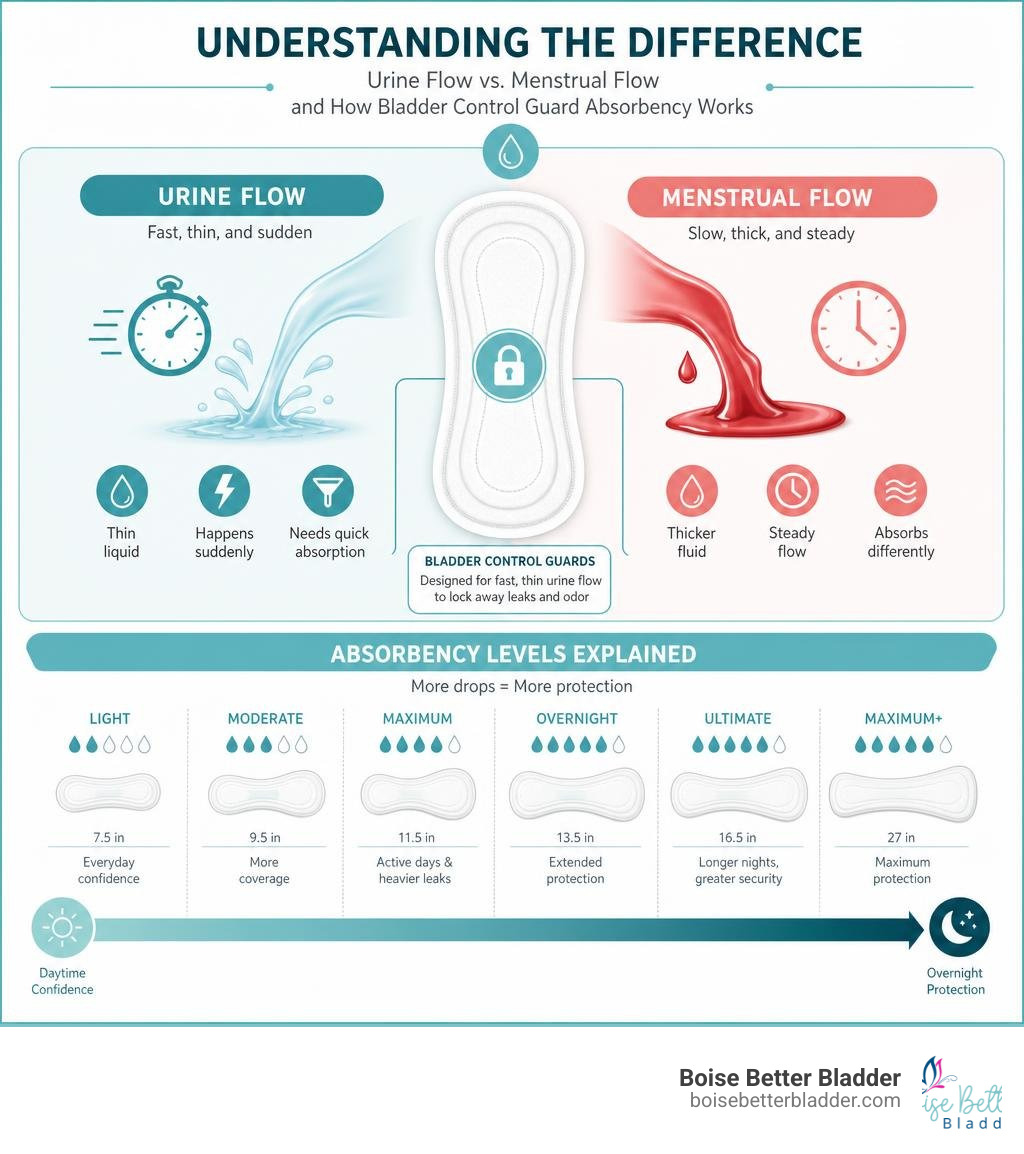
One of the most common patterns I see in my clinic is a woman using menstrual pads to manage her bladder leaks. It is an understandable choice — we are already familiar with period products, and they are easily accessible. However, the physical properties of menstrual blood and urine are entirely different, and using the wrong pad can lead to leaks, bulk, and skin irritation.
The body works in patterns.
Menstrual blood is thick, viscous, and flows slowly over several days. Menstrual pads are designed with flat, fibrous materials like cotton or wood pulp to absorb this slow-moving, heavy fluid.
Urine, on the other hand, is thin, highly liquid, and exits the body in rapid, high-volume surges. Bladder control guards are wider in the front and back than ultra-thin period pads. They feature specialized leak-block elastics along the sides to cradle your anatomy and catch sudden gushes. Inside, they contain superabsorbent polymer microbeads that can absorb up to several hundred times their weight in water almost instantly, locking the liquid away so your skin stays dry.
This difference in design is especially crucial when navigating postpartum recovery options, where the body is recovering from the physical stretch of childbirth and managing both postpartum fluid loss and temporary bladder leaks.
Why Menstrual Pads Fail for Urinary Leaks
When fast-flowing urine hits a menstrual pad, the fibers cannot absorb the liquid quickly enough. The thin fluid pools on the surface and runs right off the sides, leading to embarrassing leaks.
Furthermore, because menstrual pads lack rapid-wicking polymers, they hold moisture right against your skin. This trapped moisture compromises the skin’s natural barrier, leaving the delicate tissues of your pelvic region vulnerable to chafing, contact dermatitis, and bacterial overgrowth. This risk is particularly high during menopause-related bladder changes, when declining estrogen levels naturally make the vaginal and urethral tissues thinner, drier, and more sensitive to irritation.
Sizing, Absorbency, and Finding Your Correct Fit
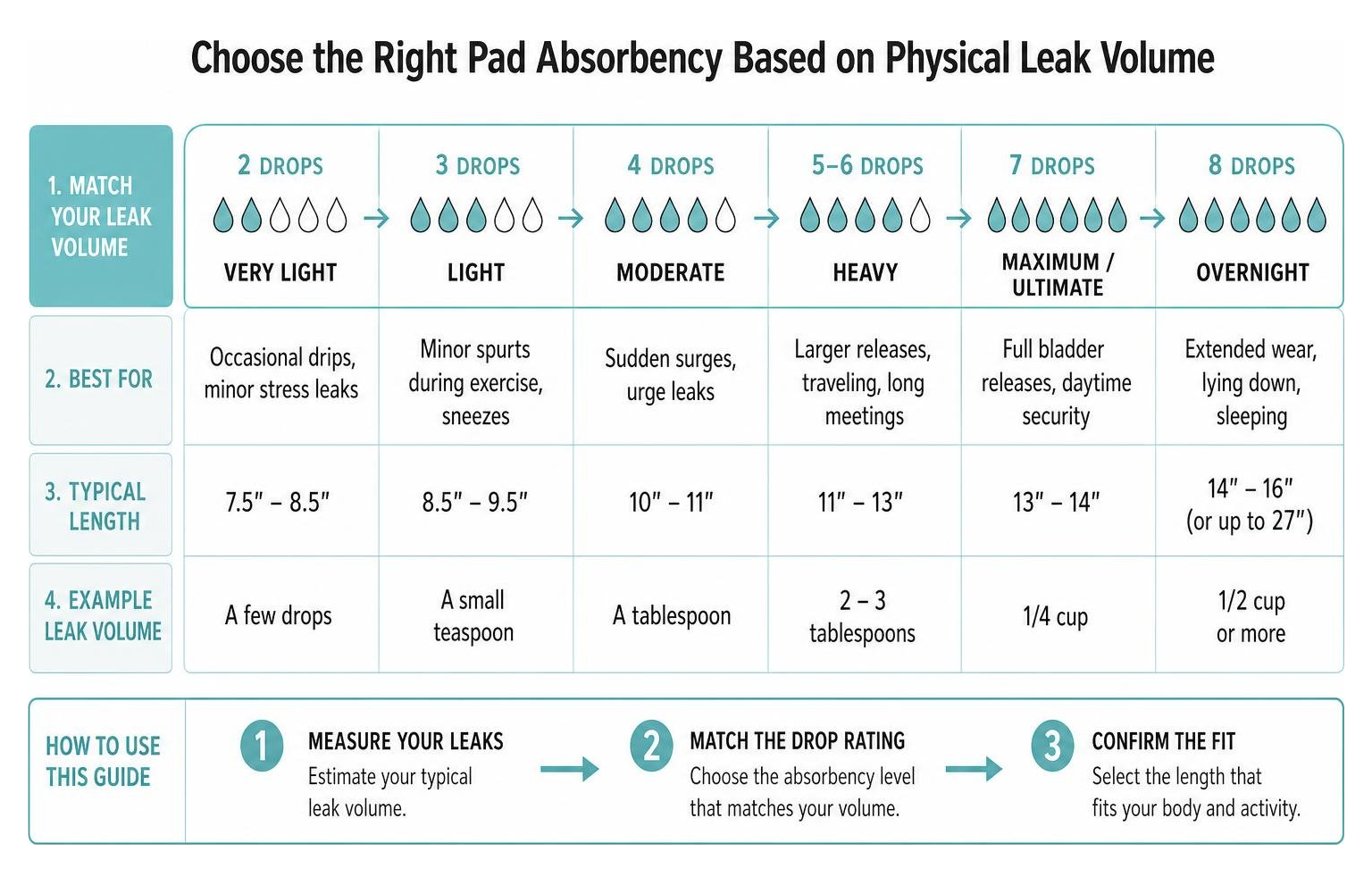
Finding the right guard is not about guessing; it is about matching the physical volume of your leaks to the capacity of the pad. The industry uses a standardized "drop rating system" to communicate absorbency, ranging from 2 drops (very light) to 8 drops (overnight or ultimate).
Absorbency Level Drop Rating Best For Typical Length Very Light 2 Drops Occasional drips, minor stress leaks 7.5" – 8.5" Light 3 Drops Minor spurts during exercise, sneezes 8.5" – 9.5" Moderate 4 Drops Sudden surges, urge leaks 10" – 11" Heavy 5–6 Drops Larger releases, traveling, long meetings 11" – 13" Maximum / Ultimate 7 Drops Full bladder releases, daytime security 13" – 14" Overnight 8 Drops Extended wear, lying down, sleeping 14" – 16" (or up to 27")
To explore the widest variety of consumer-rated options, you can consult the Best Incontinence Pads, Liners, Shields & Guards list, which showcases top-performing products like Poise, Always Discreet, and TENA based on real-world user feedback.
Choosing the Right Absorbency Level for Your Body's Signals
Your leak volume is a direct signal of what is happening internally.
Light drips (2-3 drops): Often indicate mild stress urinary incontinence. This is common when coughing, sneezing, or lifting.
Moderate surges (4 drops): Often point to urge incontinence, where the bladder spasms suddenly before you can reach the restroom. If you are seeking Overactive Bladder Treatment, moderate pads can provide safety while we work on calming the nervous system pathways that trigger these spasms.
Heavy leaks (5-7 drops): Might require a highly absorbent option like Maximum Protection Bladder Control Pads for Women | Prevail Protective Hygiene, which keeps the skin dry for up to 12 hours.
Overnight protection (8 drops): Specifically designed with extended rear coverage to prevent leaks while lying down, which is when gravity shifts the direction of urine flow.
Sizing and Fit: Preventing the 50% of Leaks Caused by Poor Fit
Did you know that up to 50% of leaks are caused by an incorrect fit rather than product failure?
A pad that is too small will not have enough surface area to catch a rapid surge, while a pad that is too large will bunch up, creating gaps where urine can escape. To ensure a proper fit:
Measure and match: Choose a length (ranging from regular 7.5-inch liners to 14-inch ultimate pads) that matches your body shape and underwear size.
Secure the adhesive: Peel the backing strip and press the pad firmly into close-fitting, snug underwear. Loose-fitting boxers or worn-out elastics will allow the pad to shift, leading to side leaks.
Check the elastics: Ensure the contoured leg gathers sit snugly in the groin crease without pinching.
Gender-Specific Designs: Women's vs. Men's and Unisex Options
The human body is shaped differently across genders, and incontinence products reflect this anatomy.
Women's bladder control guards are typically designed with a "figure-8" or contoured shape. They are wider at the front and back to provide targeted coverage where female anatomy releases fluid.
In contrast, male guards are triangular, cup-like pouches designed to fit the male anatomy. Unisex liners are generally straight, flat, and longer (sometimes up to 27 inches, like the NorthShore DynaDry Supreme), making them highly versatile for heavy bladder or bowel leaks but less contoured for active daily wear.
Protecting Skin Health and Preventing Infections
The skin in the perineal region is highly sensitive. Prolonged exposure to moisture, combined with the elevated pH of stale urine, can lead to skin breakdown, contact dermatitis, and an increased risk of urinary tract infections (UTIs).
Your body isn’t failing you. It is reacting to an artificial environment. When we trap moisture against the skin for hours, we create a warm, damp environment where bacteria thrive. To protect your body, we must focus on proper hygiene and proactive care while pursuing weak pelvic floor treatment to address the root issue.
Best Practices for Changing Bladder Control Guards for Women
To maintain skin integrity, we recommend changing your bladder control guard as soon as possible after a leak occurs. Even if a high-quality pad promises "up to 12 hours of dryness," leaving a damp pad against your body encourages bacterial multiplication.
When changing your guard, use gentle, fragrance-free, pH-balanced hygienic wipes to clean the area. Avoid harsh soaps or alcohol-based rubs, which strip away the skin's natural protective oils. Always choose pads with breathable air-dry layers and soft topsheets to allow air circulation.
Managing Skin Irritation and Preventing UTIs
For women prone to recurrent UTIs, wearing a damp pad can act as a bridge for bacteria to travel into the urethra. To prevent this, you can use a targeted barrier like the UraGuard® Shield for Women, which is a lab-tested bacteria shield designed to sit inside your primary incontinence product.
By placing a UraGuard® | Protective Liner for Incontinence Products directly over the urethral area, you create a physical barrier that prevents bacteria multiplying in the damp pad from reaching the urinary tract. Always opt for latex-free and fragrance-free materials to avoid allergic contact dermatitis.
The Danger of Doubling Up: Why Wearing Two Pads Backfires
Many women who experience heavy leaks think, "If one pad is good, two must be better." They will stack one pad on top of another, or wear a pad inside protective underwear.
This is a physical mistake that actually increases your risk of leaks. Disposable incontinence products are manufactured with a waterproof outer backing to keep your clothes dry. If you place a pad on top of another pad, the waterproof backing of the top pad blocks the fluid from reaching the bottom pad. The urine has nowhere to go but out the sides, leading to immediate leaks, severe moisture trapping, and painful skin chafing.
Comparing Your Options: Disposable Pads, Reusable Underwear, and Internal Supports
Managing leaks is highly personal, and today there are more options than ever before. We can look at these options on a spectrum from passive containment to mechanical prevention.
Disposable Guards vs. Reusable Leak-Proof Underwear
Disposable pads are convenient and highly absorbent, but they represent a recurring financial cost and contribute significantly to landfill waste.
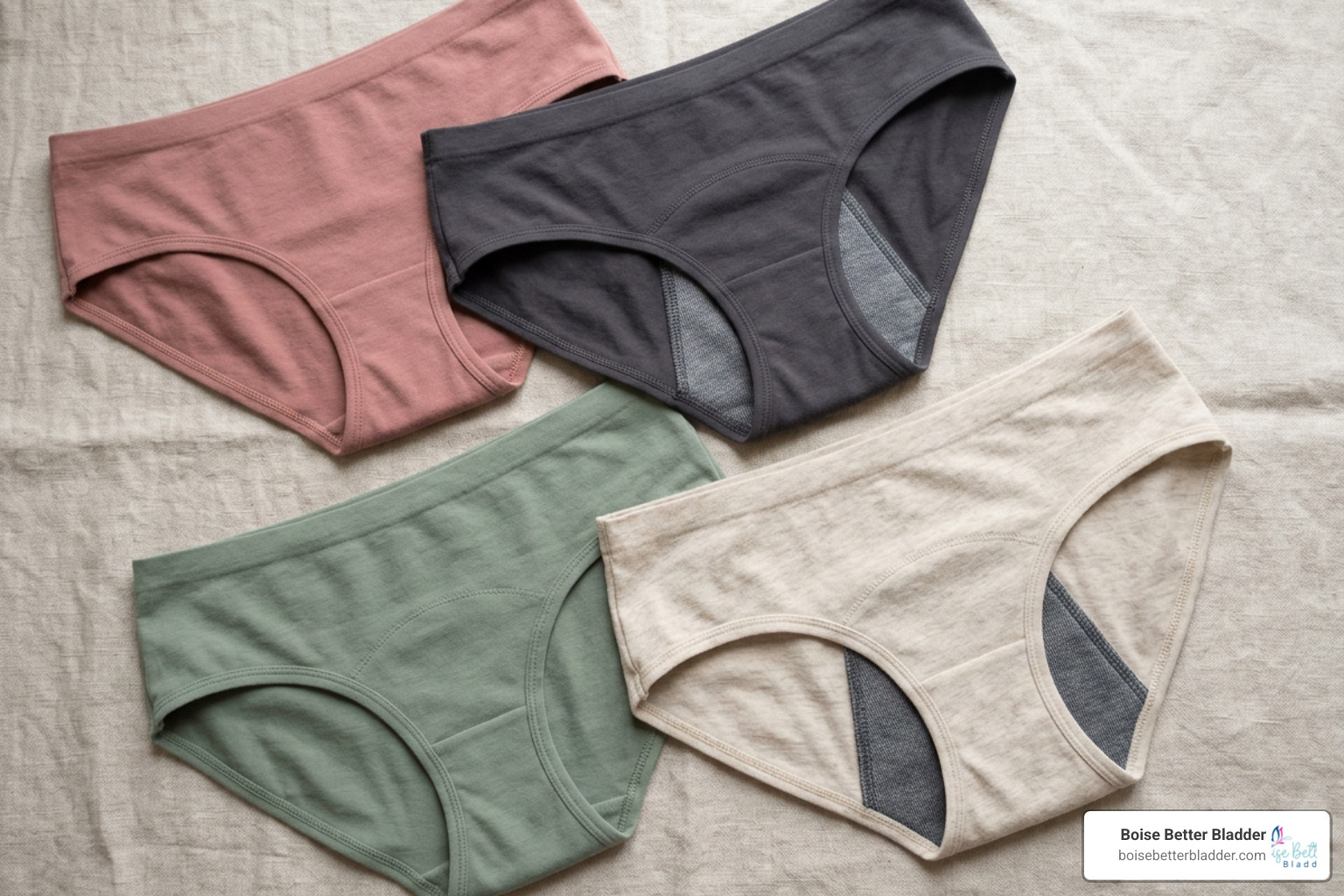
An increasingly popular alternative is reusable, leak-proof underwear, such as ComfyGuard™ Pelvic Floor Support & 100% Leak-Proof Underwear – ComfyGuard US. These garments look and feel like regular underwear but feature built-in, multi-layer absorbent zones made from moisture-wicking, breathable fabrics. Some even offer gentle compression to help stabilize the pelvic floor during physical activities.
However, whether you choose disposable guards or reusable underwear, it is crucial to understand that both are passive containment strategies. They catch the fluid after it has already escaped your body; they do not train the pelvic muscles or restore the nerve pathways. Practicing pelvic floor exercises is a step closer to active recovery, but many women need deeper support to see lasting changes.
Internal Bladder Supports: Preventing Leaks Before They Happen
For women experiencing stress urinary incontinence (SUI) — leaks triggered by coughing, laughing, or exercising — internal supports offer a different approach. Products like the Revive Reusable Bladder Support For Women | Leak Control & Comfort are soft, flexible devices inserted into the vagina, similar to a tampon.
Once inside, they press gently against the vaginal wall to support the bladder neck, physically bracing the urethra closed during moments of physical pressure. Another clinically-proven option is Contrelle Activgard, which acts as a temporary internal scaffolding to stop leaks before they happen.
While these internal devices are excellent for active lifestyles, they are still a physical brace. Just like wearing a back brace does not strengthen your core, relying on an internal bladder support does not restore your natural muscle function or nerve communication. They are a helpful management tool, but they are not a cure.
How Guards Compare to Adult Briefs and Booster Pads
If you are managing heavier incontinence, you might wonder how standard guards compare to other options:
Bladder Control Guards: Best for light to moderate leaks; worn inside regular, snug underwear.
Adult Briefs / Protective Underwear: Pull-up style or tabbed garments that provide full, 360-degree coverage for heavy leaks or bowel incontinence.
Booster Pads: Flow-through pads designed without a waterproof backing. They are placed inside a primary brief to increase its absorbency capacity, allowing liquid to flow through once the booster is full.
Practical Considerations: Insurance, Medicaid, and Proper Disposal
Managing bladder leaks involves practical, daily logistics — from financial planning to hygienic disposal.
Navigating Insurance and Medicaid Coverage for Incontinence Supplies
The monthly cost of incontinence supplies can add up quickly. Fortunately, many women are eligible to receive these supplies at little to no cost.
Medicaid and some private insurance plans cover bladder control pads and protective underwear if they are deemed a "medical necessity." To check your eligibility, you must obtain a formal diagnosis and prescription from a healthcare provider. You can then work with specialized suppliers to see if you qualify for Incontinence Pads Covered by Medicaid, which vary depending on your specific state guidelines and plan limits.
Hygienic Disposal and Environmental Impact
To dispose of used guards hygienically:
Roll the pad tightly from one end to the other, keeping the soiled inner core on the inside.
Wrap the rolled pad inside the wrapper of your fresh pad or use a small, dedicated disposal bag.
Dispose of it in a trash bin. Never flush a bladder control pad down the toilet. The superabsorbent polymers will expand in the water, causing severe plumbing blockages.
If you are concerned about the environmental impact of disposable plastics, look for brands that use PEFC-certified wood pulp (supporting forest repopulation) or consider transitioning to reusable leak-proof underwear for light daily management.
Frequently Asked Questions About Bladder Control Guards
Can bladder control pads be used for both bladder and bowel leaks?
Standard bladder control guards are contoured specifically for the front of the body to catch urinary leaks. If you are experiencing bowel leaks, look for specialized, longer liners (such as DynaDry Supreme) that feature extended rear coverage and high-rising side shields to manage both bladder and bowel incontinence simultaneously.
How do I know if my skin irritation is from the pad or an infection?
Contact dermatitis from a pad typically presents as redness, itching, or chafing exactly where the pad touches your skin. A urinary tract infection (UTI), however, causes internal symptoms like a burning sensation during urination, a frequent and urgent need to urinate, cloudy urine, or pelvic pain. If you experience these internal symptoms, consult a clinician for evaluation.
What are the top-rated features to look for in a high-quality guard?
When shopping for a guard, prioritize:
A pH-balanced, odor-neutralizing core to protect skin and maintain confidence.
Double leg elastics or side gathers to prevent side leaks during physical movement.
Breathable backsheets that allow air to circulate, reducing heat and moisture buildup.
Conclusion: Addressing the Root Cause of Your Bladder Leaks
The body works in patterns.
While bladder control guards for women are an invaluable tool for maintaining your daily freedom and confidence, they are ultimately a passive response to a deeper physical pattern. They catch the leaks, but they do not address why your bladder is losing control.
Whether your leaks started after childbirth, as your body naturally aged, or during the hormonal transitions of menopause, your body is communicating with you. It is telling you that the pelvic floor muscles have lost their strength and the nerve pathways are no longer coordinating smoothly with your bladder.
You do not have to accept pads as your permanent reality, and your body is not failing you.
At Boise Better Bladder, we help women throughout Boise, Meridian, Eagle, Nampa, and Caldwell step off the cycle of buying pads and regain true, natural bladder control. We look at the body as a whole, integrated system.
Our signature program addresses the root cause of your symptoms by combining two powerful, non-invasive therapies:
FDA-Cleared HIFEM Technology: This advanced technology uses electromagnetic energy to stimulate deep pelvic floor muscles, delivering the equivalent of 25,000 perfect Kegel exercises in a single, comfortable 30-minute session. It rebuilds muscle strength and restores physical support to your bladder.
Holistic Acupuncture Techniques: We use acupuncture to improve local circulation, calm overactive bladder spasms, and restore clear nerve communication between your brain and your pelvic organs.
This unique combination allows our patients to rebuild their body's natural support systems without surgery, medications, or uncomfortable physical therapies. Many of the women we see have tried traditional methods without success, only to find lasting relief and dry days after just a few weeks of care.
If you are ready to stop managing symptoms and start restoring your body's natural strength and coordination, we invite you to learn more. You can read about our approach to Pelvic Floor Physical Therapy Boise or explore options like Non-Surgical Bladder Control in Boise | Alma Duo & FemiLift to see how modern, gentle therapies can help you move freely again.
Your body is capable of healing. When you are ready, we are here to listen, evaluate, and guide you back to a life of confidence and freedom.
