
Beginner's Guide to Bladder Leak Solutions in Boise
Bladder Leaks in Boise Are More Common Than You Think — And More Treatable

Boise bladder leaks affect far more women than most people realize — and yet they remain one of the most under-discussed health concerns in our community.
Here is a quick overview of what you need to know:
Question Quick Answer How common are bladder leaks? Millions of women experience them, especially after 50 What causes them? Pelvic floor weakness, nerve miscommunication, menopause, childbirth Is it just "part of aging"? No — it is a treatable condition with a root cause What non-surgical options exist in Boise? HIFEM technology, tibial nerve stimulation, acupuncture-based pelvic therapy How effective are non-invasive treatments? 95% of study participants reported significant quality of life improvement Does insurance cover it? Typically no, but HSA/FSA accounts can often be used
Many women I speak with have been told the same thing by their doctor: "This is just what happens as you get older."
That answer never sat right with me — and it shouldn't sit right with you either.
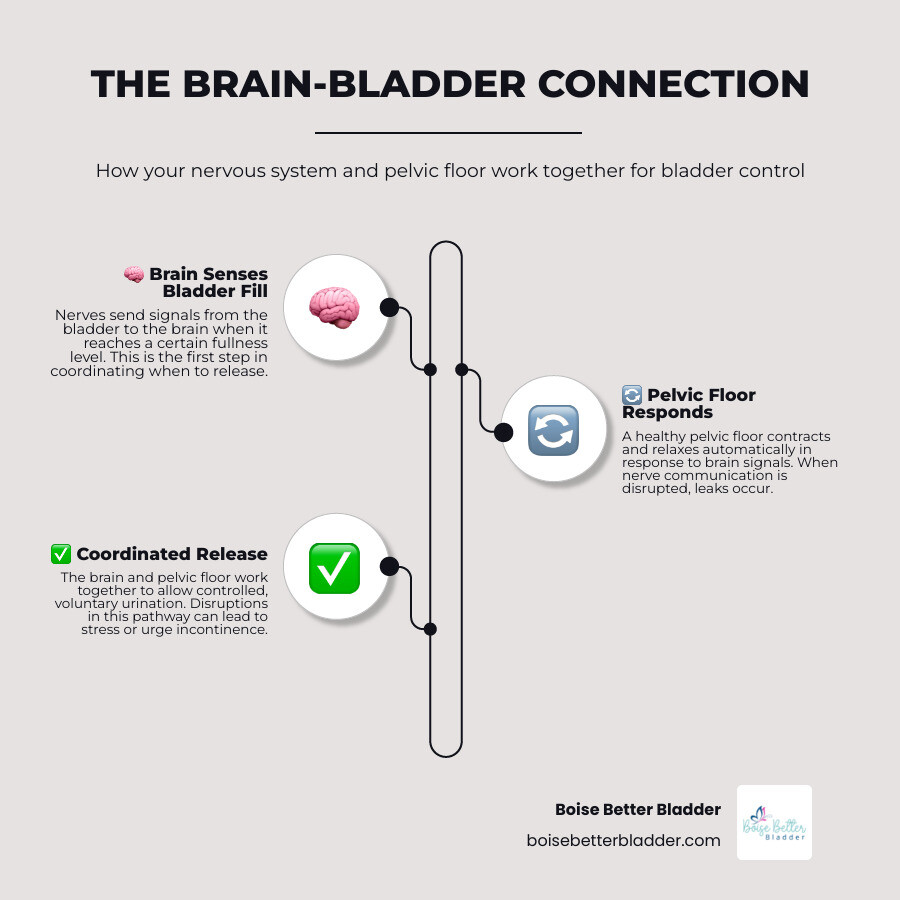
Bladder leaks are not a character flaw, a sign of weakness, or an unavoidable consequence of having children or entering menopause. They are signals. Your body is communicating that something in the pelvic floor system — the muscles, the nerves, or the brain-bladder connection — needs attention and support.
The good news is that when we listen to those signals and address the root cause, real and lasting improvement is absolutely possible.
I'm Dr. Kimberly Thompson, DACM, L.Ac., an acupuncturist and pelvic floor specialist who has spent years helping women in Boise navigate Boise bladder leaks through integrative, non-invasive care. After working with hundreds of patients who had already tried exercises, medications, and physical therapy without lasting relief, I developed a structured program that addresses both the muscular and neurological sides of bladder control — because treating only one without the other is rarely enough.
Understanding the Root Causes of Boise Bladder Leaks
When we experience unexpected leakage, the most common explanation we receive is that our pelvic floor muscles are simply "weak." While muscle weakness is certainly a factor, this explanation is incomplete. It looks at the pelvic floor in isolation, ignoring the complex web of nerves, hormones, and pressure systems that coordinate bladder control.
The body works in patterns.
To truly resolve bladder leaks, we must recognize that pelvic floor dysfunction manifests in distinct patterns. These patterns dictate whether you leak when you laugh, or whether you experience an overwhelming, uncontrollable urge to rush to the bathroom.
Let us break down the primary clinical patterns of urinary leakage:
1. Stress Incontinence (The Structural Pattern)
This occurs when physical pressure is placed on the bladder, overcoming the strength of the urethral sphincter. If you leak when coughing, sneezing, laughing, jumping, or exercising, you are experiencing stress incontinence.
This pattern is often driven by structural changes:
Vaginal Childbirth: The physical stretching of the pelvic fascia during delivery can leave the bladder neck without adequate support. This is why many women seek out specialized Postpartum Incontinence Help to restore structural integrity.
Hormonal Depletion: Estrogen plays a vital role in maintaining the thickness and elasticity of the urethral lining. During the transition into menopause, declining estrogen levels weaken these tissues. To understand this specific shift, explore our guide on Menopause Bladder Issues.
2. Urge Incontinence (The Neurological Pattern)
Also known as an overactive bladder (OAB), this pattern is characterized by a sudden, intense urge to urinate, followed by involuntary leakage before you can reach the restroom. This is not primarily a structural muscle weakness; it is a communication breakdown. The detrusor muscle (the bladder wall muscle) contracts prematurely because the nervous system is sending hyperactive signals.
3. Mixed Incontinence
Many women in the Boise area suffer from a combination of both stress and urge patterns. They might experience structural leakage while lifting groceries, while also dealing with sudden, urgent spasms when they hear running water or pull into their driveway.
4. Male Urinary Incontinence
While our clinic focuses heavily on women's pelvic health, men in our community also experience bladder leaks. In men, the patterns are frequently tied to prostate health. An enlarged prostate (Benign Prostatic Hyperplasia, or BPH) can obstruct the urethra, causing the bladder muscle to thicken and grow irreversible collagen fibers over time. This leads to chronic bladder spasms, dribbling, and urgency. Additionally, men recovering from a prostatectomy often experience stress incontinence due to localized nerve and muscle trauma during surgery.
Symptoms are signals. Whether you are experiencing stress, urge, or post-surgical leakage, your body is pointing toward an underlying coordination imbalance. You can read more about these distinct patterns in this Scientific research on urinary incontinence causes.
Why Common Approaches to Bladder Control Often Fall Short
When women first notice bladder leaks, they typically follow a predictable path: buying absorbent pads, restricting their water intake, and performing manual Kegel exercises at home. When those fail, they may seek medical advice, which often leads to daily medications or invasive surgical recommendations.
Unfortunately, these approaches often fall short because they do not address the root cause of the dysfunction.
Pads and Liners: These are management tools, not solutions. They do nothing to restore muscle tone or nerve communication, and over time, they can lead to skin irritation and a constant state of anxiety.
Medications: Drugs prescribed for overactive bladder often work by blocking nerve signals to prevent bladder spasms. However, they frequently come with systemic side effects like severe dry mouth, constipation, blurred vision, and cognitive fatigue. When you stop taking the medication, the symptoms return.
Traditional Pelvic Floor Physical Therapy: While manual physical therapy is highly valuable, many women find it clinical, highly personal, or uncomfortable. It requires weeks of active, manual pelvic floor exercises, and for some, the internal exams can feel invasive. This leads many to seek out alternative options for Pelvic Floor Physical Therapy Boise that offer a gentler, non-invasive approach.
To help you compare your options, let us look at how these pathways stack up:
Treatment Pathway Mechanism Pros Cons Invasive Surgery / Slings Structural support modification High success for severe anatomical stress leaks Risks of infection, tissue erosion, permanent mesh complications, long recovery times Pharmaceuticals Systemic nerve blocking Temporary reduction in bladder spasms Side effects (dry mouth, constipation), symptoms return once medication stops Manual Kegels / Basic PT Voluntary muscle contraction Free, can be done at home Hard to target deep muscles; requires up to 70 hours of manual exercise to match one clinical session Holistic Pelvic Restoration (Our Program) HIFEM muscle activation + Neurological re-education Non-invasive, fully clothed, targets root cause, 95% quality of life improvement Requires a 4-week commitment, not covered by traditional insurance
The Urological vs. Holistic Approach
It is also helpful to understand the difference between visiting a traditional urologist and undergoing a program like the Boise Better Bladder Program™.
Urologists are highly trained medical doctors who specialize in structural and surgical interventions. If you have a severe anatomical blockage, a kidney stone, or require advanced surgical procedures like ReZūm Water Vapor Therapy or HoLEP for prostate-related issues, a specialized urologist is the appropriate provider.
Our program, however, is a non-surgical, non-drug rehabilitation clinic. We do not perform surgery or prescribe pharmaceuticals. Instead, we use advanced, FDA-cleared electromagnetic technology combined with holistic neurological therapy to rebuild your body's natural strength and nerve pathways. We focus on restoring the pelvic floor's coordination and calming the nervous system so your body can heal itself.
The Science of Pelvic Floor Restoration and Neurological Re-Education

Your body isn’t failing you. It is operating based on the communication pathways it currently has. If those pathways have been disrupted by trauma, hormonal shifts, or chronic stress, we simply need to re-educate the system.
In our practice, we look at pelvic restoration through two primary lenses: muscular rehabilitation and neurological regulation. By combining modern bio-electric technology with traditional acupuncture channel theory, we can address both pathways simultaneously.
To understand how we rebuild these systems, we recommend reading our detailed breakdown of Understanding Weak Pelvic Floor Treatment and exploring the connection between the nervous system and the Acupuncture Pelvic Floor.
How HIFEM Technology Resolves Boise Bladder Leaks
The foundation of our physical muscle restoration is High-Intensity Focused Electromagnetic (HIFEM) technology, delivered via our specialized Freedom+ chair.
When you perform a voluntary pelvic floor exercise (a Kegel), your brain sends a signal to contract those muscles. However, if the muscle tissue is weak or the nerve pathway is damaged, you may only be able to activate a small fraction of the muscle fibers. Furthermore, most women struggle to isolate the correct muscles, often accidentally contracting their abdomen or glutes instead.
The Freedom+ chair bypasses the brain’s voluntary limitations. It uses focused electromagnetic energy to induce supramaximal contractions — contractions that are physically impossible to achieve through voluntary effort.
Massive Efficiency: A single 28-minute session on the Freedom+ chair delivers the equivalent of up to 25,000 pelvic floor contractions. To achieve this manually, you would have to perform continuous, perfect Kegels for 70 hours straight.
Deep Tissue Targeting: The electromagnetic field penetrates deeply into the pelvic basin, stimulating 100% of the pelvic floor muscles, including the deep layers that support the bladder, uterus, and bowel.
Nerve Re-Education: By repeatedly firing these muscles in a precise, therapeutic pattern, we are not just building muscle bulk; we are re-establishing the neural pathways between your pelvic floor and your brain.
This process of Pelvic Muscle Strengthening allows your body to regain the automatic reflex needed to prevent leaks when you laugh or sneeze. You can see a detailed breakdown of this technology on our How It Works page.
Restoring the Nervous System to Calm Boise Bladder Leaks
While strengthening the muscles is crucial for stress leaks, urge leaks require us to address the nervous system.
When you suffer from an overactive bladder, your nervous system is stuck in a hyper-aroused, "fight-or-flight" state. The nerves supplying the bladder are constantly firing, telling the bladder muscle to contract even when it is barely full.
To calm this pathway, we utilize Tibial Nerve Stimulation integrated with acupuncture channel diagnostics.
The tibial nerve originates in the lower spine and runs down the leg to the ankle. This nerve shares a common spinal origin with the nerves that control the bladder and pelvic floor. By gently stimulating specific acupuncture points near the ankle that correspond to the tibial nerve, we send a soothing electrical signal up the leg and back to the sacral nerve plexus.
This act effectively "reboots" the communication loop between the bladder and the brain. It down-regulates the sympathetic nervous system, calms the spastic detrusor muscle, and restores natural bladder capacity. If you struggle with sudden, frantic urges, our specialized Overactive Bladder Treatment can help quiet those hyperactive signals.
Frequently Asked Questions About Non-Surgical Bladder Solutions
Navigating pelvic health can feel overwhelming. We believe that clinical education is the first step toward healing, which is why we want to directly answer the most common questions our Boise, Meridian, Eagle, Nampa, and Caldwell patients ask.
What are the contraindications for electromagnetic pelvic therapy?
Because the Freedom+ chair utilizes powerful high-intensity focused electromagnetic energy (similar to an MRI), there are strict safety guidelines. You cannot undergo this treatment if you have:
Cardiac pacemakers or defibrillators
Implanted neurostimulators or drug pumps
Metal implants in the pelvic, hip, or lower back region (such as metal joint replacements or spinal hardware)
Copper IUDs (hormonal plastic IUDs like Mirena are perfectly safe)
Pregnancy or active nursing
Active bleeding disorders, menstruation (we recommend avoiding sessions during your period to prevent increased cramping), or active cancer
During your private consultation, we will thoroughly review your medical history to ensure you are a safe candidate for the program.
How long does the treatment plan take and what are the costs?
Our signature Boise Better Bladder Program™ is structured as a comprehensive, 6-week program.
The Schedule: A typical plan consists of 8 to 9 sessions, usually scheduled as 2 visits per week for the first 4 weeks, followed by consolidation sessions. Each session on the Freedom+ chair lasts exactly 28 minutes.
The Timeline: Most patients begin to notice meaningful improvements in their bladder control within the first 3 to 4 weeks of consistent treatment.
The Cost: Personalized treatment plans start at $2,550. We offer flexible payment plans to make care accessible.
Insurance: Because this is an integrative, non-surgical program, it is not covered by traditional health insurance. However, the majority of our patients successfully use their Health Savings Accounts (HSA) or Flexible Spending Accounts (FSA) to pay for their treatment.
To read more about the clinical backing of this electromagnetic approach, you can review these Clinical studies on electromagnetic pelvic stimulation.
How does this approach differ from traditional Kegels for women?
Many women are told to "just do your Kegels," but voluntary exercises are often ineffective for several reasons. First, clinical studies show that up to 50% of women cannot perform a proper Kegel contraction on their own, often straining the wrong muscles. Second, voluntary contractions only engage about 40% of the muscle group at maximum effort.
In contrast, our program uses Functional Magnetic Stimulation to achieve supramaximal contractions that engage 100% of the pelvic floor muscles effortlessly, while you sit fully clothed reading a book. There is no guesswork, no sweat, and no physical exertion. It is a highly targeted form of Pelvic Muscle Therapy that re-educates muscle memory so your pelvic floor knows how to contract automatically when you need it most.
Reclaiming Your Confidence and Quality of Life
Bringing it all together, we must remember that bladder leaks are not a permanent sentence. They are simply a sign of an imbalance that your body is trying to bring to your attention.
At Boise Better Bladder, we don't believe you should have to plan your life around the nearest restroom, limit your hydration, or give up the physical activities you love. Whether you want to hike the Boise Foothills, enjoy a walk along the Greenbelt, or play with your grandchildren without fear of an "uh-oh" moment, your body is capable of regaining its natural strength and balance.
Simple Lifestyle Shifts to Support Your Progress
While our clinical program does the heavy lifting, you can support your pelvic floor recovery at home with a few mindful lifestyle adjustments:
Hydrate Mindfully: Many women drink less water to avoid leaks, but this actually backfires. Concentrated urine highly irritates the bladder lining, triggering sudden spasms and worsening urgency. Drink clean, filtered water consistently throughout the day.
Identify Bladder Irritants: Certain foods and drinks can irritate the bladder wall. Consider reducing your intake of caffeine, alcohol, artificial sweeteners, carbonated beverages, and highly acidic foods.
Practice Bladder Retraining: If you have urge leaks, avoid running to the bathroom "just in case." This trains your bladder to hold less volume over time. When you feel a sudden urge, pause, take three deep belly breaths to calm your nervous system, contract your pelvic floor gently, and walk slowly to the restroom once the wave of urgency passes.
Your body is a self-regulating, healing system. When provided with the right physical and neurological inputs, it knows how to return to a state of balance.
If you are ready to stop managing symptoms with pads and start addressing the root cause of your bladder leaks, we invite you to take the first step. You can Book an Appointment for a private consultation and a complimentary demo of our Freedom+ technology. This pressure-free visit gives you a chance to experience the treatment, ask your questions, and see if our program is the right fit for your goals.
To learn more about our team and our clinical philosophy, please Contact Us or visit the main Boise Better Bladder home page. We look forward to helping you reclaim your freedom, your confidence, and your active life.
