No Surgery, No Leaks: Non-Surgical Menopause Bladder Solutions in Boise
Why Bladder Leaks After Menopause Are Not Something You Just Have to Live With
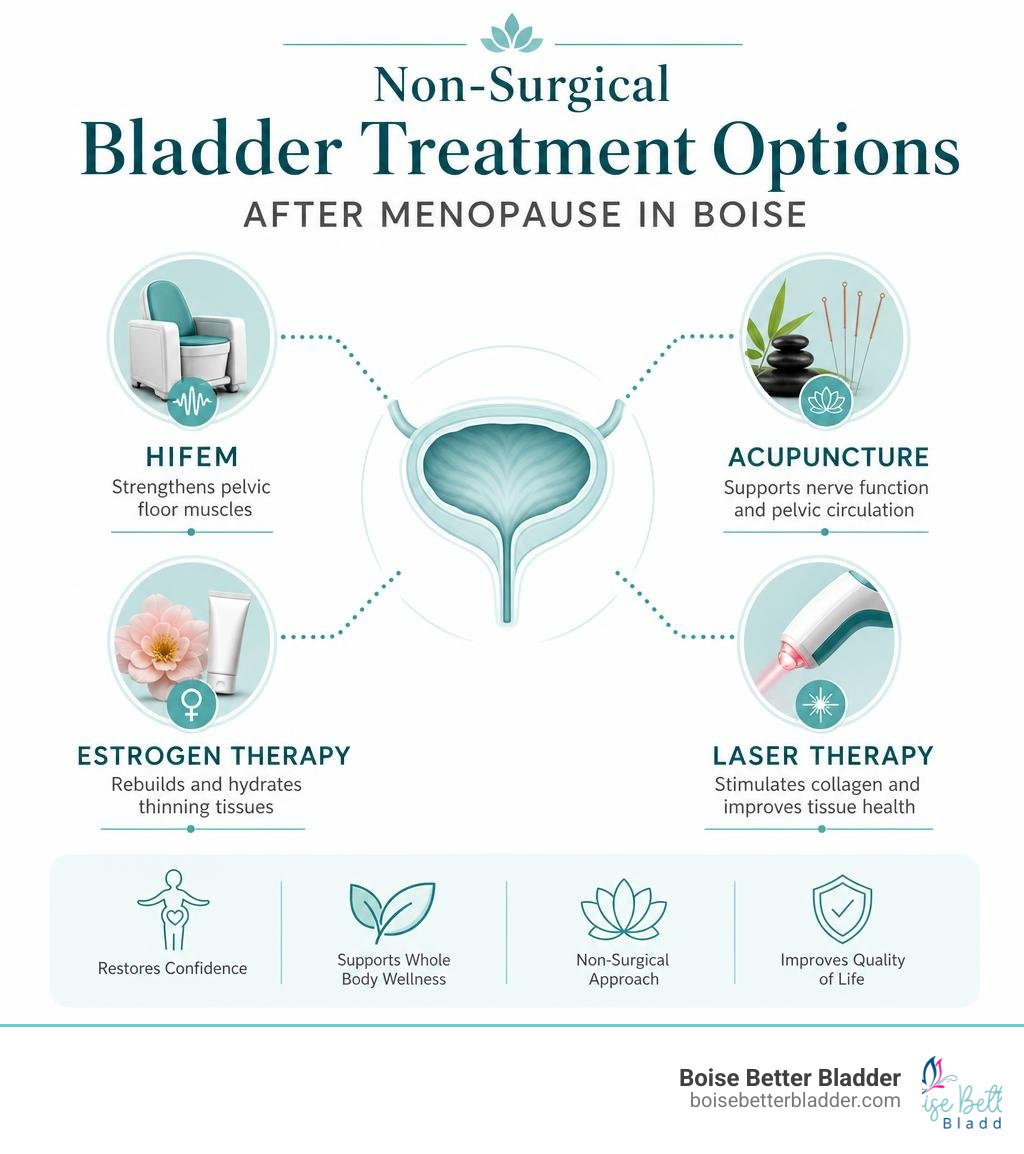
If you're searching for bladder treatment after menopause in Boise, here are the most effective non-surgical options available:
Treatment Option | How It Works | Best For |
|---|---|---|
Freedom+ Chair (HIFEM/FMS) | Delivers 25,000 pelvic floor contractions in 30 minutes | Stress & urge incontinence, muscle weakness |
Acupuncture + Nerve Stimulation | Restores nerve communication and pelvic circulation | Urgency, OAB, root-cause support |
Vaginal Estrogen Therapy | Rebuilds thinning urethral and vaginal tissue | GSM, recurrent UTIs, tissue atrophy |
Vaginal Laser Therapy | Regenerates collagen in vaginal tissue | Dryness, urgency, atrophy (non-hormonal option) |
Botox for Overactive Bladder | Relaxes bladder muscle via injection | Severe urgency when other options have failed |
Pelvic Floor Exercises + Lifestyle | Kegels, hydration, diet, probiotics | Mild symptoms, maintenance support |
Many women are told that bladder leaks are simply part of getting older — something to manage with pads and adjust around. I see this assumption every day in my practice, and it's one I want to gently but clearly challenge.
Your body isn't failing you. It's communicating a pattern — and that pattern has a root cause.
The shift that happens during and after menopause is real and significant. As estrogen levels drop, the tissues of the bladder, urethra, and pelvic floor begin to thin and lose elasticity. The muscles that once kept everything in place become weaker and less coordinated. The nervous system pathways that signal the bladder to hold or release can become disrupted. What you experience as a "leak" or a sudden urgent rush to the bathroom is the downstream result of several interconnected changes happening in your body — not a personal failing, and not an irreversible condition.
The good news is that these are patterns, and patterns can be addressed. Most of the women I work with in Boise have already tried Kegel exercises, pelvic floor physical therapy, or medications — often without lasting relief. That's not because they didn't try hard enough. It's because those approaches frequently don't go deep enough to address the full picture: muscle strength, nerve communication, tissue health, and circulation working together.
Approximately 75% of women with bladder leakage never even discuss it with their healthcare provider. That silence keeps too many women suffering longer than they need to — quietly rerouting their lives around restroom access, avoiding travel, or skipping activities they love.
This guide is here to change that.
I'm Dr. Kimberly Thompson, DACM, L.Ac., and over the years I've worked with hundreds of women navigating bladder treatment after menopause in Boise, many of whom came to me after feeling dismissed or discouraged by conventional care. My approach combines advanced HIFEM technology with acupuncture and holistic pelvic rehabilitation to address both the muscular and neurological roots of bladder dysfunction — because lasting results require treating the whole system, not just the symptom.
The Menopause-Bladder Connection: Why Symptoms Are Signals
To understand why bladder issues crop up so frequently after menopause, we have to look at how hormones and pelvic tissues interact. In Chinese medicine and holistic physiology, we look at the body as an integrated web of communication. When one key element shifts, the entire system adjusts to find a new equilibrium.
During the menopausal transition, that major shift is the decline of estrogen. Estrogen is not just a reproductive hormone; it is a vital nourishment signal for your entire pelvic bowl. When it declines, the physical structure of your bladder and urinary tract changes, leading to what is commonly called Menopause Bladder Issues.
Understanding Genitourinary Syndrome of Menopause (GSM)
Many women are familiar with hot flashes — which occur in up to 75% of women — but fewer have heard of Genitourinary Syndrome of Menopause (GSM). GSM is a collective term for the physical changes that occur in the vulva, vagina, urethra, and bladder when estrogen levels drop.
Your lower urinary tract is incredibly rich in estrogen receptors. In fact, the urethra and the base of the bladder share the same embryological origin as the vagina, making them highly sensitive to hormonal shifts. Without the nourishing presence of estrogen:
The urethral lining thins: The natural "seal" of the urethra weakens, making it harder to prevent leaks.
Tissue dryness and vulnerability increase: Tissues lose their natural lubrication and cushioning.
Atrophy occurs: More than 50% of women suffer from vulvovaginal atrophy after menopause, which directly compromises the support structures surrounding the bladder.
This physical thinning of the tissues makes the entire pelvic region highly sensitive to friction, pressure, and bacterial colonization.
The Role of Estrogen in Pelvic Tissue Health
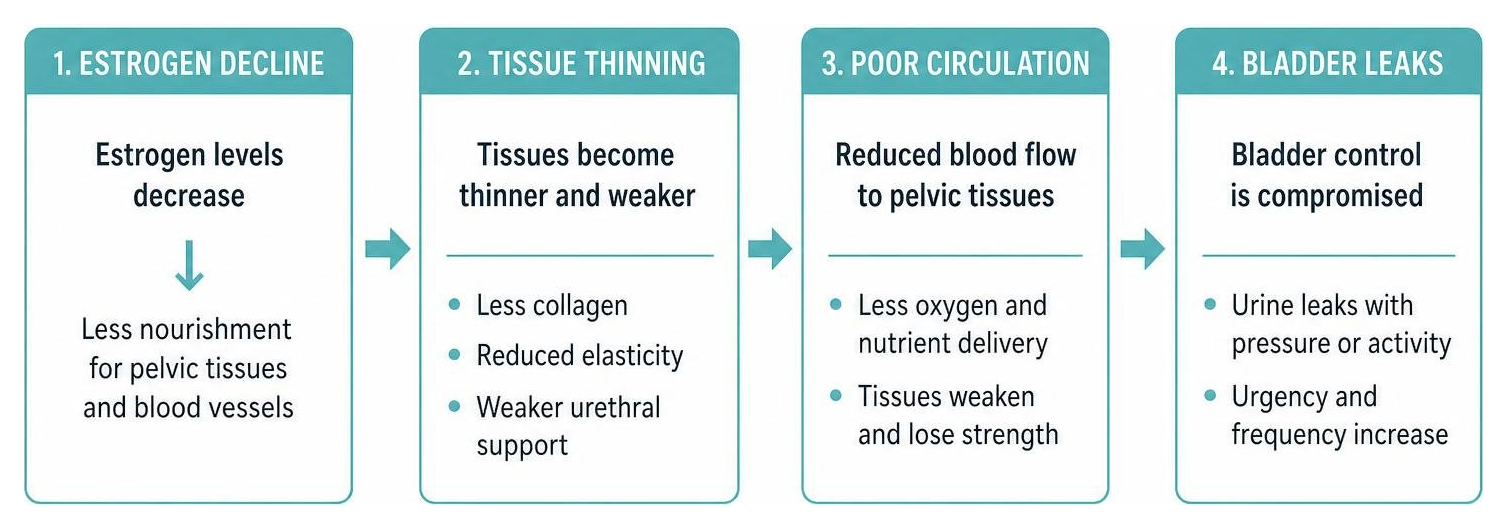
Estrogen is the primary driver of collagen production and blood flow in the pelvic region. Collagen is what gives your pelvic tissues their bounce, strength, and elasticity. When estrogen declines, collagen synthesis slows down, and the blood vessels supplying the pelvic organs become less efficient.
Without adequate blood flow, the muscles and connective tissues supporting your bladder lose their structural integrity. They begin to sag, stretch, and fail to contract with the quick, coordinated timing required to keep you dry.
The body works in patterns. When we recognize that tissue thinning, poor circulation, and muscle weakness are all part of the same underlying pattern of estrogen decline, we can stop treating these symptoms as isolated annoyances and start addressing them at their source.
Common Postmenopausal Bladder Problems in Boise
When women visit our clinic in the Treasure Valley seeking bladder treatment after menopause in Boise, they usually present with one or more of three primary patterns. It is incredibly common to experience a combination of these issues, which is why a personalized, multi-system approach is so vital.
About 18 million women in the U.S. suffer from urinary incontinence—which translates to 1 in 4 women over the age of 18. If you are experiencing these symptoms, you are far from alone. Understanding which pattern is dominant is the first step toward finding the right Understanding Weak Pelvic Floor Treatment.
Stress Urinary Incontinence and Weakened Support
Stress Urinary Incontinence (SUI) is the involuntary leakage of urine when physical pressure is placed on the bladder. This is the classic "uh-oh" moment that happens when you:
Laugh, sneeze, or cough
Exercise, run, or jump
Lift heavy objects (like groceries or grandchildren)
SUI occurs because the pelvic floor muscles and the connective tissues supporting the urethra have become deconditioned. When pressure from above presses down on the bladder, the weakened pelvic floor cannot provide enough upward counter-pressure to keep the urethral seal closed.
Overactive Bladder and Urgency Patterns
Overactive Bladder (OAB) is characterized by a sudden, intense urge to urinate that is difficult to ignore, sometimes followed by involuntary leakage (urge incontinence).
Symptoms are signals. An overactive bladder is often a bladder that is receiving chaotic or hyperactive signals from the nervous system. When the lining of the bladder thins due to estrogen loss, the sensory nerves inside the bladder wall become exposed and hypersensitive. They signal the brain that the bladder is full and must empty immediately, even when it only contains a small amount of urine. This leads to:
Frequent trips to the bathroom (more than 8 times a day)
Nighttime waking to urinate (nocturia)
Sudden, overwhelming spasms of urgency
Recurrent UTIs and Tissue Atrophy
Recurrent urinary tract infections (UTIs) are another frustrating hallmark of the postmenopausal transition. Estrogen plays a crucial role in maintaining the health of the vaginal microbiome. It supports the growth of beneficial bacteria (lactobacilli), which produce lactic acid to keep the vaginal and urethral pH acidic.
When estrogen levels drop:
The pH of the pelvic region becomes more alkaline.
Beneficial bacteria die off.
Opportunistic, infection-causing bacteria are able to colonize the area more easily.
Combined with a thinner, more fragile urethral barrier, this microbial shift makes it incredibly easy for bacteria to migrate up into the bladder, causing frequent, painful infections.
Non-Surgical Bladder Treatment After Menopause Boise
For years, women were led to believe their only options for managing bladder leaks were wearing pads, taking daily medications with unpleasant side effects, or undergoing invasive pelvic surgeries. Today, we have highly effective, non-invasive technologies that restore tissue health and muscle coordination without a single incision.
To help you understand the landscape of bladder treatment after menopause in Boise, let's compare the most common pathways:
Feature | Freedom+ Chair Program (Boise Better Bladder) | Traditional Pelvic Floor PT | Surgical & Pharmaceutical Options |
|---|---|---|---|
Invasiveness | Completely non-invasive; remain fully clothed | Internal physical exams and exercises | Invasive surgeries (slings) or daily pills |
Effort Required | Passive; sit and relax for 30 minutes | Daily "homework" and active exercises | High recovery downtime or daily medication compliance |
Primary Mechanism | HIFEM delivers 25,000 supramaximal pelvic contractions | Manual muscle training and biofeedback | Structural alteration or chemical nerve blocking |
Root-Cause Focus | Strengthens muscles, improves circulation & nerve paths | Focuses primarily on muscle strength | Manages symptoms or alters anatomy without improving tissue health |
If you are looking for an alternative to surgery, exploring advanced Overactive Bladder Treatment options can open up new possibilities for recovery.
Functional Magnetic Stimulation (FMS) and the Freedom+ Chair
At Boise Better Bladder, our signature program features the Freedom+ Chair, which utilizes High-Intensity Focused Electromagnetic (HIFEM) technology. This FDA-cleared, non-invasive treatment represents a massive leap forward in pelvic floor rehabilitation.
When you sit on the Freedom+ Chair fully clothed, the device sends focused electromagnetic pulses deep into your pelvic floor. These pulses trigger "supramaximal" contractions—intense, deep muscle contractions that you could never achieve voluntarily through standard Kegel exercises.
25,000 Kegels in 30 minutes: A single session delivers the muscular equivalent of thousands of perfectly executed pelvic floor exercises.
Muscle re-education: The technology retrains the deep pelvic floor muscles to contract and support the bladder dynamically.
High success rates: Clinical studies show that 95% of participants reported a significant improvement in their quality of life, and two-thirds completely eliminated or drastically reduced their use of incontinence pads.
This technology is also highly effective for general pelvic floor deconditioning, helping women regain control passively and rebuild their pelvic strength from the inside out.
The Synergy of HIFEM and Acupuncture
What makes our approach at Boise Better Bladder unique is that we do not rely on technology alone. The body works in patterns, and a mechanical solution is only half the answer. To achieve lasting restoration, we combine the muscle-strengthening power of the Freedom+ Chair with the circulation-boosting, nerve-calming properties of acupuncture.
While the electromagnetic chair rebuilds the structural foundation of your pelvic floor, targeted acupuncture points help to:
Re-establish clear nerve communication between your bladder and your brain.
Direct vital blood flow and microcirculation back into the thinning pelvic tissues.
Calm an overactive, hypersensitive nervous system to reduce sudden bladder spasms.
By addressing both the physical muscles and the underlying neurological and circulatory pathways, we treat the root cause of your symptoms rather than just masking them.
Restoring the Foundation: Natural and Holistic Pathways to Pelvic Health
While advanced clinical treatments provide the heavy lifting for pelvic floor recovery, supporting your body's natural healing pathways at home is an essential part of long-term wellness.
Addressing Blood Flow and Tissue Vitality Without Hormones
When women undergo a hysterectomy—even if their ovaries are left intact—ovarian blood flow often drops by 30% to 50%. This sudden decline can cause estrogen and progesterone levels to drop far earlier than expected, accelerating tissue thinning and bladder issues. To read more about how surgical history impacts your hormonal landscape, you can explore Hormone Replacement Therapy After Hysterectomy - Treasure Valley Pain Center.
To restore tissue vitality naturally without relying solely on hormones, we must focus on improving pelvic microcirculation. You can support this at home by:
Staying deeply hydrated: Water is essential for maintaining the volume and elasticity of mucosal tissues.
Using non-hormonal, high-quality vaginal moisturizers: Products containing hyaluronic acid can help bind moisture to thinning tissues, providing comfort and structural support.
Avoiding inflammatory foods: Reducing sugar, caffeine, and alcohol helps protect the delicate bladder lining from irritation.
Acupuncture and Nerve Communication Pathways
From a clinical standpoint, acupuncture acts as a regulator for the autonomic nervous system. When the bladder is overactive, the sympathetic and parasympathetic nerve pathways that control bladder filling and emptying are out of sync.
By stimulating specific acupuncture channels that run through the lower back, sacrum, and lower legs, we can directly influence the sacral nerve plexus. This helps soothe the bladder muscle, reduce the frequency of sudden spasms, and improve local blood flow to help thinning tissues regenerate naturally.
At-Home Pelvic Floor Exercises for Women
If you want to maintain your pelvic floor strength between clinical sessions, practicing coordinated pelvic exercises is highly beneficial. However, doing Kegels incorrectly can sometimes make bladder symptoms worse—especially if your muscles are tense or "hypertonic."
To learn the correct patterns of relaxation and contraction, we recommend reviewing our guide on Pelvic Floor Exercises for Women.
Remember: Your body isn't failing you. It is simply operating under a pattern of deconditioning and reduced circulation. With the right input, muscles and tissues can regain their strength and elasticity at any age.
Navigating Your Care in the Treasure Valley
Seeking help for intimate health issues can feel daunting, but finding a compassionate, specialized clinic makes all the difference.

Many women benefit from a collaborative approach to pelvic wellness. For those seeking comprehensive clinical care, working with specialized providers who understand the complexities of the pelvic floor and hormonal health can help you build a comprehensive plan for your physical well-being. If you've tried standard physical therapy in the past and want to understand how it compares to our program, you can read more about Pelvic Floor Physical Therapy Boise.
Finding a Specialized Clinic for Bladder Treatment After Menopause Boise
When looking for a clinic in Boise, Meridian, Eagle, Nampa, or Caldwell, look for providers who:
Focus on non-surgical, non-invasive pathways.
Offer trauma-informed, gentle, and respectful care.
Spend time listening to your full history to recognize the broader patterns of your health.
Create highly customized treatment plans rather than using a one-size-fits-all approach.
When to See a Pelvic Health Specialist in the Treasure Valley
You should schedule an evaluation if:
Bladder leaks are forcing you to wear pads daily or plan your outings around restroom locations.
Sudden, intense urges to urinate are disrupting your sleep or daily activities.
You are experiencing painful intercourse, persistent dryness, or recurrent UTIs.
Traditional exercises or medications have failed to provide lasting relief.
Questions to Ask Your Boise Provider About Bladder Treatment After Menopause Boise
When you sit down with a healthcare provider to discuss your bladder health, consider asking:
Are there non-surgical, drug-free options available for my specific type of bladder leakage?
How does my hormonal status or menopausal history tie into the bladder symptoms I am experiencing?
What is the expected timeline for recovery, and how do we measure progress?
How do your treatments address both the physical muscles and the nerves of the pelvic floor?
Frequently Asked Questions About Menopausal Bladder Health
Is bladder leakage an unavoidable part of aging after menopause?
No. While bladder leaks are incredibly common after menopause due to hormonal shifts and muscle deconditioning, they are never "normal," and you do not have to live with them. Weakened pelvic muscles and thinning tissues can be successfully rehabilitated, strengthened, and re-educated at any age using non-surgical methods.
How long does it take to see results from non-surgical bladder treatments?
While every body is unique, many of our patients at Boise Better Bladder begin to notice a meaningful reduction in leaks and urgency within 2 to 4 weeks of starting our structured Freedom+ program. Lasting muscle re-education and tissue support typically build over a standard 4-week course of treatment (usually consisting of 8 sessions).
Can I treat postmenopausal bladder issues without hormone replacement therapy or surgery?
Absolutely. Many women cannot take hormone replacement therapy due to medical histories (such as estrogen-sensitive cancers) or simply prefer to avoid surgery and daily medications. Non-hormonal, non-surgical pathways—such as Functional Magnetic Stimulation (HIFEM), targeted acupuncture, and advanced non-invasive therapies—are highly effective at rebuilding muscle strength, improving circulation, and restoring tissue elasticity naturally.
Conclusion
Your pelvic floor is the physical and energetic foundation of your body. When menopause shifts your hormonal landscape, your bladder symptoms are not a sign that your body is failing you—they are simply signals that your foundation needs a little extra care, circulation, and structural support.
At Boise Better Bladder, we are dedicated to helping women throughout the Treasure Valley reclaim their confidence, freedom, and quality of life without the need for invasive surgeries, daily medications, or uncomfortable physical therapy. By combining the cutting-edge muscle rehabilitation of the Freedom+ Chair with the time-tested, circulation-boosting power of holistic acupuncture, we address the root cause of bladder dysfunction to help you achieve lasting relief.
You don't have to quietly manage leaks or plan your life around the nearest restroom. If you are ready to explore a comfortable, non-surgical solution, we invite you to Schedule a consultation at Boise Better Bladder today. Let's work together to restore your body's natural balance and help you live life on your own terms again.
