The Urge to Purge: Understanding Overactive Bladder Symptoms
When Your Bladder Is Running the Show: What's Really Happening

Overactive bladder affects an estimated 33 million people in the United States alone — and yet, far fewer than half ever bring it up with a doctor.
If you've been dealing with sudden, urgent rushes to the bathroom, waking up at night to urinate, or unexpected leaks during everyday moments, you are not imagining it. And you are not alone.
Here's a quick overview of what overactive bladder actually is:
Feature Details What it is A condition where the bladder contracts involuntarily, creating sudden urges to urinate Key symptoms Urgency, frequent urination (8+ times/day), nocturia, and sometimes leakage Who it affects About 40% of older women and 30% of older men Is it normal aging? No — it is a treatable medical condition, not an inevitable part of getting older First step Identifying your symptoms and understanding their root cause
One of the most important things I want you to know before we go any further:
Your body isn't failing you.
What you're experiencing isn't weakness, and it isn't simply "getting older." It's your body sending signals — signals that something in the communication pathway between your brain and your bladder has shifted. Those signals deserve to be understood, not dismissed.
Most women I see at Boise Better Bladder have already tried the usual recommendations — Kegels, lifestyle changes, sometimes medications — and still feel stuck. The missing piece is almost always a deeper understanding of why the bladder is behaving this way in the first place.
I'm Dr. Kimberly Thompson, DACM, L.Ac., and I've spent years working with women experiencing overactive bladder and pelvic floor dysfunction — many of whom were told their symptoms were simply a normal part of aging or that surgery was their only path forward. In this guide, I want to walk you through what's actually happening in your body, and why understanding that changes everything about how we approach healing.
Decoding the Patterns of an Overactive Bladder
To understand why your bladder is suddenly calling all the shots, we have to look at how a healthy bladder is supposed to communicate.
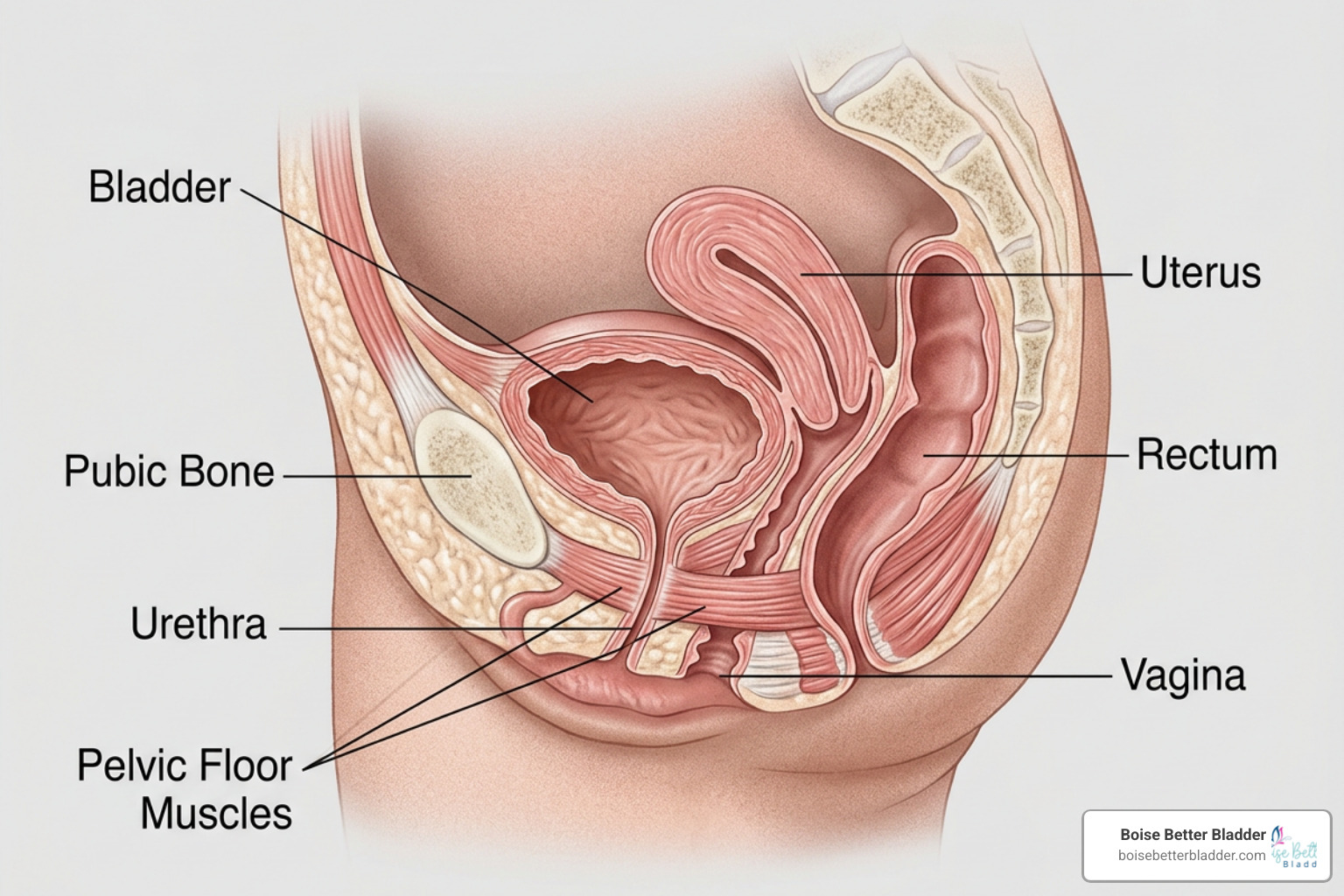
The bladder is not just a passive storage balloon; it is a highly coordinated muscular organ. Under normal circumstances, your bladder slowly fills with urine, and your brain receives gentle, gradual signals letting you know it is getting full. Typically, a healthy bladder will comfortably hold about two cups of urine before you feel a true need to find a restroom. During this filling phase, the main bladder muscle—known as the detrusor muscle—remains relaxed, while the pelvic floor muscles and sphincter remain contracted to keep the exit closed.
When you are ready to urinate, your brain sends a coordinated signal: the detrusor muscle contracts (squeezes) while the pelvic floor relaxes, allowing urine to flow out easily.
The body works in patterns. When those patterns are disrupted, we see the hallmark signs of Overactive bladder - Symptoms and causes - Mayo Clinic.
In a person with overactive bladder (OAB), the detrusor muscle begins to contract involuntarily, even when the bladder contains only a tiny amount of urine. This sudden, spasm-like contraction triggers an immediate, intense sensation of urgency. It is a neurological and muscular mismatch—the bladder is telling the brain it is completely full and must empty immediately, even if it is nearly empty.
Recognizing Overactive Bladder Symptoms in Daily Life
The symptoms of OAB are not always identical from person to person. Broadly, we categorize the condition into two types: "OAB dry" and "OAB wet."
OAB Dry (Urgency-Frequency): This affects about two-thirds of OAB sufferers. You experience sudden, overwhelming urges to urinate and feel the need to go constantly, but you are able to make it to the bathroom in time without leaking.
OAB Wet (Urgency Urinary Incontinence): This affects the remaining one-third of individuals. In this pattern, the involuntary bladder spasm is so strong or the pelvic floor is too weak to resist, resulting in an involuntary loss of urine before you can reach the toilet.
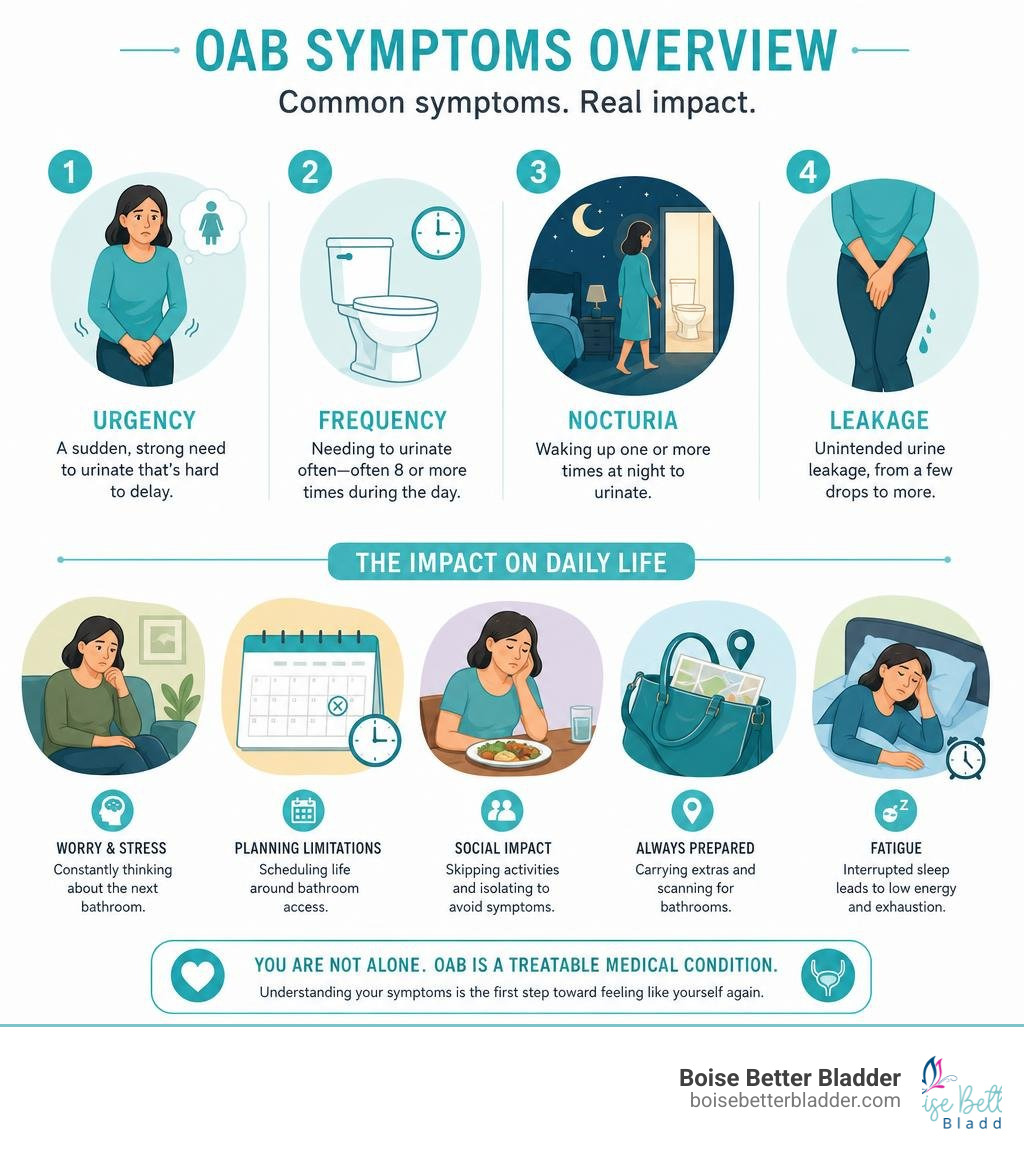
No matter which pattern you experience, the symptoms typically revolve around these key indicators:
Urgency: A sudden, compelling desire to urinate that is incredibly difficult to defer or ignore.
Frequency: Needing to urinate eight or more times within a 24-hour period.
Nocturia: Waking up two or more times during the night to urinate, which severely disrupts deep sleep cycles.
Urgency Incontinence: The involuntary loss of urine accompanied or immediately preceded by urgency.
The Emotional and Physical Toll of Bladder Imbalance
Living with OAB goes far beyond physical inconvenience. It reshapes how you interact with the world.
Many of the women who visit our clinic in Boise share stories of "toilet mapping"—constantly scanning any room, store, or restaurant they enter to locate the nearest restroom. This hyper-vigilance creates a background hum of chronic anxiety. Over time, it can lead to social isolation, as traveling, attending social events, or even going for walks in the park feel too risky.
At night, the physical toll increases. Waking up multiple times to rush to the bathroom in the dark creates sleep deprivation, which impairs immune function, memory, and mood. For older adults, nocturia is a leading cause of physical falls and fractures.
Furthermore, many women struggle with a combination of urgency incontinence and stress incontinence (leaking when coughing, sneezing, laughing, or exercising). This is known as mixed incontinence. Despite the profound impact on quality of life, fewer than half of those struggling actually consult a healthcare provider, often due to embarrassment or the mistaken belief that nothing can be done.
The Root Causes: Why the Bladder Contracts Involuntarily
Symptoms are signals. When the bladder contracts at the wrong times, it is telling us that the underlying communication pathways have been disrupted.
The bladder relies on a delicate balance between the central nervous system, the peripheral nerves in the pelvis, and the muscle tissue of the bladder wall. If the nervous system is in a state of constant high alert, or if the local nerves are irritated, they can misfire. These misfires cause the detrusor muscle to spasm involuntarily.
In women, this nerve-to-muscle communication is heavily influenced by hormonal balance. During perimenopause and menopause, estrogen levels decline. Estrogen plays a vital role in maintaining the health, elasticity, and blood flow of the pelvic tissues, the urethra, and the bladder lining. When estrogen levels drop, these tissues can thin and become highly sensitive, making the bladder hyper-reactive to even small amounts of urine.
If you are experiencing these changes, remember: your body isn’t failing you. It is simply adapting to a shift in its internal environment, and we can help guide it back to balance by Understanding Weak Pelvic Floor Treatment.
Risk Factors and the Aging Myth
While OAB is highly common in older populations—affecting roughly 30% of older men and 40% of older women—it is not an inevitable consequence of aging. It is a sign of underlying physiological imbalances that can occur at various stages of life.
Several key risk factors contribute to the development of overactive bladder:
Pregnancy and Childbirth: The physical pressure of pregnancy and the stretching of muscles during childbirth can cause severe strain to the levator ani muscle (the primary muscle of the pelvic floor). This structural trauma weakens the support system of the bladder.
Chronic Constipation: A full, impacted bowel sits directly against the bladder, physically pressing on it and irritating the nerves that control bladder contractions.
Cognitive Decline: Conditions like dementia or cognitive impairment can make it difficult for the brain to properly process the sensory signals sent by the bladder, leading to coordination issues.
Neurological Conditions: Stroke, multiple sclerosis, or Parkinson's disease can directly disrupt the nerve pathways between the brain and the bladder.
The Diagnostic Journey: Mapping Your Bladder Patterns
Finding the right path to relief begins with a thoughtful, comprehensive assessment. We don't believe in rushing into invasive testing. Instead, we focus on mapping your unique patterns to find the root cause of your symptoms.

A proper clinical evaluation starts with a detailed medical history and physical examination. To ensure we are dealing with idiopathic OAB and not an acute issue, a simple urinalysis is performed to exclude urinary tract infections (UTIs) or the presence of blood in the urine.
In some clinical settings, a post-void residual (PVR) test may be performed using a quick, non-invasive ultrasound to make sure your bladder is actually emptying completely when you do go. According to updated clinical guidelines, invasive diagnostic tests—such as cystoscopy (looking inside the bladder with a camera) or urodynamic pressure testing—should actively be avoided during an initial, uncomplicated OAB evaluation. You can read more about standard diagnostic pathways via the Overactive bladder - Diagnosis and treatment - Mayo Clinic resource page.
The Power of a Three-Day Bladder Diary
One of the most valuable tools we use is a simple, three-day bladder diary. It is a highly practical way to gather objective data about how your body is functioning in its natural environment.
For three consecutive days, you keep a written log of:
What you drink and when: Tracking your fluid intake, especially caffeine and alcohol.
When you urinate: Documenting the times of your bathroom visits.
The volume of urine: Using a simple collection cup to measure output (e.g., small, medium, or large amounts).
Leakage episodes: Noting if you leaked, what you were doing at the time, and whether you felt a sudden urge beforehand.
This diary often reveals surprising patterns. For instance, you might notice that your sudden urges spike exactly two hours after your morning cup of coffee, or that you are urinating frequently despite drinking very little water (which actually makes urine highly concentrated and irritating to the bladder lining).
Restoring Balance: First-Line Behavioral and Lifestyle Therapies
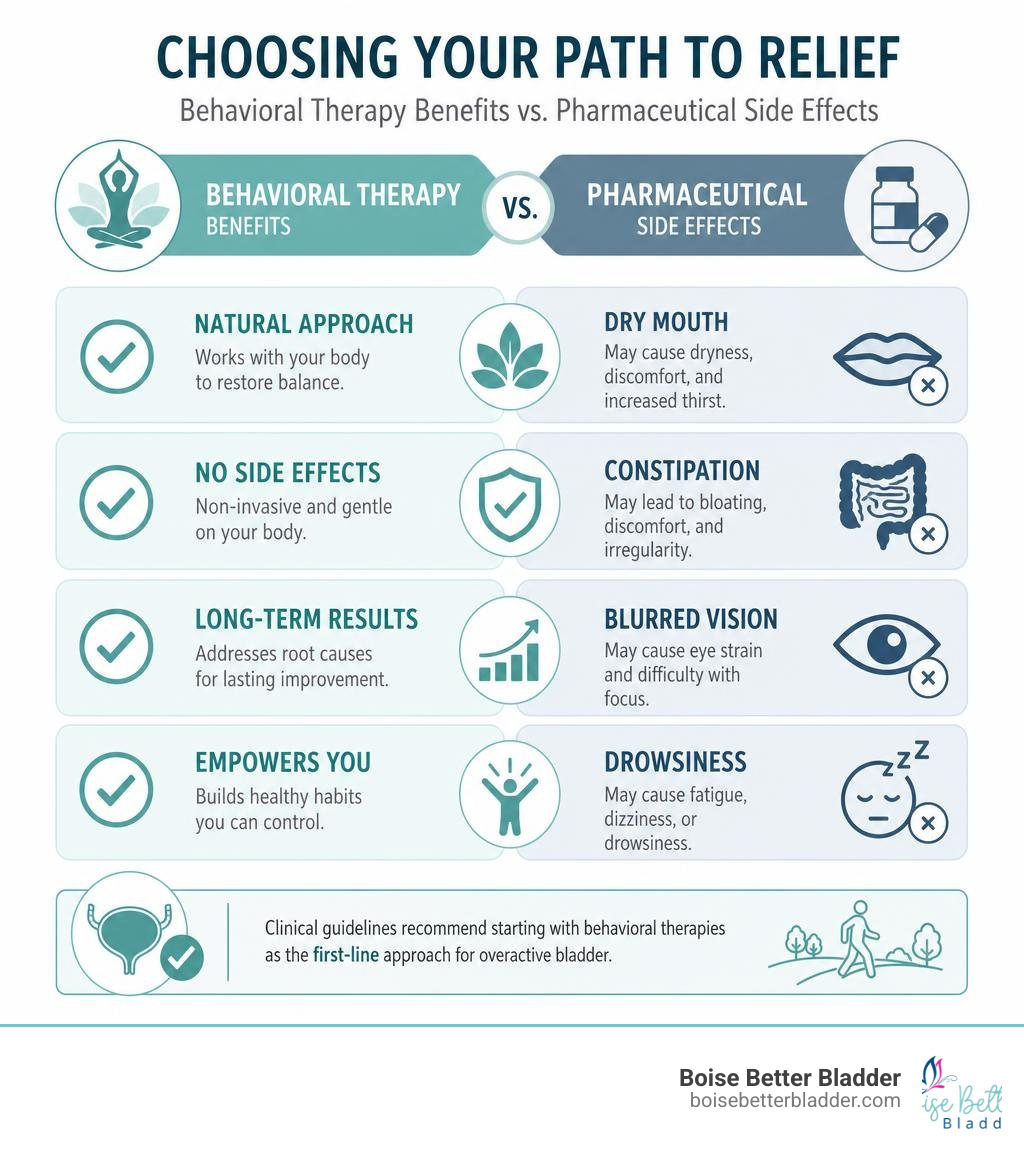
Before ever considering medications or surgeries, clinical guidelines strongly recommend starting with non-invasive, behavioral therapies. These natural approaches are highly effective and carry zero side effects.
The goal of behavioral therapy is to retrain the nervous system and rebuild the physical support structures of the pelvis.
Bladder Retraining: This involves establishing a timed voiding schedule. Instead of running to the bathroom the moment you feel an urge, you urinate on a set schedule (for example, every two hours). If an urge strikes before your scheduled time, you practice "urge suppression" techniques—such as taking deep, calming belly breaths and performing rapid pelvic floor contractions—to quiet the bladder spasm. Once the urge passes, you walk slowly to the restroom. Gradually, you increase the interval by 15 minutes, training your bladder to hold larger volumes.
Dietary Modifications: Eliminating common bladder irritants can drastically reduce sudden spasms. The primary culprits include caffeine, alcohol, carbonated beverages, spicy foods, artificial sweeteners, and highly acidic citrus fruits.
Healthy Hydration: Many people with OAB restrict their water intake, but this backfires. Dehydration leads to highly concentrated, acidic urine that severely irritates the bladder wall, worsening urgency. We recommend sipping moderate amounts of water consistently throughout the day.
Bowel Management: Addressing chronic constipation through dietary fiber, hydration, and movement is essential to relieve physical pressure on the bladder.
By implementing these steps alongside targeted Pelvic Muscle Strengthening, many women experience a dramatic reduction in their symptoms.
Addressing the Limitations of Traditional Pelvic Exercises
When women hear about pelvic floor strengthening, they immediately think of Kegel exercises. However, traditional Kegels have significant limitations.
First, studies show that up to 50% of women do not perform Kegels correctly when relying on written instructions alone. Many inadvertently squeeze their abdominal muscles, buttocks, or inner thighs while holding their breath—which actually increases downward pressure on the bladder and can worsen incontinence.
Second, traditional pelvic floor physical therapy often involves internal, manual pelvic exams and exercises. For many women, this clinical approach can feel highly uncomfortable, clinical, or invasive.
Furthermore, if your pelvic floor muscles are hypertonic (overly tight and unable to relax), performing repetitive Kegels without professional guidance can actually worsen your bladder urgency. This is why specialized, non-invasive support is so critical. If you are looking for a comfortable, professional alternative, you can explore specialized Pelvic Floor Physical Therapy Boise options that prioritize your comfort and privacy.
Understanding the Limitations and Risks of Conventional Bladder Medications
When conservative behavioral therapies aren't enough, traditional medicine often turns to prescription medications. However, these drugs come with significant trade-offs that cause many women to seek drug-free, non-invasive alternatives.
There are two primary classes of medications prescribed for overactive bladder:
Anticholinergics (such as oxybutynin, tolterodine, and solifenacin): These drugs work by blocking the chemical signals that cause the detrusor muscle to contract. Unfortunately, they block these signals throughout the entire body, leading to systemic side effects like severe dry mouth, dry eyes, and chronic constipation. Ironically, constipation puts pressure on the bladder, worsening OAB symptoms.
More concerningly, clinical updates have highlighted a serious link between the long-term use of anticholinergic medications and an increased risk of cognitive decline and dementia in older adults, as these drugs can cross the blood-brain barrier.
Beta-3 Agonists (such as mirabegron): These medications relax the detrusor muscle during the filling phase. While they do not carry the same cognitive risks as anticholinergics, they can significantly elevate blood pressure and cause headaches or sinus irritation.
Because of these systemic side effects and the prospect of lifelong drug dependency, many women actively look for ways to restore their bladder health naturally.
Why Invasive Procedures and Surgery are Viewed as Last Resorts
When medications fail or cause intolerable side effects, conventional urology offers third-line, minimally invasive procedures. However, these options are often temporary and carry their own risks:
Bladder Botox Injections: Botulinum toxin is injected directly into the bladder muscle via a cystoscope to paralyze parts of the muscle. While effective, the results typically wear off within six to nine months, requiring repeated procedures. Additionally, there is a risk of urinary retention (the inability to urinate at all), which can require the patient to self-catheterize.
Nerve Stimulation (Neuromodulation): This includes Percutaneous Tibial Nerve Stimulation (PTNS)—which involves inserting a needle electrode near the ankle once a week for 12 weeks—or surgically implanting a sacral nerve stimulator (a "bladder pacemaker") under the skin of the buttocks.
Surgical Interventions: Major surgeries, such as augmentation cystoplasty (using a piece of the bowel to enlarge the bladder) or urinary diversion, are highly invasive, carry significant surgical risks, and are reserved strictly as an absolute last resort for refractory, severe cases.
Because these interventions either carry surgical risks or offer only temporary relief, restoring the body's natural neuromuscular coordination through non-invasive means is always the preferred, safest path.
Frequently Asked Questions About Bladder Health
The body works in patterns. When we understand those patterns, we can find clear, reassuring answers to our most common questions.
Is overactive bladder an inevitable part of getting older?
No. While physiological changes like estrogen decline and muscle laxity are common as we age, overactive bladder is a highly treatable medical condition, not an inevitable consequence of growing older. You do not have to accept bladder leaks, constant urgency, or disrupted sleep as your "new normal." It is entirely possible to reclaim control of your bladder without relying on lifelong medications, invasive surgeries, or uncomfortable, clinical physical therapy.
What are the most common dietary triggers for bladder urgency?
The most common bladder irritants include:
Caffeine: A powerful diuretic and direct bladder muscle stimulant.
Alcohol: Acts as both a muscle relaxant (weakening the sphincter) and a bladder irritant.
Spicy Foods: Can irritate the sensitive lining of the bladder.
Citrus Fruits and Juices: High acidity levels can trigger sudden detrusor spasms.
How does acupuncture help restore bladder coordination?
Acupuncture works by directly interacting with the nervous system to calm overactive nerve pathways. By targeting specific points that correspond to the sacral nerve plexus (the nerve center controlling the bladder and pelvic floor), acupuncture helps restore proper communication between the brain and the bladder. It calms the "fight or flight" sympathetic nervous system, reduces involuntary detrusor contractions, and improves local blood circulation to promote tissue healing.
For women seeking a holistic, evidence-based approach to bladder control, clinical studies support the efficacy of Acupuncture for Women with Overactive Bladder - PMC - NIH.
Restoring Your Freedom and Confidence
Bringing it all together, it is important to remember that your body is not failing you; it is simply communicating that its internal systems have lost their coordination. Whether your symptoms were triggered by childbirth, hormonal shifts during menopause, or the natural changes of aging, you deserve a solution that addresses the root cause of your discomfort rather than just managing the symptoms with pads or pills.
At Boise Better Bladder, we provide a specialized, drug-free, and non-surgical program designed specifically for women in Boise, Meridian, Eagle, Nampa, and Caldwell.
Our unique, signature approach combines two powerful, non-invasive therapies to restore your pelvic health:
Advanced HIFEM Technology: Our FDA-cleared electromagnetic chair allows you to remain fully clothed while receiving deep, targeted stimulation to the pelvic floor. A single 30-minute session delivers the equivalent of 25,000 perfectly coordinated Kegel exercises, rebuilding muscle strength and structural support far more effectively than traditional exercises ever could.
Holistic Acupuncture Healing: By combining modern muscle-strengthening technology with time-tested acupuncture techniques, we calm the irritated nerve pathways that trigger sudden urgency. This dual approach restores both physical strength and neurological coordination to your bladder.
If you are ready to stop mapping toilets, sleep peacefully through the night, and return to the activities you love with absolute confidence, we invite you to explore our comprehensive Overactive Bladder Treatment program.
Your body is ready to heal. When you are ready to take the first step toward lasting relief, we invite you to Book an Appointment with us today.
