
Postpartum Incontinence Solutions for Busy Moms
Postpartum Bladder Leaks Are Common, but You Have Options
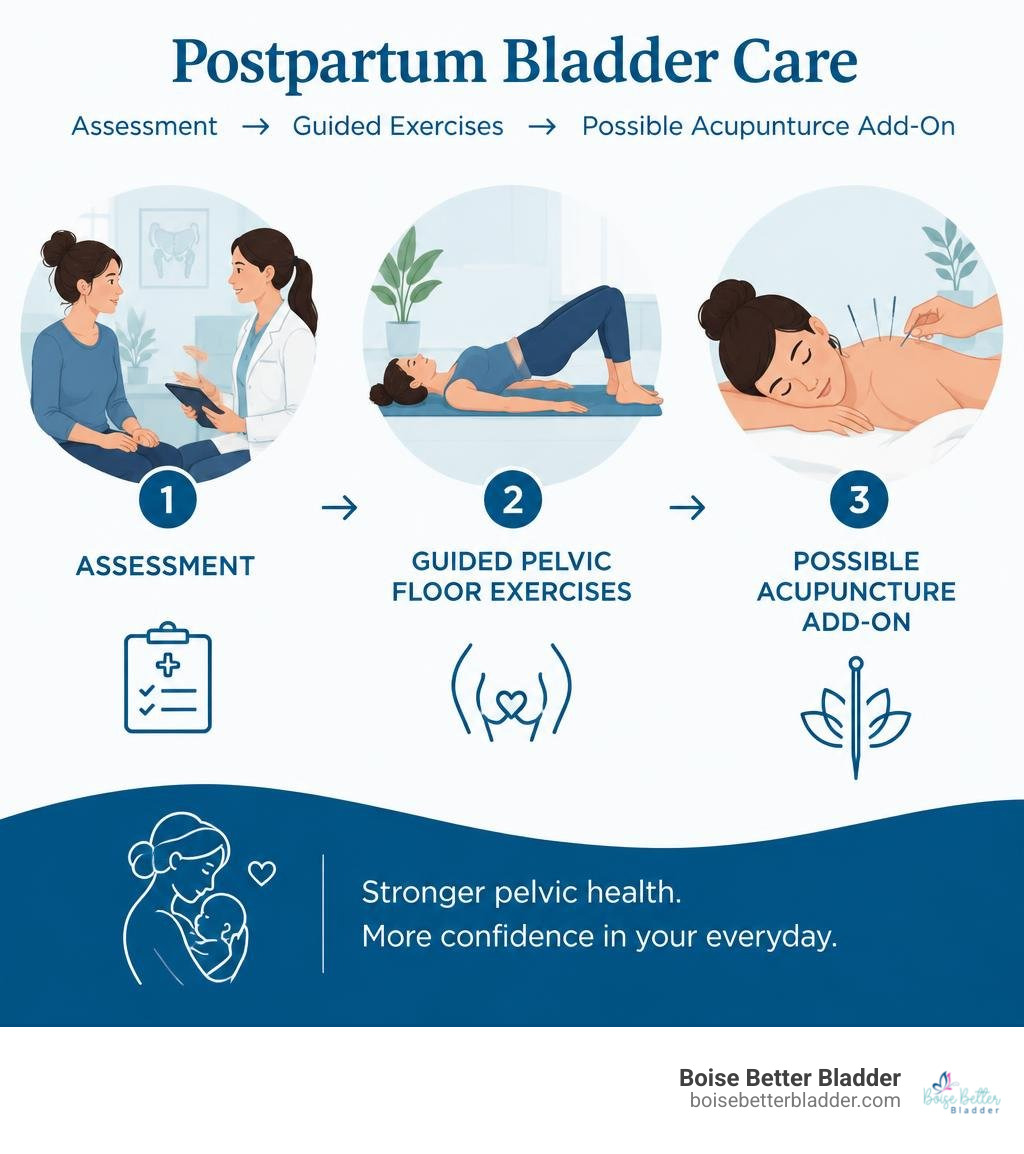
If you leak when you cough, laugh, or lift your baby, start with a pelvic health assessment and guided pelvic floor exercises. If leaks continue, ask your clinician whether meridian-based acupuncture could be a useful add-on. Research on acupuncture specifically for postpartum incontinence is still limited, so it should not replace established care.
Postpartum leaks can affect your confidence as well as your daily routine. They are a signal to look at how your pelvic floor muscles, abdominal support, and nervous system work together - not a sign that your body is failing you.
I'm Dr. Kimberly Thomspon, DACM, L.Ac., and I've worked with hundreds of women facing bladder control and pelvic floor concerns. I'll explain where meridian postpartum incontinence care may fit alongside pelvic floor therapy, and where the evidence still has gaps.
Why Standard Kegel Exercises Often Fall Short After Childbirth
A widespread misunderstanding surrounding postpartum recovery is that bladder leaks stem solely from lazy or deconditioned muscles. Women are frequently told to simply perform hundreds of Kegel contractions throughout the day. While traditional pelvic floor muscle training (PFMT) can achieve meaningful clinical efficacy, it typically requires at least three months of strict daily adherence to see peak benefits. For many mothers, self-guided contractions fail to resolve symptoms.
Symptoms are signals. When standard contractions do not stop leakage, the typical explanation—that the muscle is merely weak—is incomplete. Incontinence after childbirth is rarely just an isolated muscle-strength deficit. It is fundamentally an issue of neuromuscular timing, structural support, and autonomic regulation.
During vaginal delivery or extended labor, the pelvic floor tissues, connective fascia, and pudendal nerve branches undergo immense mechanical stretch. This can leave the musculature in one of two distinct functional states:
Neuromuscular Underactivity (Laxity): The muscles are overstretched and struggle to generate adequate urethral closure pressure during sudden increases in intra-abdominal pressure (such as laughing, coughing, or jumping).
Protective Muscle Overactivity (Hypertonicity): The pelvic floor muscles clench into a chronic spasm to stabilize an unstable pelvis. A tight, fatigued muscle cannot contract further when you sneeze, leading to unexpected leaks.
When women attempt standard pelvic floor exercises for women on a hypertonic or poorly coordinated pelvic floor, they often inadvertently reinforce muscle tension or recruit compensatory muscle groups like the inner thighs and glutes. Without targeted guidance, generic weak pelvic floor exercises can stall recovery rather than restore dynamic continence.
The Relationship Between Abdominal Separation and Pelvic Floor Strength
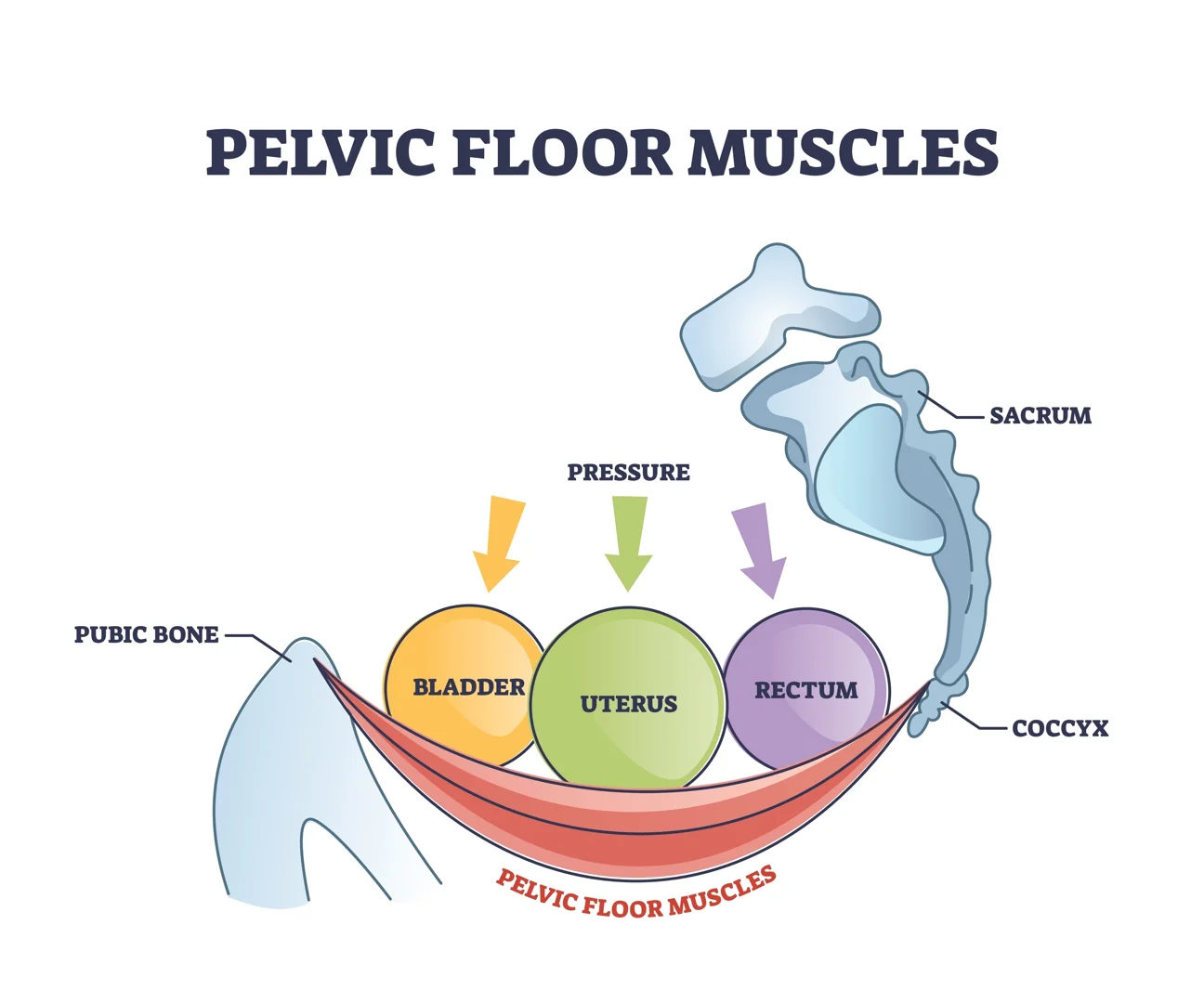
The body works in patterns. The pelvic floor does not function in isolation; it operates as the base of a dynamic muscular canister consisting of the diaphragm at the top, the deep transverse abdominis at the front and sides, and the multifidus along the spine.
During pregnancy, expanding uterine volume frequently leads to diastasis recti abdominis (DRA)—a widening of the inter-rectus distance along the linea alba. When the abdominal wall is compromised, the body struggles to manage intra-abdominal pressure correctly. Every time you lift your baby, cough, or bend down, pressure that should be dispersed across a strong abdominal wall is directed straight down onto the healing pelvic floor.
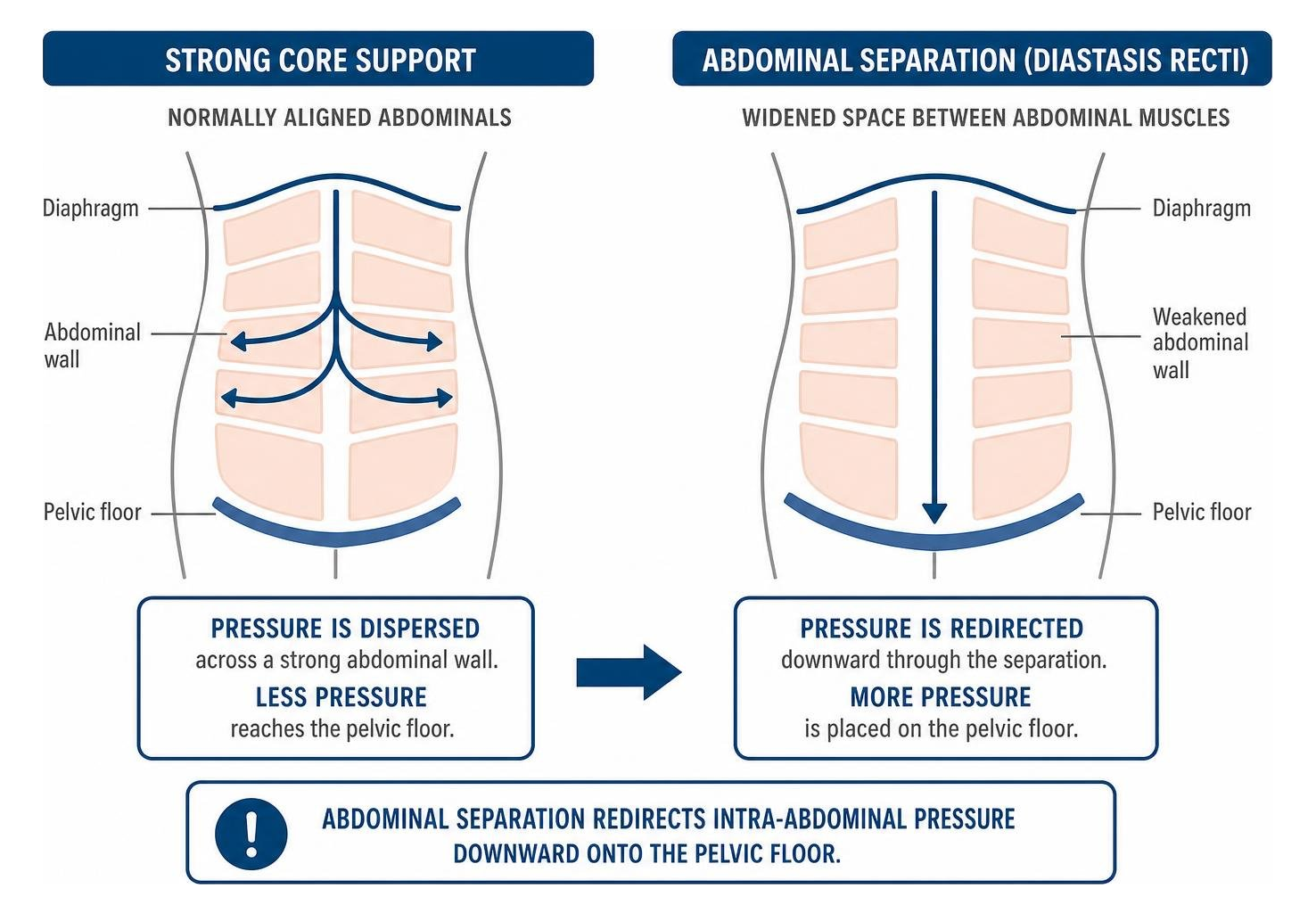
Achieving true continence requires addressing this deeper structural pattern. A comprehensive recovery plan must stabilize the abdominal midline while re-educating the pelvic base. When evaluating your recovery, understanding weak pelvic floor treatment through this whole-body lens ensures that both the anterior core and the pelvic floor are rehabilitated together.
Comprehensive Approaches to Meridian Postpartum Incontinence
In clinical practice, we view postpartum recovery through both modern neuroanatomy and classical meridian pathways. Traditional Chinese Medicine identifies the flow of Qi (vital energy) and blood along specific functional meridians. Childbirth places significant demand on the Spleen, Kidney, and Conception Vessel (Ren Mai) meridians, which govern tissue integrity, structural holding capacity, and fluid metabolism.
When evaluating meridian postpartum incontinence, we focus on restoring neurological signaling and local microcirculation through specific, clinically evaluated acupoints:
Sanyinjiao (SP6): Located on the lower leg, this point is the intersection of the Spleen, Liver, and Kidney meridians. Stimulating SP6 helps balance pelvic blood flow, tone smooth muscle structures, and calm hyperactive autonomic signaling to the bladder.
Zhongji (CV3): Situated on the lower midline over the bladder reflex zone, CV3 directly influences local nerve pathways governing the bladder base and urethral sphincter mechanism.
Taichong (LR3): Positioned on the foot along the Liver meridian, this point regulates systemic neuromuscular tension, down-regulating stress patterns that cause pelvic floor muscle clenching.
Stimulating these pathways promotes central and peripheral nervous system communication, helping the brain and pelvic floor coordinate resting tone and reflex contractions.
Treatment Approach | Mechanism of Action | Clinical Advantages | Primary Limitations |
|---|---|---|---|
Self-Directed Kegel Exercises | Voluntary muscle recruitment | Cost-effective; can be done at home | High rate of incorrect technique; requires months of strict compliance |
HIFEM Technology | Electromagnetic motor neuron depolarization | Delivers 25,000 supramaximal contractions in 30 minutes; non-invasive | Focuses primarily on motor endplates; requires clinic visits |
Integrated HIFEM + Meridian Therapy | Dual electromagnetic motor stimulation and neuro-energetic regulation | Re-educates deep motor fibers while restoring microcirculation and nerve pathways | Requires a specialized clinical setting |
Integrating Traditional Meridian Postpartum Incontinence Care with Modern Therapy
While meridian therapy supports circulation and neural signaling, modern regenerative technologies provide profound muscular re-education. In our clinical protocols, we combine meridian acupuncture with High-Intensity Focused Electromagnetic (HIFEM) technology.

HIFEM technology utilizes focused electromagnetic fields to depolarize motor neurons in the pelvic floor. A single 30-minute session generates roughly 25,000 supramaximal contractions—muscle activations that cannot be achieved through voluntary exercise alone. This process triggers deep structural remodeling of the pelvic musculature, thickening supportive connective fascia and restoring resting sphincter tone.
By coupling this modern technology with acupuncture, we treat both the structural musculature and the underlying nerve pathways. For women seeking effective postpartum incontinence help, this integrated strategy bridges traditional holistic medicine and advanced physiological rehabilitation.
Managing Meridian Postpartum Incontinence and Diastasis Recti
Meridian care also offers measurable benefits for abdominal separation. Research demonstrates that applying row-like needling along the Spleen meridian—specifically targeting points like Daheng (SP15) and surrounding connective tissue—significantly reduces inter-rectus distance compared to exercise alone.
Stimulating the Spleen meridian enhances microcirculation and collagen synthesis along the linea alba. When paired with functional movement, this approach tightens the abdominal midline, normalizes intra-abdominal pressure dynamics, and relieves chronic downward strain on the bladder neck.
Practical Care, Protection, and Modern Treatment Options for Busy Mothers
For mothers navigating the postpartum period, finding hours for daily rehabilitation exercises or frequent clinic visits can be overwhelming. Early in recovery, many women rely on specialized postpartum maternity pads to manage unexpected leaks while their tissues heal. However, temporary protection is not a permanent solution for root-cause healing.
Your body isn’t failing you; it simply needs targeted, efficient support. Modern non-invasive therapies are specifically designed to respect a busy schedule:
Time Efficiency: Advanced in-clinic sessions take just 30 minutes, allowing patients to remain fully clothed while receiving intensive neuromuscular rehabilitation.
Objective Tracking: Progress is tracked using validated clinical metrics, such as 1-hour pad weight tests and standardized quality-of-life questionnaires (such as the ICIQ-SF), ensuring measurable recovery without guesswork.
Low Burden, High Impact: Combining meridian-based care with electromagnetic stimulation eliminates the frustration of unguided home routines, producing noticeable improvements in muscle control and tone within weeks.
Navigating In-Clinic Pelvic Care in Idaho
For mothers across Boise, Meridian, Eagle, Nampa, and Caldwell, access to localized, non-surgical pelvic care makes postpartum recovery manageable. Rather than traveling out of state or resorting to invasive surgical consults, Treasure Valley mothers can access comprehensive protocols that restore bladder control comfortably and safely.
Bringing It All Together: Restoring Confidence and Long-Term Bladder Control
Postpartum recovery is not a matter of trying harder with isolated exercises; it is about restoring communication throughout your entire core and pelvic network. When we align muscular strength, nerve pathways, and structural balance, the body responds naturally.
By integrating meridian therapy with modern neuromuscular restoration, you address the root causes of bladder leaks—improving urethral closure pressure, repairing the abdominal wall, and calming overactive bladder reflexes. This comprehensive approach allows you to return to lifting your children, running, and enjoying daily life with total confidence.
Frequently Asked Questions About Meridian Postpartum Incontinence
How does meridian therapy influence pelvic floor function and bladder control?
Meridian therapy utilizes specific acupoints (such as SP6, CV3, and LR3) to stimulate somatic and autonomic nerve branches, including the pudendal nerve network. This stimulation enhances pelvic microcirculation, reduces localized muscle spasms, and helps regulate the neuromuscular reflexes that control the urethral sphincter and bladder wall.
How can busy mothers fit in-clinic care into their schedules?
Non-invasive protocols are designed for maximum time efficiency. Sessions typically last 30 minutes, require no downtime, and are performed fully clothed. This allows mothers to integrate care into their weekly schedule without disrupting family or work commitments.
How soon after delivery is it appropriate to begin non-invasive pelvic restoration?
Most women can begin gentle evaluations and conservative non-invasive protocols around the 42-day (6-week) postpartum mark, following clearance from their obstetrician or midwife. This ensures that initial tissue healing is complete before beginning active neuromuscular rehabilitation.
Conclusion
At Boise Better Bladder, we believe that no woman should have to accept bladder leaks as a permanent consequence of motherhood. Our signature program combines advanced, FDA-cleared HIFEM technology—delivering the equivalent of 25,000 Kegels in a single 30-minute session—with holistic acupuncture protocols to restore strength, nerve communication, and vitality to your pelvic floor.
If you are ready to address the root cause of your symptoms without surgery, medications, or invasive procedures, we invite you to explore our pelvic health options and take the first step toward lasting comfort and freedom.
