
Struggling With Pelvic Muscle Weakness in Nampa?
How to Start Restoring Pelvic Floor Strength in Nampa
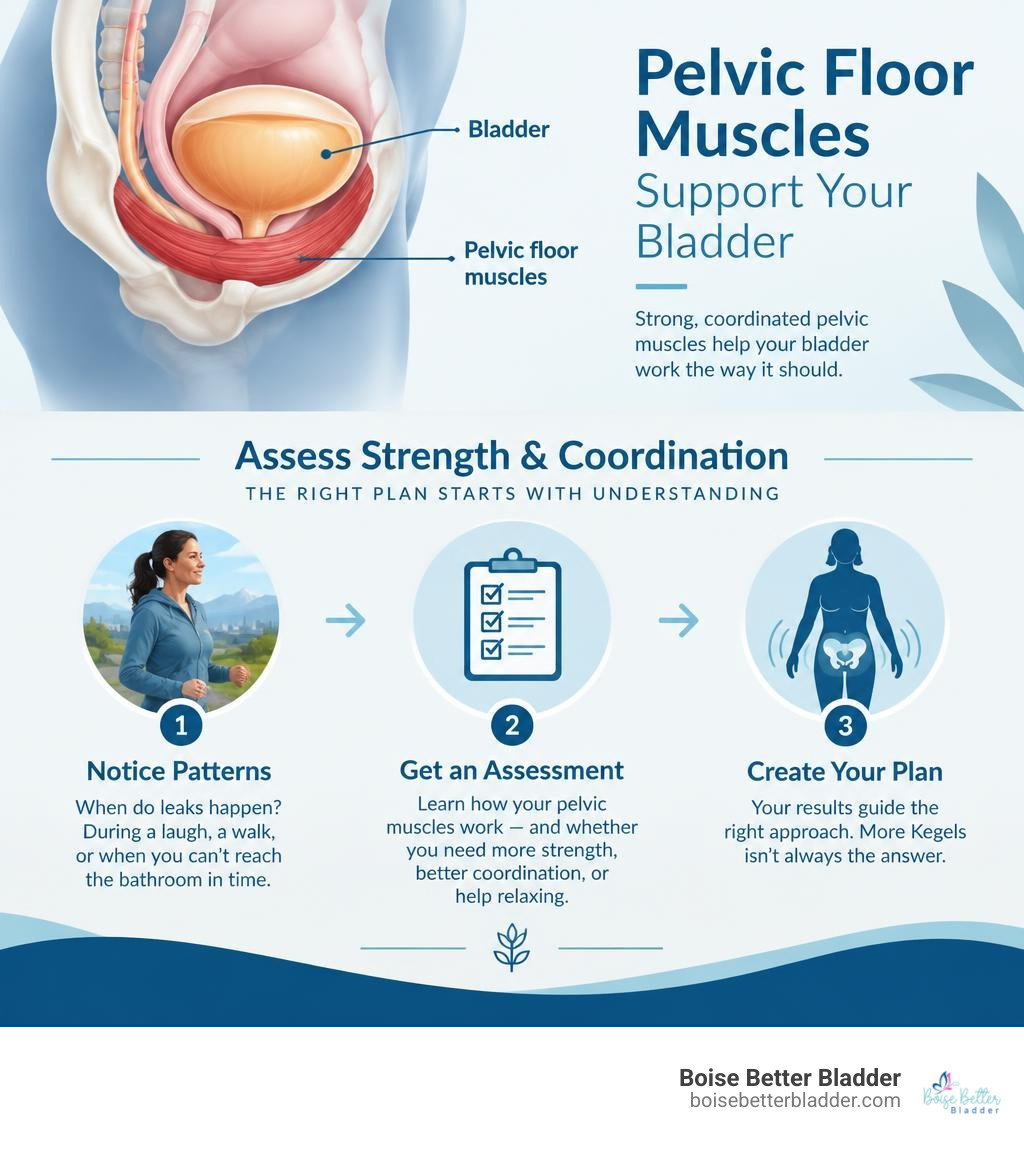
Start by noticing when leaks happen: during a laugh, on a walk, or when you cannot reach the bathroom in time. Then seek an assessment of how your pelvic muscles work, including whether they need more strength, better coordination, or help relaxing. The right plan depends on that pattern. Doing more Kegels is not always the answer.
If you have tried exercises or pads without lasting relief, your symptoms are still worth exploring. At Boise Better Bladder, care may include non-invasive HIFEM technology and acupuncture when they fit your needs. The goal is to understand what your body is telling you and choose a practical next step.
If you're considering nampa pelvic floor restoration, I'm Kimberly Thomspon, DACM, L.Ac., and I've worked with hundreds of women facing bladder control and pelvic floor concerns. I'll walk you through how pelvic strength works and what to consider as you choose care. For a broader medical perspective on pelvic floor dysfunction, the Cleveland Clinic offers a helpful overview of how these muscles support bladder and bowel function.
Why Conventional Muscle Strengthening Alone Often Falls Short
When women first notice involuntary leaks, a common assumption is that the muscles of the pelvic sling have simply lost tone and need basic isolation exercises. We are often told to practice standard Kegels throughout the day while driving, working, or cooking dinner. Yet for many women across Nampa and the greater Treasure Valley, months of disciplined squeezing yield little change.
The body works in patterns. A common misunderstanding is viewing the pelvic diaphragm as a simple mechanical switch that is either turned on or off. In clinical reality, weakness is rarely an isolated problem of low effort.
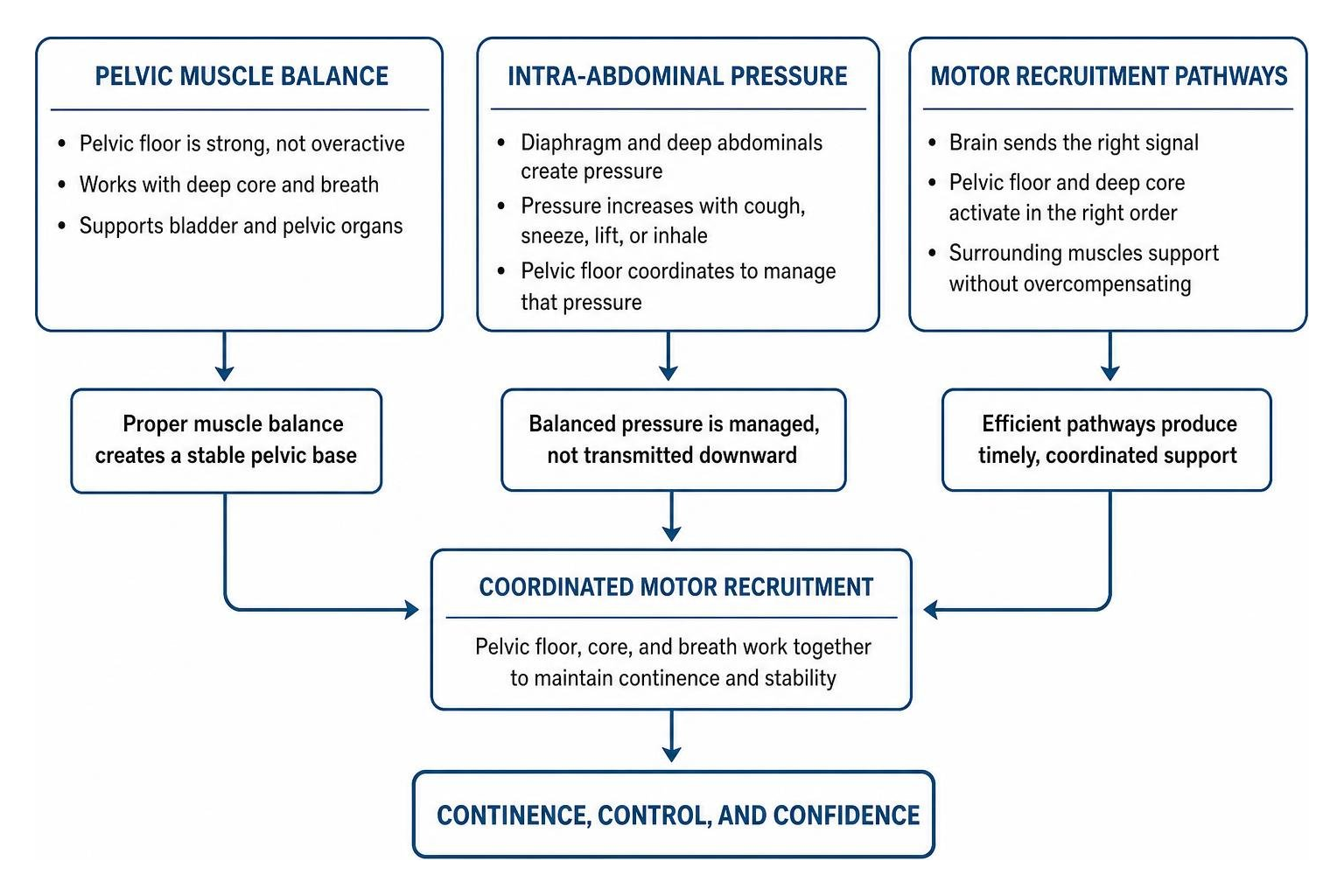
When evaluating pelvic floor dysfunction, we frequently encounter underlying physiological factors that simple clenching cannot resolve:
Muscle Hypertonicity: When muscles are chronically tight, shortened, and overactive, they become functionally weak. A muscle cannot generate a supportive contraction if it is already locked in a state of tension.
Faulty Compensation Patterns: The body compensates when primary stabilizers underperform. Surrounding muscle groups—such as the glutes, deep hip rotators, and inner thighs—often grip tightly to provide stability, masking the true root cause.
Imbalances in Intra-Abdominal Pressure: Every time we cough, sneeze, lift a child, or inhale deeply, the diaphragm and deep abdominal wall create downward pressure. If the pelvic floor cannot coordinate with your breath, leaks occur regardless of basic strength.
Disrupted Motor Coordination: Pelvic control requires rapid, subconscious firing rather than just slow, voluntary contractions.
True restoration requires addressing these deeper biomechanical and neurological imbalances. Gaining a clearer perspective on understanding weak pelvic floor treatment allows us to move away from isolated muscle squeezing and toward genuine functional support.
The Neuromuscular Component of Pelvic Dysfunction
Symptoms are signals. When bladder control wavers, it often indicates an interruption in communication between the central nervous system and the pelvic diaphragm.
The pelvic floor consists of layered skeletal muscle that must operate both voluntarily and involuntarily. While you can choose to contract these muscles consciously, their primary role—holding back urine during a sudden laugh or supporting your pelvic organs throughout the day—depends on reflex loops managed by autonomic and somatic nerve pathways.
When local nerve communication is sluggish or desensitized, the brain cannot recruit the full volume of muscle fibers required to resist sudden spikes in pressure. Effective pelvic muscle strengthening must therefore awaken these motor pathways, retraining the neuromuscular system to fire automatically and completely.
How Hormones and Childbirth Weaken the Pelvic Diaphragm
Two of the most significant life transitions for women—pregnancy and hormonal shifts—deeply influence connective tissue integrity.
During pregnancy and vaginal delivery, the pelvic diaphragm undergoes prolonged strain and physical stretching. Even years into postpartum recovery, micro-tears in fascial connective tissue, nerve compression, or surgical scars can disrupt normal muscle activation.
Later in life, as systemic estrogen levels naturally decline during perimenopause and menopause, blood flow to the urogenital tissue decreases. Estrogen plays a vital role in maintaining collagen synthesis and cellular hydration within the pelvic fascia and urethral lining. As this structural support softens, women may notice an increase in urinary urgency, stress leaks, or the heavy, downward sensation of pelvic organ prolapse.
Your body isn’t failing you. It is adapting to physiological transitions that simply require specialized, restorative support.
Comprehensive Solutions for Nampa Pelvic Floor Restoration
Restoring pelvic health should not require invasive surgeries, uncomfortable probes, or years of symptom management with disposable pads. At Boise Better Bladder, we combine targeted neuromuscular conditioning with restorative medicine to treat the whole person.
Restoration Component | Clinical Focus | Mechanism of Action | Patient Experience |
|---|---|---|---|
HIFEM Technology | Deep muscle recruitment & motor control | High-Intensity Focused Electromagnetic energy induces supramaximal contractions | Fully clothed, seated comfortably on an ergonomic chair |
Holistic Acupuncture | Nerve regulation, circulation & tissue healing | Restores systemic communication, calms bladder urgency, optimizes blood flow | Relaxing, gentle, whole-body clinical setting |
Pattern Assessment | Identifying root-cause imbalances | Evaluates pressure management, core coordination, and autonomic tone | Personalized, non-invasive clinical evaluation |

Holistic Support for Pelvic Muscle Function
In our clinical practice, we view local symptoms through the lens of whole-body balance. Chronic pelvic tension, bladder frequency, and sudden urgency often stem from a sensitized, overactive nervous system.
By integrating specialized acupuncture techniques into pelvic muscle therapy, we work to modulate the autonomic pathways that regulate bladder spasms, reduce local inflammation, and enhance microcirculation to pelvic ligaments. This systemic support creates the optimal physiological environment for tissues to rebuild and adapt.
Advanced Non-Invasive Technology for Nampa Pelvic Floor Restoration
While traditional exercises only engage a fraction of available muscle fibers, modern medical advancements allow us to stimulate deep neuromuscular layers without invasive procedures.
Our signature program utilizes FDA-cleared High-Intensity Focused Electromagnetic (HIFEM) technology. This modality generates focused electromagnetic fields that penetrate the entire pelvic floor, triggering thousands of "supramaximal" contractions. These contractions are far deeper and more coordinated than what can be achieved through voluntary effort alone.
In a single 30-minute session, the device stimulates the equivalent of approximately 25,000 perfectly timed contractions. This intensive stimulation rebuilds muscle density, strengthens connective tissue, and recalibrates the neuromuscular reflexes responsible for bladder control. You can explore how non-invasive restoration works to see how this technology supports long-term structural recovery.
Specialized Restorative Care Across the Treasure Valley
Women living in Nampa, Caldwell, Meridian, Eagle, and Boise deserve access to dignified, comfortable care that respects their time and comfort.
Rather than relying on invasive internal exams or temporary symptom covers, our clinic focuses on gentle, evidence-based methods that help you return to running, laughing, traveling, and playing with your family without anxiety. Learn more about specialized restorative care and how our patient-first philosophy guides our clinical practice.
Step-by-Step Pathway to Rebuilding Pelvic Strength
Reclaiming your comfort and physical stability follows a structured, supportive clinical pathway designed around your unique health history.

Initial Consultation and Symptom Review
Every restorative journey begins with listening. During your comprehensive assessment, we discuss:
Symptom Mapping: When leaks occur, what activities trigger urgency, and how symptoms affect your daily routines.
Health History: Reviewing past pregnancies, deliveries, abdominal surgeries, postural habits, and hormonal milestones.
Pattern Recognition: Assessing how your nervous system, breath patterns, and pelvic floor interact.
Suitability & Planning: Determining if HIFEM technology and holistic modalities are the right fit for your goals and creating a personalized schedule of care.
What to Expect During Nampa Pelvic Floor Restoration
When you arrive for treatment, there is no need to change into a hospital gown or endure uncomfortable physical exams.
You remain fully clothed and sit comfortably on our specialized treatment chair. As the session begins, you will feel rhythmic, gentle tapping and firm contractions as the electromagnetic waves engage your pelvic floor. The intensity is adjusted to your comfort level throughout the 30-minute visit.
Most women read a book, listen to a podcast, or simply relax during their appointment. Because the treatment is non-invasive, there is zero downtime—you can immediately return to your normal daily activities in Nampa.
Frequently Asked Questions About Pelvic Floor Restoration in Idaho
What happens during an initial consultation?
We take the time to review your medical background, pregnancy history, daily habits, and specific symptoms. We will discuss what your body is experiencing, explain the underlying patterns contributing to your concerns, and outline a clear, step-by-step treatment plan tailored to your needs.
How long does pelvic floor restoration typically take?
Individual care plans vary depending on the chronicity of symptoms and the baseline tone of your pelvic floor. Most patients complete a series of sessions spaced over several weeks. Because neuromuscular conditioning is cumulative, many women notice measurable improvements in bladder control, core stability, and urgency within the first few weeks of consistent care.
What does the Boise Better Bladder program include?
Our program pairs advanced, non-invasive HIFEM sessions with restorative acupuncture techniques and lifestyle education. This dual approach addresses both the physical strength of the pelvic diaphragm and the underlying nervous system pathways that govern bladder reflexes, supporting lasting functional stability.
Bringing It All Together: Reclaiming Confidence and Control
Bladder leaks, sudden urgency, and pelvic instability are common experiences, but they are not an inevitable part of aging or motherhood. When you understand the deeper patterns driving your symptoms, you can move past temporary fixes and address the root cause of muscle weakness.
Rebuilding functional control gives you back the freedom to exercise, travel, and enjoy daily life in the Treasure Valley without planning around the nearest restroom.
If you are ready to explore a comfortable, non-invasive path forward, we invite you to book an initial consultation with our team. You can also explore complete pelvic restoration options to learn how we help women restore strength, coordination, and confidence.
