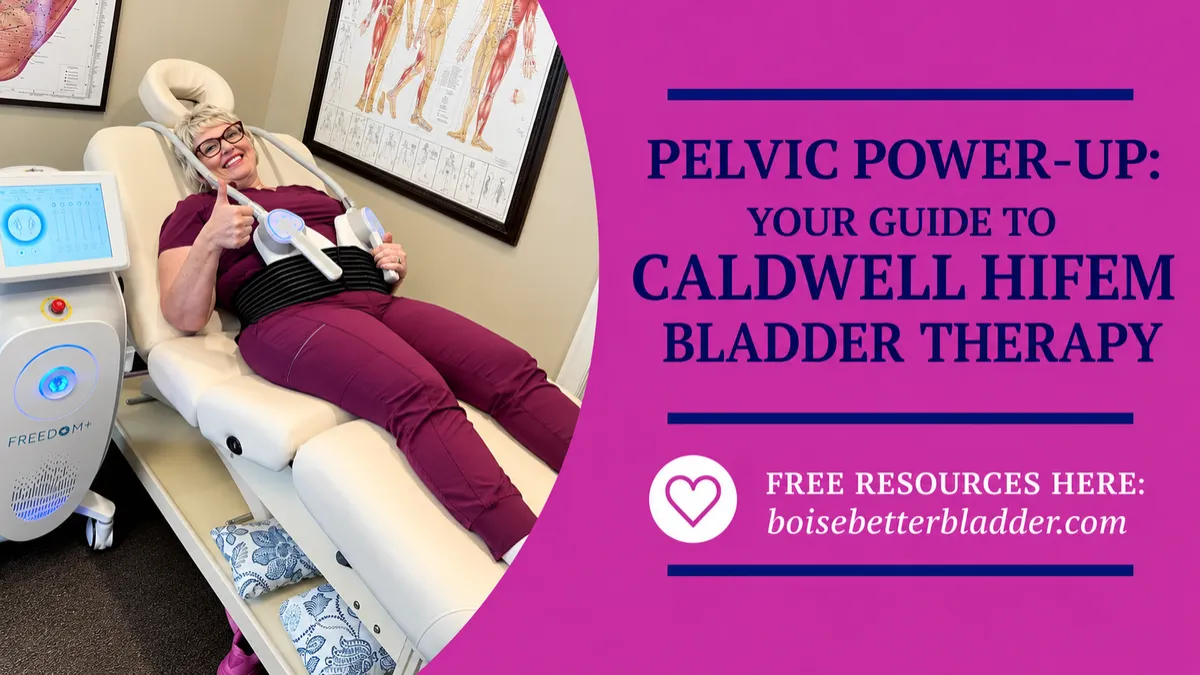
Pelvic Power-Up: Your Guide to Caldwell HIFEM Bladder Therapy
Bladder Leaks Are Not Just "Part of Getting Older"
Caldwell HIFEM bladder therapy is a non-invasive, clinically proven treatment that uses high-intensity focused electromagnetic energy to deeply strengthen the pelvic floor muscles — restoring bladder control without surgery, medication, or discomfort.
Quick answer: What is Caldwell HIFEM bladder therapy?
It uses electromagnetic waves to trigger thousands of deep pelvic floor muscle contractions per session
Each 28-minute session is equivalent to over 11,000 Kegel exercises — performed while you sit fully clothed
The standard protocol is 6 sessions over 3 weeks, with maintenance every 3–4 months
Clinical studies show 95% of patients report improved quality of life, with a 75% reduction in pad use
It works for stress urinary incontinence, urge incontinence, mixed incontinence, and postpartum pelvic floor weakness
If you have been told that bladder leaks are simply something you have to "manage" as you age, I want you to hear this clearly: your body is not failing you. Leaks, urgency, and loss of control are signals. They are telling you that something specific — your pelvic floor muscles — has become deconditioned and is no longer communicating properly with your bladder.
Most women who come to me have already tried Kegels, physical therapy, or medications. Many felt dismissed. Some were told surgery was their only real option. What they were rarely told is that the root cause — weakened, neurologically compromised pelvic floor muscles — can be directly and measurably addressed with the right technology.
That is exactly where HIFEM therapy comes in.
I'm Dr. Kimberly Thompson, DACM, L.Ac., and I've spent years helping women in the Caldwell and Treasure Valley area address bladder control issues through my integrative approach — combining Caldwell HIFEM bladder therapy with acupuncture and whole-body care to treat both the muscular and neurological roots of incontinence. This guide will walk you through exactly how this therapy works, what the clinical evidence shows, and whether it may be the right path forward for you.
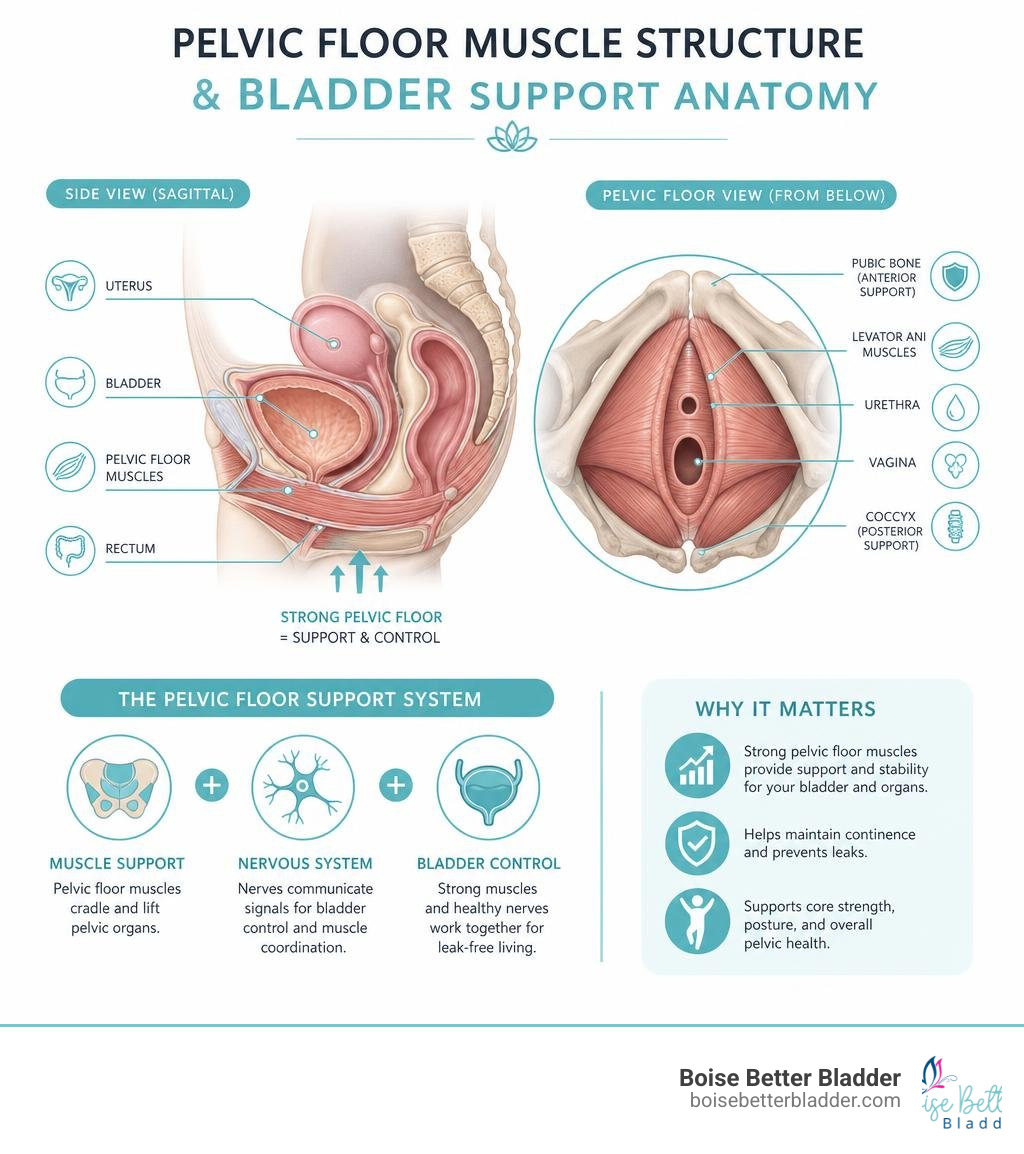
The Science of Neuromodulation: How Caldwell HIFEM Bladder Therapy Restores Pelvic Integrity
To understand how high-intensity focused electromagnetic (HIFEM) therapy heals the bladder, we must look past the surface of the skin and explore how muscles and nerves communicate.
Traditional pelvic treatments often focus solely on the physical strength of the muscles. However, the body works in patterns. A muscle cannot contract, relax, or support your organs without a clear, uninterrupted signal from the nervous system. When pelvic floor tissues are stretched or damaged due to childbirth, hormonal shifts during menopause, or chronic strain, those communication lines are disrupted.
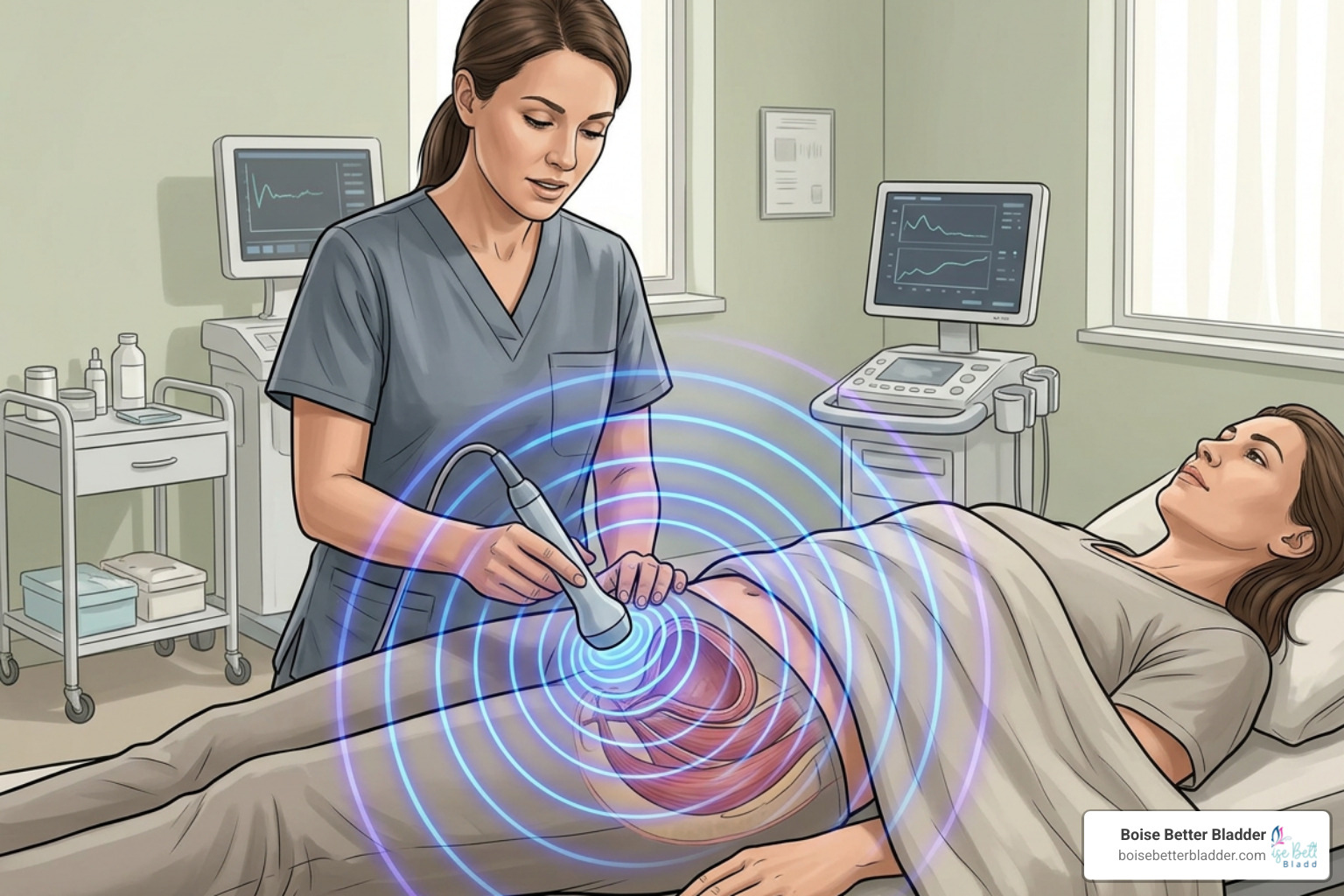
HIFEM technology works through the principle of electromagnetic induction. When you sit on the specialized therapy chair, the device projects a focused, alternating magnetic field (typically measured at 2.5 Tesla) directly into the pelvic floor. As this magnetic field passes through the tissues, it generates localized electrical currents — known as eddy currents — within the deep pelvic structures.
These eddy currents gently depolarize the motor neurons responsible for controlling your pelvic floor muscles. By depolarizing these nerves, the technology forces the muscles to contract. This process completely bypasses the central nervous system, meaning the contractions are automatic, involuntary, and far more powerful than anything your brain could consciously coordinate.
During a single, comfortable session, this deep neuromodulation achieves two critical physiological changes:
Muscle Fiber Hypertrophy: The existing muscle fibers (myofibrils) grow larger and stronger to handle the deep stimulation.
Muscle Fiber Hyperplasia: The high-intensity stimulation triggers the creation of entirely new protein strands and muscle fibers, physically rebuilding the structural wall that supports your bladder and urethra.
This dual action of building muscle volume and restoring nerve communication is why we see such profound, lasting changes. To dive deeper into the clinical trials validating this technology, you can review this Scientific explanation of HIFEM mechanism. For a broader look at how we approach muscle rehabilitation in our clinic, read our detailed guide on pelvic muscle therapy.
Comparing Caldwell HIFEM Bladder Therapy to Traditional Pelvic Floor Muscle Training
When a patient is diagnosed with pelvic floor weakness, the standard recommendation is almost always to "do your Kegels." While pelvic floor muscle training (PFMT) is a valuable tool, it has severe physiological limitations — especially for those whose pelvic floors are already significantly compromised.
When you perform a voluntary Kegel, you are attempting a Maximal Voluntary Contraction (MVC). This contraction is limited by your existing muscle strength and your brain's ability to locate and activate those deep, hidden muscles. In fact, studies show that up to 30% of women who attempt voluntary Kegels are actually performing them incorrectly — often pressing down instead of lifting up, which can worsen bladder leaks.
Furthermore, a voluntary contraction can only be held for a few seconds before the muscle tires.
Our signature Caldwell HIFEM bladder therapy program bypasses these limitations entirely. Instead of relying on your brain to find the muscles, the electromagnetic field targets the entire pelvic floor uniformly. It delivers supramaximal contractions — contractions held at 100% intensity for several seconds at a time. While a standard session on a basic device can deliver the equivalent of 11,200 Kegels, our advanced, clinical program at Boise Better Bladder delivers up to 25,000 supramaximal contractions in a single, effortless 30-minute session.
Feature | Traditional Kegel Exercises (PFMT) | Caldwell HIFEM Bladder Therapy |
|---|---|---|
Contraction Type | Voluntary (limited by brain-muscle connection) | Supramaximal (brain-independent, automatic) |
Muscle Coverage | Often isolated or performed incorrectly | 100% uniform activation of the pelvic floor |
Contraction Count | 50–100 per day (with physical effort) | Up to 25,000 per 30-minute session |
Energy Penetration | Superficial, voluntary activation | Deep tissue stimulation of motor neurons |
Clothing | Requires active movement, sometimes undressing | Fully clothed, passive, and comfortable |
Clinical Success | High drop-out rates; slow, variable results | 95% quality of life improvement in 3 weeks |
By training the muscles at a level of intensity that is physiologically impossible to achieve on your own, we can rapidly re-educate deconditioned tissues. If you've struggled to see results from standard exercises, you can learn more about the physical dynamics of recovery by reading our article on understanding weak pelvic floor treatment.
Deep Neuromodulation vs. Superficial Electrical Stimulation
Some patients ask us how HIFEM differs from the electrical stimulation units often used in standard pelvic physical therapy or at-home devices. The difference lies in physics, comfort, and depth of penetration.
Traditional electrical stimulation (like TENS or probe-based EMS) relies on surface electrodes or internal probes. Because electrical currents must travel through the skin or mucosal tissues, they lose a massive amount of energy at the surface. To reach the deep pelvic muscles, the intensity must be turned up, which frequently activates cutaneous nociceptors — the pain-sensing nerves on the surface of your skin. This can cause stinging, burning, and significant discomfort.
Because the body works in patterns, pain triggers a protective guarding mechanism. When a treatment causes discomfort, the surrounding muscles tighten defensively, preventing the deep, therapeutic relaxation and contraction cycles needed for true rehabilitation.
In contrast, Caldwell HIFEM bladder therapy uses magnetic fields, not electrical currents. Magnetic fields pass through skin, fat, and bone completely unimpeded. They do not activate the superficial pain receptors on your skin. This allows the therapeutic energy to penetrate deeply and painlessly into the pelvic cavity, depolarizing only the motor nerves of the pelvic floor. It provides a completely non-invasive, comfortable experience that avoids the physical trauma and high complication rates associated with surgical options like mid-urethral slings — which carry up to a 25% risk of long-term complications like chronic pelvic pain.
Clinical Evidence and Long-Term Outcomes of Electromagnetic Pelvic Stimulation
At Boise Better Bladder, we base our treatments on rigorous clinical evidence. The technology behind our pelvic therapies has been evaluated in numerous peer-reviewed medical journals, showing remarkable outcomes for women struggling with various forms of incontinence.
Across multiple multi-center clinical trials, the statistics speak for themselves:
95% of patients report a significant, noticeable improvement in their overall quality of life.
75% average reduction in daily incontinence pad usage after completing the standard three-week protocol.
68.4% of patients achieve complete dryness (zero leaks) at their six-month follow-up.
These subjective improvements are backed by objective, physical proof. Researchers utilizing 3D transperineal ultrasound imaging have documented that HIFEM therapy physically remodels the pelvic floor anatomy. Post-treatment ultrasounds show a significant reduction in the levator hiatus area and the anteroposterior diameter, proving that the muscles have physically tightened, shortened, and lifted to support the bladder neck.
Furthermore, urodynamic testing has demonstrated a significant increase in Maximum Urethral Closure Pressure (MUCP) and Urethral Closure Area (UCA) following therapy. This means the muscular "valve" of the bladder is physically stronger and more capable of resisting sudden pressure from coughing, laughing, or exercising.
Most importantly, these results last. In a landmark 12-month randomized controlled trial, patients treated with HIFEM maintained their improvements in bladder control and quality of life for a full year post-treatment. Meanwhile, patients in the traditional pelvic floor muscle training (PFMT) group experienced a rapid regression, with their quality-of-life improvements dropping back to near-baseline levels by the 12-month mark. For those looking to compare these outcomes with traditional physical therapy routes in the Treasure Valley, explore our guide on pelvic floor physical therapy Boise.
Addressing Refractory Lower Urinary Tract Symptoms (LUTS) and Urgency
While stress urinary incontinence (leaking during physical movement) is highly common, many women suffer from overactive bladder (OAB), sudden urgency, and nocturia (waking up multiple times at night to urinate). These lower urinary tract symptoms (LUTS) are often refractory, meaning they do not respond well to standard behavioral changes or medications.
Urgency and OAB are primarily neurological patterns. They occur when the detrusor muscle (the muscle that wraps around your bladder) spasms involuntarily, sending a false, panicked signal to your brain that your bladder is full, even when it isn't.
Symptoms are signals. When your bladder spasms constantly, it is a sign that the autonomic nervous system is stuck in an overactive, sympathetic loop, and the pelvic floor lacks the coordinated strength to calm the bladder down.
By delivering rhythmic, high-frequency electromagnetic pulses, HIFEM therapy helps to calm these pathological bladder contractions. The deep stimulation acts as a reset button for the sacral nerves, restoring the normal, quiet communication pathway between the brain and the bladder.
Safety Profiles, Contraindications, and Patient Selection
One of the greatest benefits of Caldwell HIFEM bladder therapy is its exceptional safety profile. Because it is entirely non-surgical and non-invasive, there is no downtime, no risk of infection, and no need for anesthesia.
This therapy is highly effective for a wide range of patient populations:
Stress Urinary Incontinence (SUI): Women who leak when coughing, sneezing, running, or lifting.
Urge Incontinence & OAB: Those who experience a sudden, uncontrollable need to go and struggle to reach the restroom in time.
Mixed Urinary Incontinence (MUI): A combination of both stress and urge symptoms.
Postpartum Pelvic Recovery: Mothers looking to restore pelvic floor integrity, resolve vaginal laxity, and heal stretched tissues after childbirth.
Menopausal & Mature Women: Those experiencing tissue thinning and muscle deconditioning due to age-related estrogen decline.
Contraindications to Keep in Mind
Because the therapy utilizes a powerful magnetic field, there are specific medical conditions that make a patient unsuitable for this treatment. Contraindications include:
Cardiac pacemakers, defibrillators, or neurostimulators
Metal implants in the lumbosacral, pelvic, or hip regions (such as metal plates, screws, or joint replacements)
Copper or metal-containing intrauterine devices (IUDs)
Active pregnancy
Active urinary tract infections (UTIs) or pelvic inflammatory disease
Metal piercings between the waist and knees (must be removed before the session)
During your initial consultation at Boise Better Bladder, we conduct a thorough health screening to ensure this therapy is completely safe and appropriate for your body.
Designing the Optimal Protocol for Caldwell HIFEM Bladder Therapy
To achieve lasting structural changes in the pelvic floor, we must respect the biological timelines of muscle remodeling and nerve healing.
Our standard, clinically validated protocol consists of six 28-to-30-minute sessions, scheduled twice a week for three consecutive weeks.
Just like going to the gym, consistency is key. The first few sessions focus on neuromuscular awakening — teaching your brain and nerves how to fire these deep muscles again. The subsequent sessions focus on building muscle density and structural lift.
After completing the initial six-session series, we recommend a single maintenance session every 3 to 4 months. This maintenance prevents the natural, age-related regression of muscle tone, ensuring you remain leak-free and confident long-term.
At Boise Better Bladder, we elevate this standard protocol by integrating modern technology with whole-body healing. By pairing your electromagnetic sessions with specialized, holistic acupuncture techniques, we help improve localized blood circulation, reduce systemic inflammation, and support the nervous system. This combined approach ensures that your nerves have the nutritional and circulatory support they need to maintain their new, healthy communication patterns.
Frequently Asked Questions About Pelvic Floor Neuromodulation
Is the treatment painful, and do I need to undress?
Not at all. Because the magnetic field passes painlessly through tissues without irritating the surface pain nerves, the treatment is entirely comfortable. Most patients describe the sensation as a deep, unusual "tingling" or a rhythmic, involuntary lifting of the pelvic muscles.
You remain fully clothed throughout the entire session. You can sit comfortably in our therapy chair, read a book, listen to music, or catch up on your favorite show while the device does all the work for you.
How quickly will I see results from electromagnetic bladder therapy?
Every body heals at its own pace, but many of our patients report noticing a difference after just 2 to 3 sessions. You may find that you can go longer between bathroom visits, or that you experience fewer leaks when you cough or laugh. The most dramatic, structural improvements typically appear around the 3-to-4-week mark, with tissue remodeling continuing for up to six months after your final session.
Can this therapy help if first-line treatments like medication or physical therapy failed?
Yes, absolutely. Many of our patients come to us after trying pelvic floor physical therapy, medications, or bladder training without success. Often, these treatments fail because the pelvic floor is too deconditioned or neurologically disconnected to respond to voluntary exercises, or because medications only mask the symptoms without addressing the physical weakness.
By directly stimulating the motor nerves and delivering thousands of involuntary contractions, we can bypass these barriers and rebuild the physical foundation of your bladder control.
Conclusion
Your body is not failing you. The leaks, the sudden urges, and the constant worry of finding the nearest restroom are simply signals that your pelvic floor is out of balance.
At Boise Better Bladder, we are dedicated to helping women in Caldwell, Nampa, Meridian, Eagle, and the greater Boise area reclaim their freedom, their confidence, and their quality of life. By combining advanced, FDA-cleared Caldwell HIFEM bladder therapy with the time-tested, neurological balancing of holistic acupuncture, we don't just patch over your symptoms — we address the root neuromuscular cause.
You do not have to accept bladder leaks as a normal part of aging or motherhood. If you are ready to experience deep, non-invasive pelvic healing, we invite you to take the first step.
Book an Appointment with us today, or visit our Contact Us page to learn more about how we can help you live life on your own terms — leak-free and confident.
