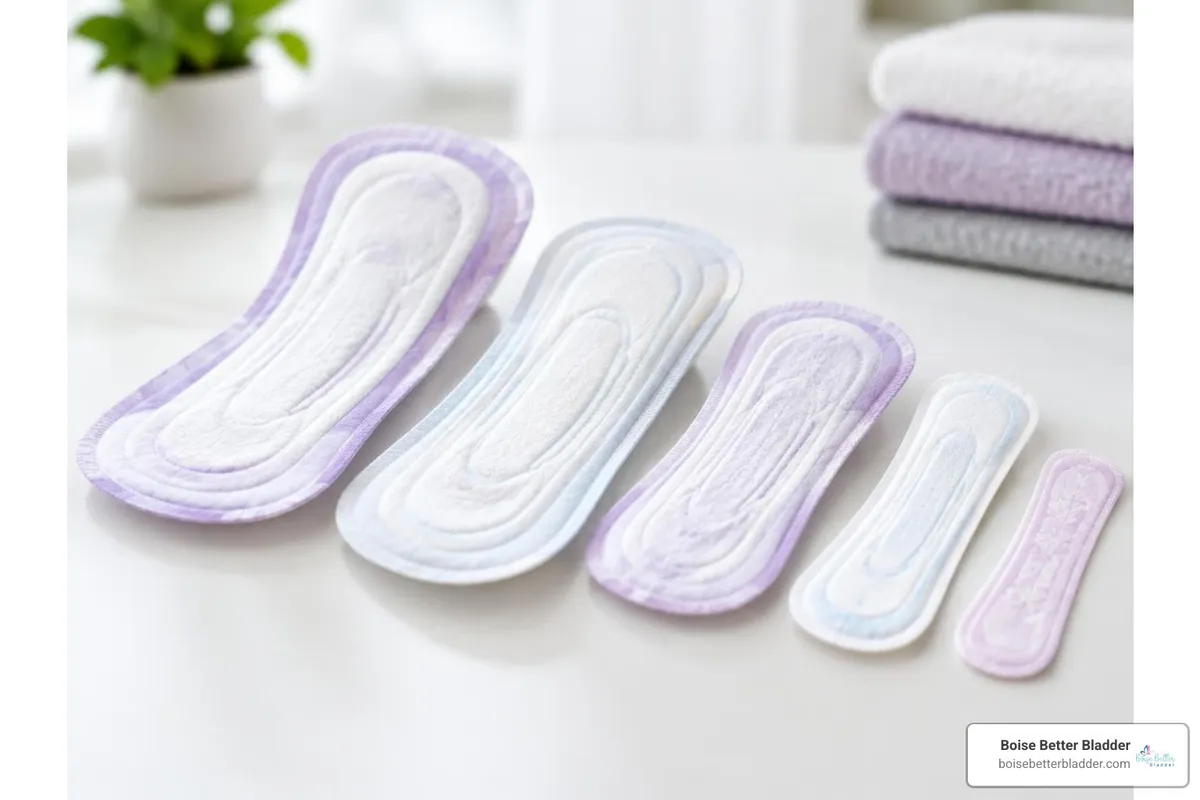
Find Your Perfect Bladder Protection Pad Match Before You Buy
How to Choose the Right Poise Pad Size
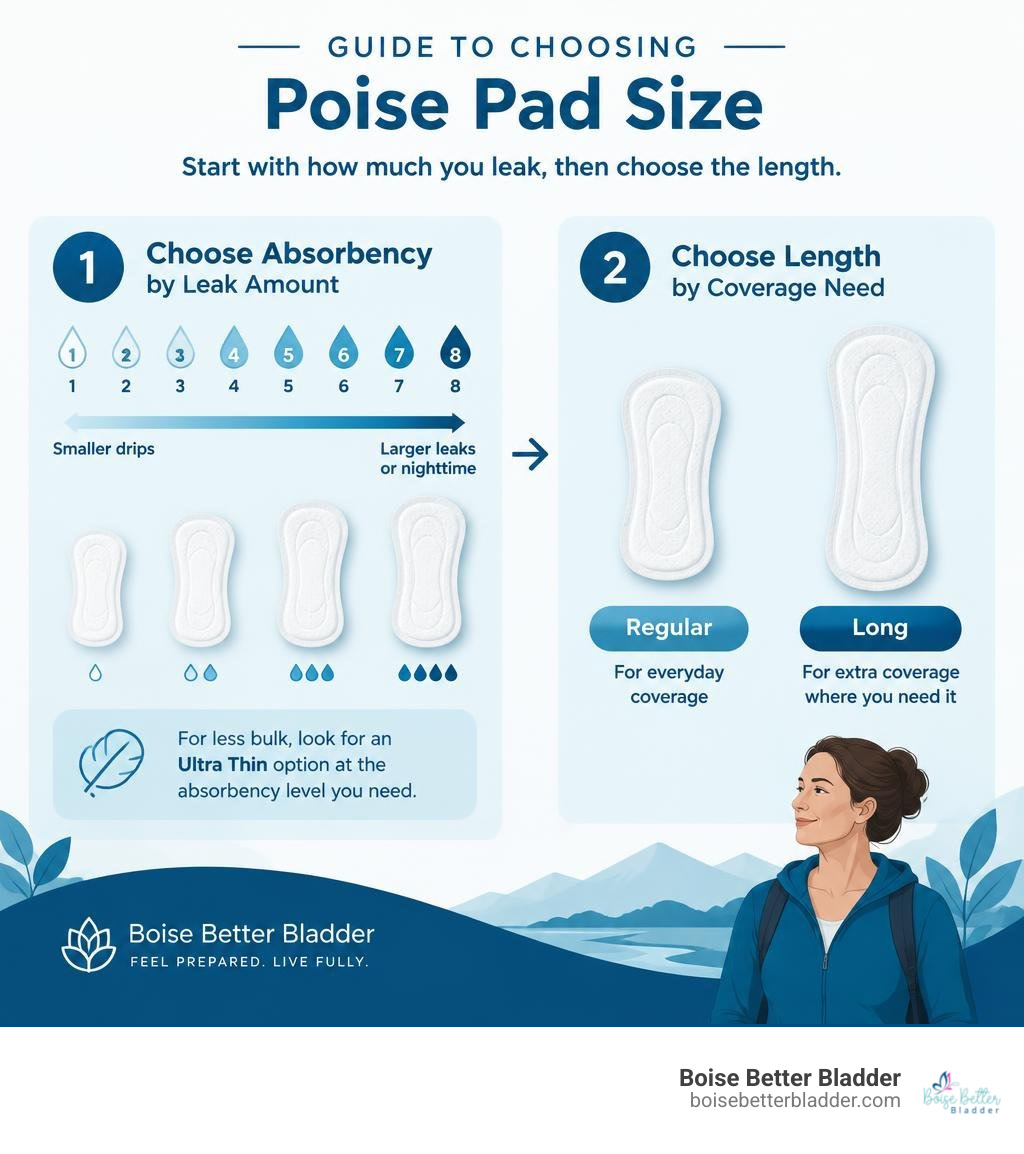
Start with how much you leak, then choose the length. Poise uses a 1-to-8-drop absorbency scale: lower levels suit small drips, while higher levels offer more protection for larger leaks or nighttime. Choose Regular or Long based on where you need coverage. If you want less bulk, look for an Ultra Thin option at the absorbency level you need. Not every style comes in every length or drop level, so check the package before buying.
Bladder leaks can happen quickly, which is why a pad made for urine may work better than a period pad. A pad can help you feel prepared while you learn what is causing the leaks.
I'm Kimberly Thomspon, DACM, L.Ac., and I've worked with women who are trying to manage bladder leaks without giving up the activities they enjoy. I help them compare poise pads sizes with their leak patterns while looking beyond pads for possible causes.
Introduction
When unexpected bladder leaks start happening, many women reach into their bathroom cabinets for whatever is closest—usually a standard menstrual pad. When that pad bunches, leaks out the sides, or feels damp immediately, it is easy to assume your body is simply failing you.
Your body isn’t failing you.
The trouble rarely comes from a lack of vigilance; it comes from using the wrong tool for the fluid involved. Menstrual flow moves slowly and consists of thicker, viscous fluid. Urine releases rapidly under pressure and is thin, requiring immediate, high-volume absorption. Standard menstrual pads rely on cellulose and slower-absorbing cotton layers. In contrast, specialized incontinence pads feature superabsorbent polymers specifically calibrated to pull fast-moving liquid away from the surface in seconds.
Research demonstrates that dedicated bladder protection pads can be up to 25 times drier and provide twice the absorbency of leading period pads. Understanding how absorbency levels and pad dimensions function allows you to protect your skin and maintain peace of mind while we investigate the underlying imbalances causing your symptoms.
Understanding Pad Absorbency Levels
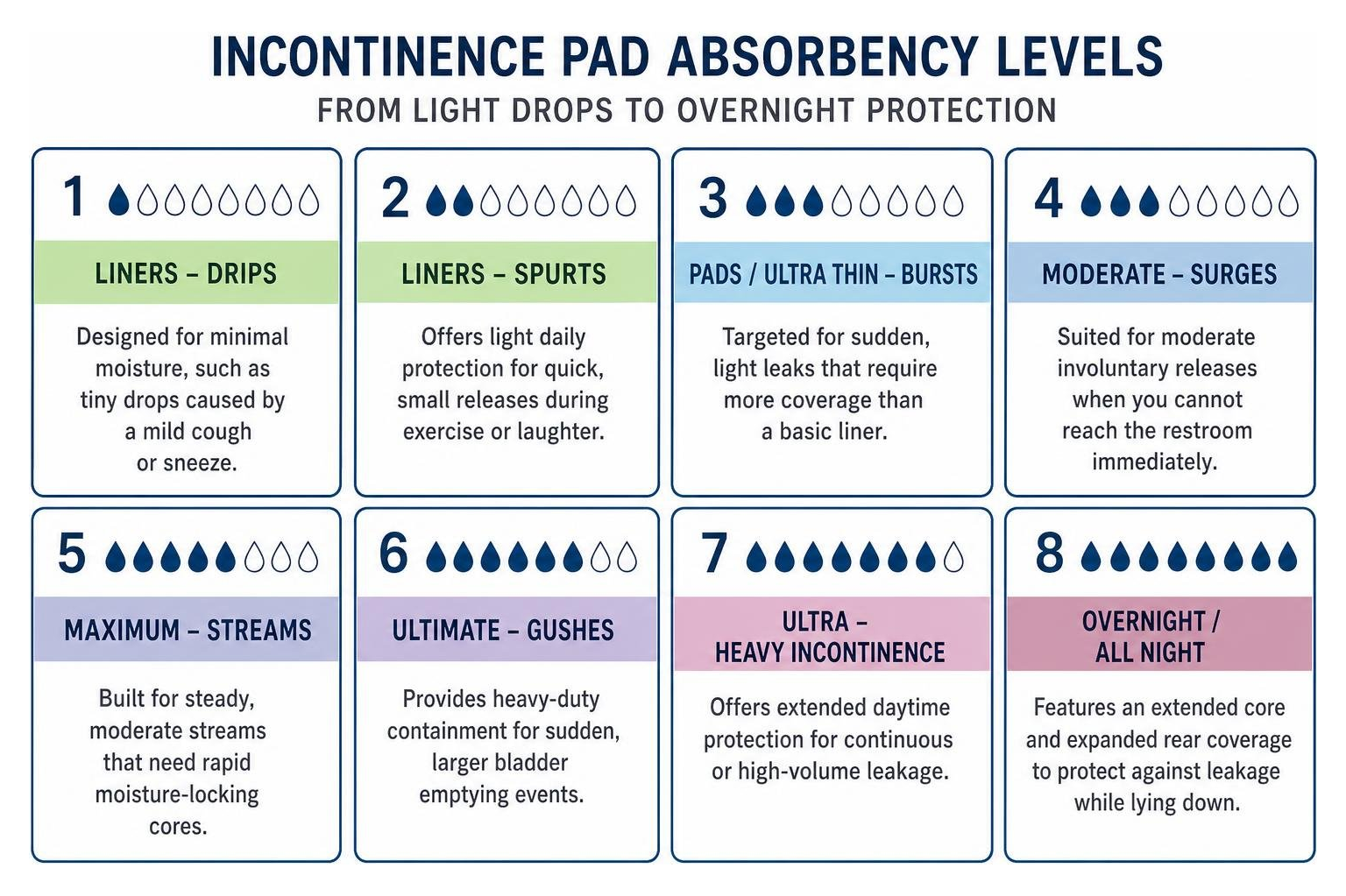
Bladder leakage does not follow a one-size-fits-all pattern. Symptoms vary from occasional trickles during a workout to sudden, full-volume surges on the drive home. To match these varying needs, manufacturers use a standardized absorbency scale. Poise categorizes protection using a progressive 1-to-8 drop rating system:
1 Drop (Liners – Drips): Designed for minimal moisture, such as tiny drops caused by a mild cough or sneeze.
2 Drops (Liners – Spurts): Offers light daily protection for quick, small releases during exercise or laughter.
3 Drops (Pads / Ultra Thin – Bursts): Targeted for sudden, light leaks that require more coverage than a basic liner.
4 Drops (Moderate – Surges): Suited for moderate involuntary releases when you cannot reach the restroom immediately.
5 Drops (Maximum – Streams): Built for steady, moderate streams that need rapid moisture-locking cores.
6 Drops (Ultimate – Gushes): Provides heavy-duty containment for sudden, larger bladder emptying events.
7 Drops (Ultra – Heavy Incontinence): Offers extended daytime protection for continuous or high-volume leakage.
8 Drops (Overnight / All Night): Features an extended core and expanded rear coverage to protect against leakage while lying down.
At the heart of these ratings is a multi-layer design utilizing an ABSORB-LOC core. This system draws moisture downward, locks liquid into gel beads, and neutralizes odors for up to 12 hours. Reviewing a detailed absorbency chart can help you align your daily leak severity with the right product tier.
Drop Level | Descriptor | Common Leak Triggers | Core Design Feature |
|---|---|---|---|
1 – 2 Drops | Drips & Spurts | Coughing, lifting, light impact | Micro-thin daily pantiliners |
3 – 4 Drops | Bursts & Surges | Positional changes, running, urgent need | ContourFit core with odor shield |
5 – 6 Drops | Streams & Gushes | Severe urge, delayed restroom access | High-capacity polymer layer |
7 – 8 Drops | Ultra & All Night | Full releases, nighttime recumbency | Extended front/back leak barriers |
Comprehensive Guide to Incontinence Pad Sizes and Lengths
Absorbency rating indicates how much liquid a pad holds, but physical pad dimensions determine whether that fluid stays contained during movement. Finding the right fit requires balancing length, surface contouring, and profile thickness.
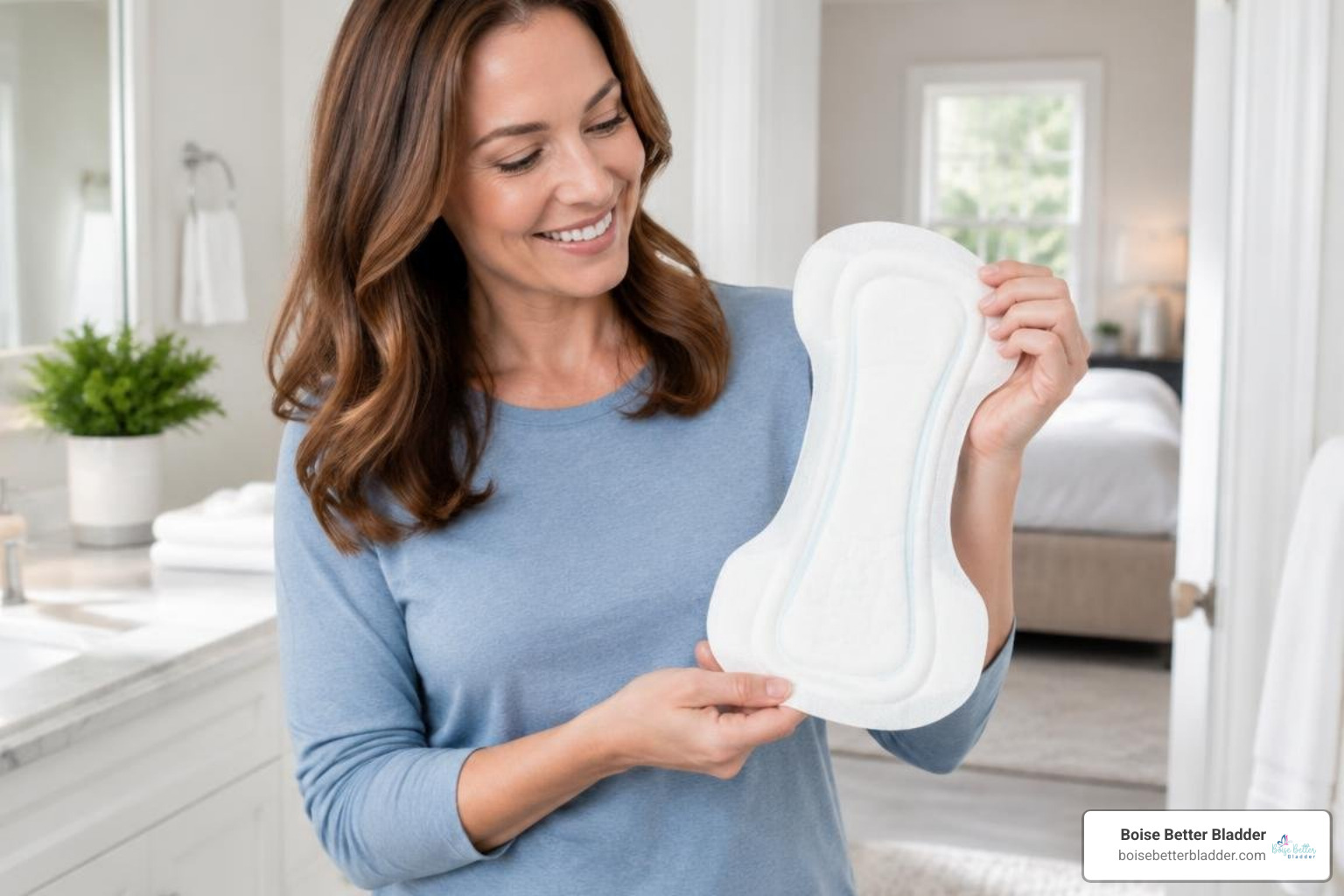
Modern incontinence pads use a specialized ContourFit design. Unlike flat, rectangular menstrual pads, these products are broader at the front and back while curving inward at the center. This ergonomic hourglass structure conforms to the natural pelvic curve, preventing bunching between the thighs and keeping the side leak-block barriers flush against your body.
Regular vs. Long Lengths Across Incontinence Pad Sizes
Most drop levels come in two core lengths:
Regular Length (approx. 9.5 to 10.5 inches): Best suited for standard daytime activity, seated work, and smaller or close-fitting underwear styles. It offers discreet protection without excess bulk at the tailbone.
Long Length (approx. 12 to 14 inches): Adds 2 to 3 inches of extra surface coverage. This extended length is ideal for taller individuals, higher-impact movement, or women who experience posterior leaks when resting or sleeping.
When deciding between lengths, evaluate your posture and daily movements. If leaks tend to escape over the back edge while sitting, upgrading to a Long length provides the necessary catchment area without requiring a higher, thicker absorbency rating.
Ultra Thin vs. Original Incontinence Pads and Wing Options
You can also choose between traditional standard pads and Ultra Thin variations:
Standard / Original Pads: Utilize a thicker, plush pulp core. Many women prefer this design for resting at home or overnight because the cushioned feel provides reassurance.
Ultra Thin Pads: Combine compressed, high-density polymer layers to deliver the same fluid retention as thicker pads at a fraction of the profile. They fit discreetly beneath activewear, work trousers, or leggings.
Wing vs. Non-Wing Styles: Selected Ultra Thin sizes include side adhesive wings that wrap around the underwear gusset. Wings help anchor the pad during active workouts, brisk walking, or restless sleep, preventing side-to-side shifting.
How to Choose the Right Pad and Move Beyond Temporary Protection
To identify the right pad configuration, start by observing your daily leakage patterns:
Map Your Leak Triggers: Leaks caused by physical exertion (stress incontinence from running, jumping, or coughing) typically require a 2- to 4-drop pad in a Regular length. Sudden, intense urges where you cannot reach the toilet in time (urge incontinence) often involve larger fluid volumes, making a 5- to 6-drop Long pad more appropriate.
Monitor Your Skin Health: Urine is alkaline and contains urea, which can irritate delicate skin if held in close contact over extended periods. Even if a high-absorbency pad promises 12 hours of protection, change pads every 3 to 5 hours—or immediately following a noticeable leak—to preserve your skin barrier.
Evaluate Market Alternatives: Evaluating an incontinence pads comparison chart helps you weigh features like adhesive stability, breathability, and bulk across different product styles.
Symptoms are signals. Relying on pads helps manage daily routines, but disposable products are an external accommodation rather than a permanent solution. Frequent pad changes indicate an underlying functional imbalance in the pelvic floor, core stabilizers, and nervous system signaling that deserves proper clinical attention.
Frequently Asked Questions About Incontinence Pads
How often should you change an incontinence pad during the day?
Even when a pad feels dry on top, change it every 3 to 4 hours during waking hours, or immediately following an involuntary bladder release. Regular changes prevent skin maceration, minimize bacterial buildup, and maintain optimal odor control.
Why can incontinence pads be more effective for bladder leaks than period pads?
Urine is expelled in rapid, high-velocity bursts and has a watery consistency. Incontinence pads contain fast-acting superabsorbent polymers that gel upon contact with thin liquids, pulling wetness away 25 times faster than standard period pads.
What is the most absorbent incontinence pad size available?
The highest absorbency level is the 8-drop Overnight or Maximum/Ultimate Long pad. These pads feature extended lengths, widened rear zones, and high-capacity absorbent cores engineered for full bladder voids and nighttime protection.
Conclusion: Regaining Confidence and Long-Term Bladder Health
Understanding pad dimensions and drop levels allows you to manage daily activities with comfort and discretion. However, pads only manage fluid after it leaves the body—they do not address why the leakage happens in the first place.
The body works in patterns. Bladder control relies on an integrated communication network between your pelvic floor muscles, spinal nerves, deep core stability, and brain signaling. When pelvic floor tissues lose strength or neurological communication becomes desynchronized—whether from childbirth, hormonal changes, or natural aging—the bladder cannot properly sustain pressure changes.
At Boise Better Bladder, we help women across Boise, Meridian, Eagle, Nampa, and Caldwell address the root cause of bladder leakage without surgery, medications, or invasive internal therapy. Our comprehensive approach combines FDA-cleared High-Intensity Focused Electromagnetic (HIFEM) technology—delivering the equivalent of 25,000 supramaximal pelvic floor contractions in a single 30-minute session—with targeted acupuncture protocols to restore local circulation, nerve conduction, and muscular tone.
While you select the right bladder control guards for women to keep you protected today, lasting freedom comes from restoring your body's innate strength. We invite you to schedule a comprehensive evaluation at our clinic to rebuild your pelvic foundation and step away from relying on pads for good.
