
Laugh Without Leaking: Non-Surgical Bladder Solutions Near Eagle and Nampa
Why So Many Women Near Eagle Are Quietly Searching for a Better Answer
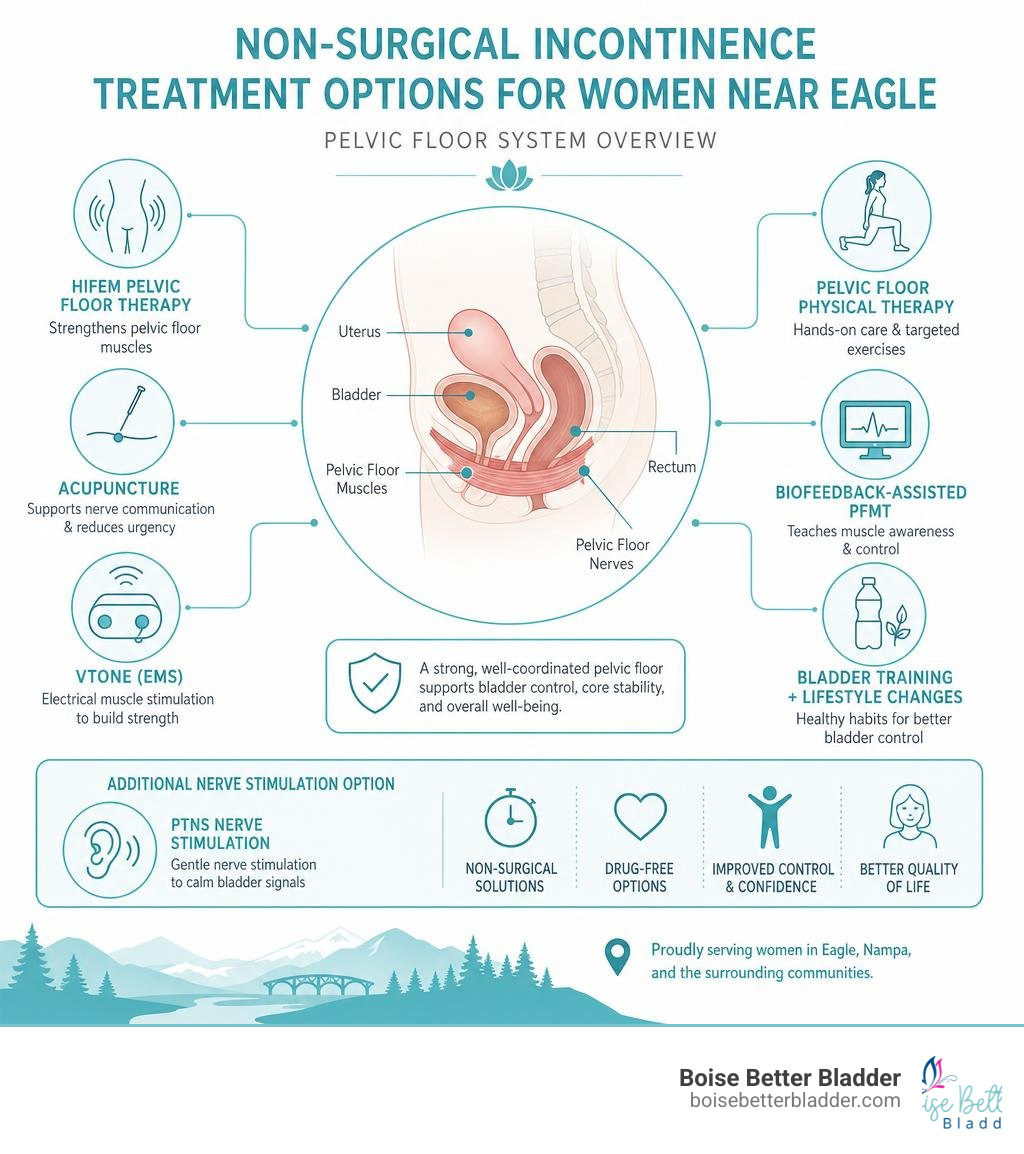
If you're looking for non surgical incontinence treatment in Eagle, here are the most effective options available today:
Treatment Option Best For Downtime HIFEM pelvic floor therapy Stress & mixed incontinence None Acupuncture Nerve communication & urgency None VTone (EMS) Pelvic floor muscle strengthening None Pelvic floor physical therapy Foundational muscle retraining None Biofeedback-assisted PFMT Patients who can't isolate muscles None Bladder training + lifestyle changes Urge incontinence None PTNS nerve stimulation Overactive bladder Minimal
You laughed at a grandchild's joke. You sneezed on the way to the car. You felt that familiar, unwelcome sensation — and quietly hoped no one noticed.
This is the reality for millions of women. More than 60% of women in the United States have experienced urinary incontinence at some point. Yet most suffer in silence, convinced it's simply part of getting older — or that surgery is the only real fix.
It isn't.
What's actually happening is a pattern your body is communicating. The pelvic floor — a network of muscles, nerves, and connective tissue — has lost coordination or strength. That's not a permanent sentence. It's a signal worth listening to.
Bladder leaks are common. That doesn't mean they're inevitable.
Many women near Eagle and Nampa have already tried Kegel exercises, pads, or even medications — without lasting relief. That frustration is real, and it makes sense. Most of those approaches treat the symptom, not the underlying pattern.
There is a more complete way to address this — one that doesn't require surgery, needles, or accepting that this is just "how it is now."
I'm Dr. Kimberly Thompson, DACM, L.Ac., and I've spent years helping women find lasting relief through non surgical incontinence treatment near Eagle — combining advanced HIFEM technology with acupuncture and whole-body pelvic health care. My approach focuses on treating the root cause, not just managing the leaks.
Understanding Bladder Leaks: Symptoms are Signals
When we experience bladder leaks, our first instinct is often to feel frustrated with our bodies. We might view our bladder or pelvic floor as "weak" or "broken."
But as a clinician, I look at these symptoms differently.
Symptoms are signals.
Your body is not failing you; it is communicating. The involuntary loss of urine is simply a physical sign that a deeper pathway of communication, muscle coordination, or structural support has been disrupted.
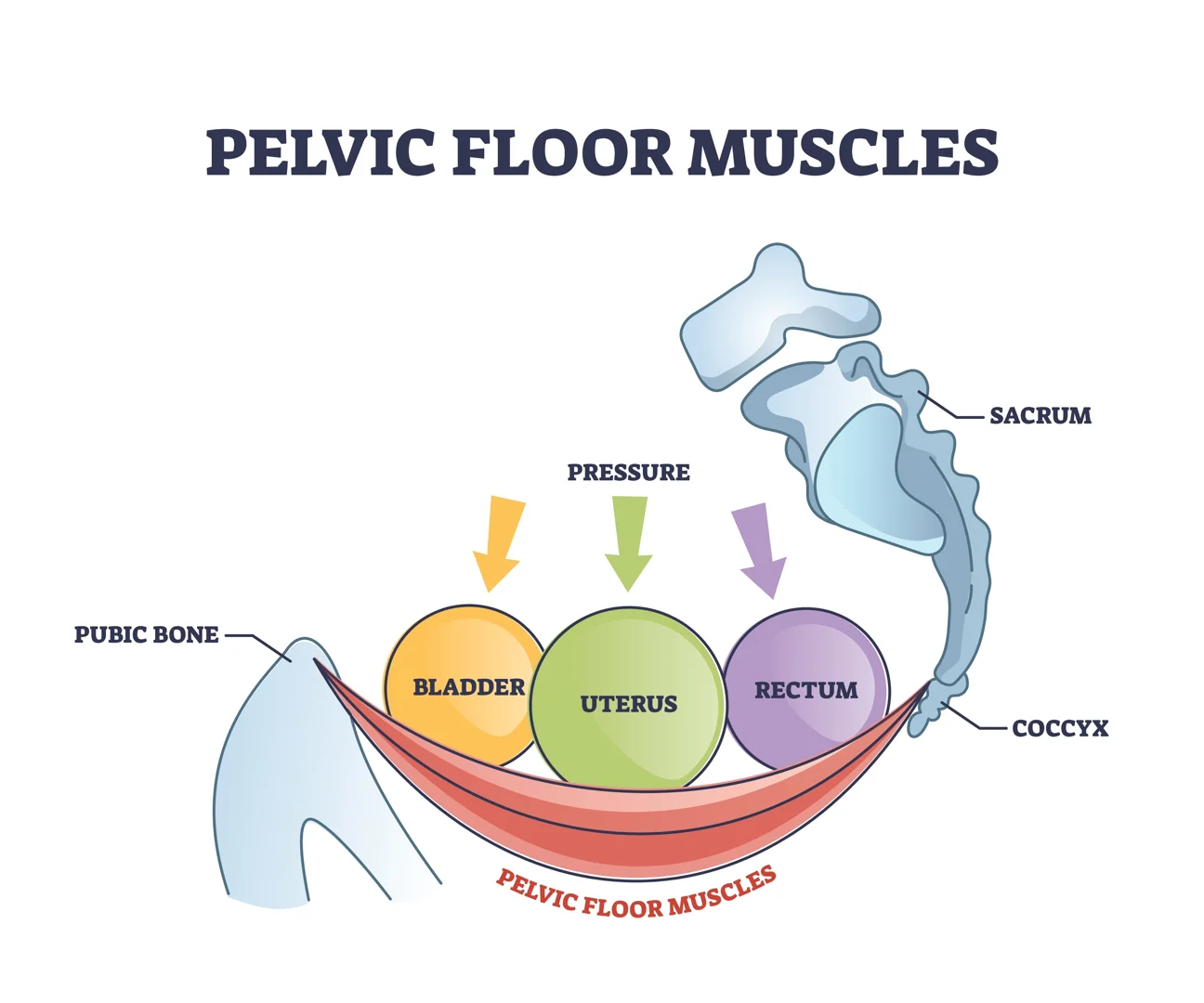
To understand why this happens, we must first look at the patterns of how the bladder and the pelvic floor interact. The pelvic floor is a dynamic bowl of muscles that supports your pelvic organs, including your bladder, uterus, and bowels. When this system is working in harmony, these muscles contract and relax in perfect coordination with your nervous system. When that coordination breaks down, we see different patterns of leakage.
The Four Primary Patterns of Incontinence
Stress Urinary Incontinence (SUI): This pattern occurs when physical pressure or "stress" is placed on the bladder, and the pelvic floor muscles or the urethral sphincter cannot exert enough counter-pressure to keep the urethra closed. This is why you leak when you laugh, sneeze, cough, run, jump, or lift something heavy. It is incredibly common, affecting roughly 30% to 50% of all adult women, particularly after pregnancy, childbirth, or hormonal shifts like menopause.
Urge Urinary Incontinence (UUI): Often described as an overactive bladder, this pattern is characterized by a sudden, intense, and uncontrollable need to urinate, followed immediately by involuntary leakage. Here, the signal is a communication error: the bladder muscle (the detrusor) contracts before the bladder is actually full, often triggered by simple things like hearing running water or unlocking your front door.
Mixed Urinary Incontinence: Many women do not fit neatly into one category. If you experience leaks when you sneeze and also suffer from sudden, overwhelming urges on the drive home to Nampa, you are experiencing mixed incontinence. This indicates that both the structural support system and the nervous system communication pathways need attention.
Overflow Incontinence: This occurs when the bladder cannot empty completely, causing it to constantly overflow and drip. It is less common in women but represents a distinct blockage or muscle underactivity pattern that requires careful clinical evaluation.
To resolve these issues, we have to look beyond the surface. For instance, Scientific research on pelvic floor muscle training demonstrates that while pelvic floor exercises are the recommended first-line conservative treatment, the success of these therapies relies heavily on proper muscle isolation and systemic support. If the pelvic organs lack visceral mobility, or if the surrounding abdominal tissues are restricted, the bladder is subjected to constant, abnormal pressure.
The body works in patterns. When we treat the pelvic floor as an isolated muscle group without addressing the nervous system, tissue health, and abdominal pressure pathways, we only get half the picture.
Restoring Pelvic Harmony: Non Surgical Incontinence Treatment Eagle
When women visit our clinic looking for a non surgical incontinence treatment Eagle residents can easily access, they are often seeking an alternative to invasive surgeries, mesh slings, or daily medications that come with dry mouth and fatigue.
True restoration doesn't come from a quick fix or a synthetic patch. It comes from restoring pelvic harmony.
Our approach focuses on three core pillars:
Rebuilding Muscle Strength and Coordination: Re-educating the pelvic floor muscles so they can automatically contract when pressure increases.
Improving Tissue Tightening and Support: Enhancing local blood flow, collagen production, and tissue elasticity to support the urethra and bladder neck.
Calming and Regulating Nerve Communication: Balancing the autonomic nervous system to stop the "false alarms" sent to the bladder.
By combining modern, FDA-cleared technology with holistic healing modalities like acupuncture, we address these three pillars simultaneously. This dual pathway of care allows us to achieve deep, lasting results by working with the body’s natural healing mechanisms. If you would like to read more about this approach, you can explore More info about how it works.
Why Standard Kegels Fail and the Need for Non Surgical Incontinence Treatment Eagle
"Just do your Kegels."
Almost every woman who has experienced bladder leaks has received this advice. Yet, so many women diligently practice their Kegels for months only to find they are still leaking when they sneeze.
Why is this?
First, the pelvic floor is incredibly difficult to isolate. Clinical studies show that up to 25% of women perform Kegel exercises incorrectly in a way that actually pushes down on the bladder, potentially worsening their incontinence. Some research suggests that when relying on written or verbal instructions alone, up to 70% of women perform them incorrectly. They may grip their inner thighs, clench their glutes, or hold their breath, none of which strengthens the deep pelvic floor.
Second, the pelvic floor does not exist in a vacuum.
The body works in patterns.
If you have abdominal restrictions from past surgeries (like a C-section), chronic bloating, or pelvic inflammatory issues, your internal organs lose their natural "slide and glide" mobility. This lack of visceral mobility means the bladder is constantly being compressed from above. No amount of isolated Kegel exercises can overcome a structural restriction in the abdomen that is continuously forcing urine out of the bladder.
Furthermore, a Clinical study on pelvic floor muscle stimulators highlights that utilizing targeted, device-assisted stimulation can produce measurable, objective reductions in urine loss and pad use. This is because these advanced therapies bypass the mental struggle of trying to find and squeeze the correct muscles, delivering a perfect, therapeutic contraction every single time.
For women seeking a non surgical incontinence treatment Eagle clinics can provide, moving beyond basic, unassisted home exercises is often the turning point in their recovery.
The Role of Advanced Pelvic Floor Stimulation and Acupuncture
At Boise Better Bladder, we combine the physical power of High-Intensity Focused Electromagnetic (HIFEM) technology with the regulatory power of holistic acupuncture.
HIFEM Technology: The 25,000 Kegel Equivalent
HIFEM technology is a non-invasive, fully clothed treatment that uses targeted electromagnetic energy to stimulate the entire pelvic floor. As you sit comfortably on our specialized treatment chair, the electromagnetic waves penetrate deep into the pelvic tissues, causing the muscles to contract supramaximally.
In a single 30-minute session, your pelvic floor undergoes the equivalent of 25,000 perfect Kegel exercises. This intense, effortless stimulation retrains the muscles, builds deep structural support, and restores the natural resting tone of the pelvic bowl.
Acupuncture: Restoring the Nerve Communication Pathway
While HIFEM focuses on rebuilding the physical muscle structure, acupuncture addresses the energetic and neurological pathways.
In Chinese medicine, bladder control is deeply tied to the vitality of the Kidney and Urinary Bladder organ systems, which govern fluid metabolism and structural holding power. From a neurological perspective, acupuncture helps regulate the sacral nerve plexus — the main communication highway between your brain and your bladder.
By inserting tiny, sterile needles at specific points on the body, we can:
Calm an overactive nervous system, reducing the sudden, inappropriate spasms of the detrusor muscle that cause urge incontinence.
Improve local microcirculation, bringing oxygen and nutrient-rich blood to the pelvic tissues to promote natural healing and collagen production.
Release myofascial and abdominal restrictions, restoring natural visceral mobility and relieving pressure on the bladder.
Scientific validation supports these combined approaches. A Research on pelvic floor muscle stimulation effectiveness study demonstrates that adding physical stimulation to pelvic floor training significantly improves muscle activation, quality of life, and overall severity of incontinence. Additionally, a Study on neuromuscular electrical stimulation confirmed that external stimulation therapies yield high rates of patient satisfaction, with 100% of active treatment participants reporting that they felt "better" or "completely healed" compared to sham treatments.
By uniting modern electromagnetic physical therapy with time-tested acupuncture, we treat both the muscle and the nerve, the structure and the signal.
Advanced Conservative Pathways and Lifestyle Adjustments
True pelvic health is a journey that extends beyond our clinic walls. While our in-office treatments do the heavy lifting of rebuilding muscle and regulating nerves, daily lifestyle habits help preserve and protect those gains.
Mindful Hydration: Many women struggling with leaks make the mistake of drinking less water. However, highly concentrated urine actually irritates the bladder lining, triggering sudden spasms and worsening urge incontinence. Aim for consistent, moderate water intake throughout the day rather than chugging large amounts at once.
Identifying Bladder Irritants: Certain foods and beverages can irritate the bladder pathway. Common culprits include caffeine, alcohol, carbonated drinks, artificial sweeteners, and highly acidic foods (like citrus or tomatoes). Pay attention to your body's signals after consuming these.
Bladder Retraining: If you have developed the habit of going to the bathroom "just in case" before leaving the house, you may be accidentally shrinking your bladder's functional capacity. Bladder training involves sticking to a set voiding schedule and gradually increasing the time between bathroom visits to rebuild the bladder's tolerance.
To help you understand how our integrated approach compares to other common pathways, let's look at this comparison:
Therapy Type Focus Area Muscle Activation Nerve Regulation Treatment Ease Traditional Home Kegels Muscle strengthening Low (often performed incorrectly) Minimal High effort, low consistency Standard Clinical Pelvic Floor PT Muscle isolation & manual therapy Moderate (requires active physical effort) Indirect Requires disrobing and internal exams Integrated HIFEM & Acupuncture Deep muscle rebuilding & nerve pathway regulation High (25,000 supramaximal contractions) Direct (via targeted acupuncture points) Fully clothed, comfortable, and relaxing
Choosing the Right Non Surgical Incontinence Treatment Eagle for Your Body
Every woman's body has its own unique history. Your pelvic health is shaped by your pregnancies, surgeries, stress levels, and natural hormonal cycles. Because of this, there is no one-size-fits-all timeline for healing.
However, a typical treatment program at Boise Better Bladder is designed to be highly efficient, comfortable, and easily integrated into your weekly routine:
The Timeline: Most patients benefit from a series of 6 to 8 sessions, scheduled twice a week. Each session takes about 30 to 45 minutes.
The Experience: You remain fully clothed throughout the entire treatment. There are no invasive physical exams, no uncomfortable probes, and no painful procedures. Most women describe the HIFEM sensation as a deep, tingling muscle contraction, while the acupuncture portion is deeply relaxing — many of our patients actually take a light nap.
Downtime: There is absolutely zero downtime. You can immediately return to your daily activities, whether that’s shopping in downtown Eagle, heading to work in Meridian, or picking up groceries in Nampa.
Accessibility: Investing in non-surgical care avoids the high costs, surgical risks, and lengthy recovery times associated with bladder sling surgeries. We focus on providing transparent, accessible care options tailored to your wellness goals.
If you would like to meet our compassionate team and discuss your unique patterns, you can find More info about our clinical team to see how we support your journey back to bladder confidence.
Frequently Asked Questions about Non-Surgical Bladder Solutions
Is leaking urine normal after childbirth or as we age?
It is incredibly common, but it is not healthy, and it is certainly not something you have to live with.
Postpartum changes and the natural hormonal shifts of menopause can weaken the connective tissues and disrupt the nerve pathways of the pelvic floor. But remember: symptoms are signals. Leaking is simply your body's way of letting you know that the pelvic floor muscles and nerves have lost their cooperative pattern. It is a treatable imbalance, no matter your age or how many years have passed since you gave birth.
What does a non-surgical treatment session feel like and is there downtime?
Our treatments are entirely non-invasive and virtually painless. During the HIFEM portion, you will feel a distinct pulsing or contracting sensation in your pelvic floor, similar to a deep, automated Kegel. It is highly effective but completely tolerable.
The acupuncture portion involves incredibly thin, sterile needles that cause little to no discomfort. There is absolutely zero downtime. You can drive yourself to and from our clinic and immediately jump back into your normal routine.
How long does it take to see results from non-surgical therapies?
Many of our patients begin to notice a difference after just a few sessions. You might realize you aren't waking up as often during the night, or that you felt completely secure when you coughed.
Because we are working with the nervous system and rebuilding physical muscle tissue, the effects are cumulative. Over a course of several weeks, the pelvic floor regains its strength, the bladder signals calm down, and your body establishes a new, stable pattern of pelvic harmony.
Conclusion: Your Path to Lasting Pelvic Wellness

If you have spent months or even years worrying about the nearest bathroom, planning your outfits around potential leaks, or avoiding the physical activities you love, please know this:
Your body isn't failing you.
It is simply waiting for the right support to return to balance. By combining the muscle-rebuilding power of advanced FDA-cleared HIFEM technology with the neurological and energetic balancing of acupuncture, we can help you address the true root causes of your bladder leaks. You do not have to choose between invasive surgery and living with constant worry.
We invite you to take a gentle first step toward reclaiming your freedom, your confidence, and your peace of mind.
To hear from other local women who have successfully restored their bladder control, you can Read our patient testimonials.
If you are ready to explore a customized, non-surgical pathway to pelvic wellness, please Schedule a consultation at Boise Better Bladder or reach out to us via our Contact Us page.
We look forward to welcoming you to our clinic and helping you live your life fully, comfortably, and without leaks.
