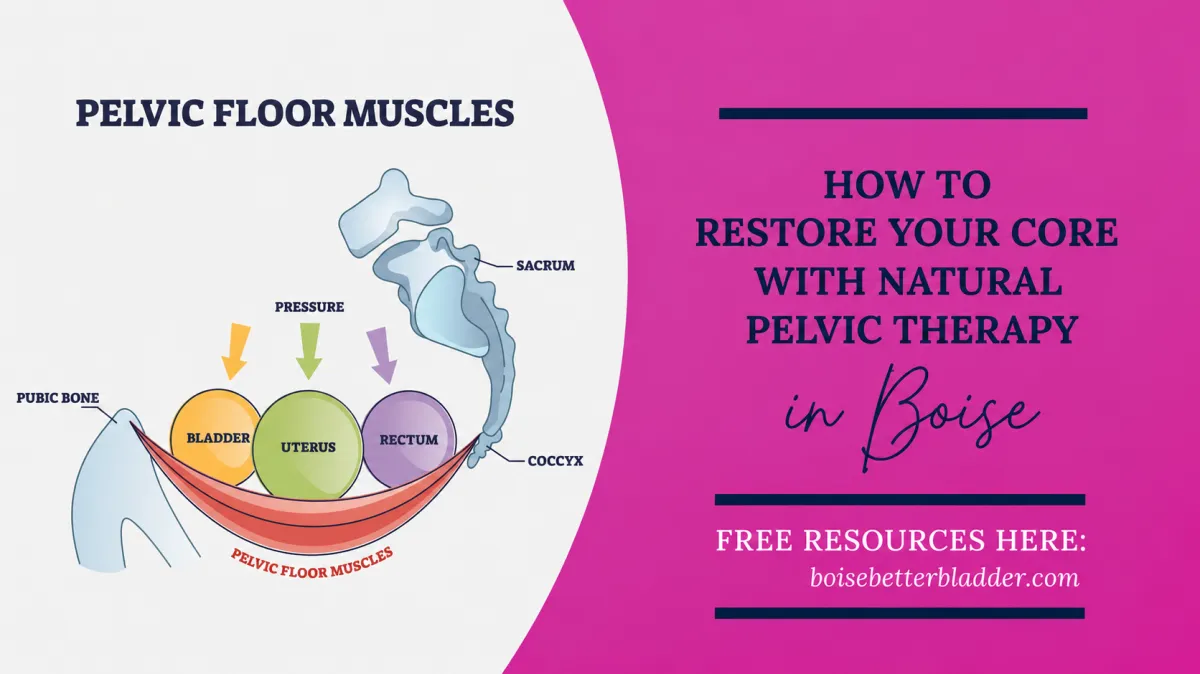
How to Restore Your Core with Natural Pelvic Therapy in Boise
When Bladder Leaks Feel Like "Just Part of Life" - There's Another Way
Natural pelvic floor therapy in Boise is a non-invasive, root-cause approach to restoring bladder control, core strength, and pelvic health - without surgery, medications, or invasive procedures.
Quick answer - what does natural pelvic floor therapy in Boise involve?
A thorough evaluation to identify why your pelvic floor is not functioning well
Non-invasive muscle re-education using advanced technology and/or hands-on techniques
Support for the nervous system pathways that coordinate bladder and pelvic muscle function
A personalized, multi-week plan that builds real, lasting strength - not just symptom management
If you have been quietly managing with pads, cutting back on travel, or hesitating before you laugh too hard, you are not alone. Bladder leakage is common, and trusted medical resources such as the National Institute of Diabetes and Digestive and Kidney Diseases explain that urinary incontinence can affect women for many reasons, including childbirth, aging, hormonal changes, and changes in pelvic support.
Common does not mean inevitable.
Your body is not failing you. These symptoms are signals - signs that the communication between your brain, nervous system, and pelvic floor muscles has been disrupted. And that disruption can often be addressed.
Many women have already tried Kegel exercises, pelvic physical therapy, or even medications without lasting relief. That frustration is real, and it usually comes from treating the symptom rather than the underlying pattern.
There is a more complete approach available.
I am Dr. Kimberly Thompson, DACM, L.Ac., and I have spent years helping women in Boise reclaim their confidence and independence through natural pelvic floor therapy in Boise - combining advanced HIFEM muscle stimulation with acupuncture and holistic techniques to address both the muscular and neurological roots of pelvic dysfunction. In this guide, I will walk you through exactly how this approach works and what you can realistically expect.
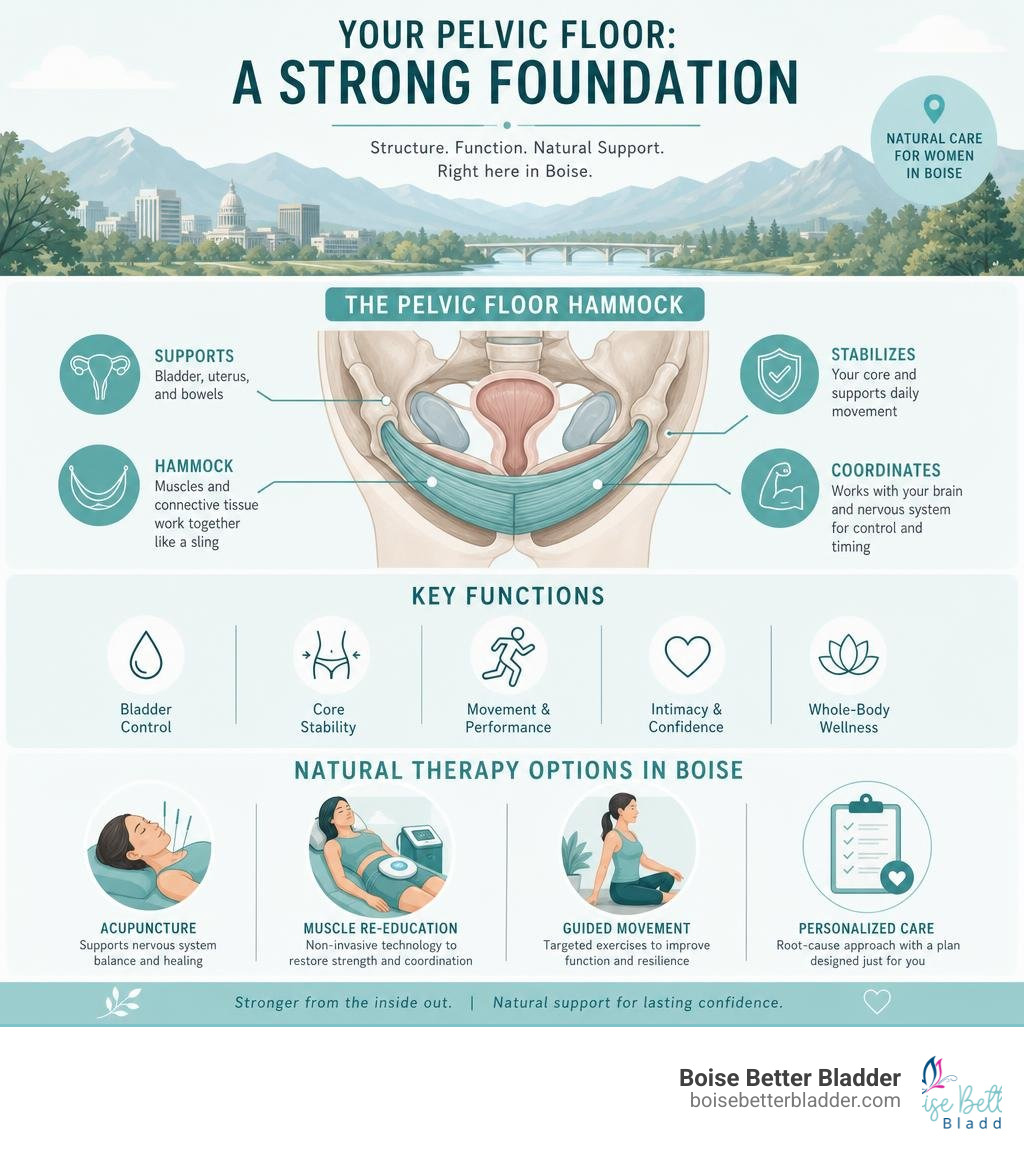
Understanding the Pelvic Floor: Symptoms are Signals
To truly understand how to heal, we must first look at the pelvic floor not as an isolated group of muscles, but as an integrated system.
The Pelvic Hammock
The pelvic floor is a sophisticated, dynamic sling of muscles, ligaments, and deep connective tissues that stretch from your pubic bone to your tailbone. Think of it as a muscular hammock that cradles and supports your vital pelvic and lower abdominal organs, including your bladder, uterus, and bowel. When this hammock is strong and resilient, it effortlessly manages internal pressure, supports your posture, and maintains continence.
The Role of the Nervous System
But muscles do not operate in a vacuum. Every movement, contraction, and release is governed by the nervous system. The nerves traveling from your lower spine coordinate the intricate dance of muscle contraction and relaxation. When you need to hold urine, your nervous system tells the pelvic floor to contract; when you are ready to empty your bladder, it signals those same muscles to relax.
If you want to dive deeper into how this intricate coordination works, you can explore the science behind it on our page explaining How It Works.
Symptoms are Signals
When pelvic floor dysfunction occurs, it is easy to feel frustrated with your body. However, as a clinician, I encourage you to reframe this frustration.
Symptoms are signals.
When you leak when sneezing, feel an overwhelming urgency to find a restroom, or experience a dull, heavy pressure in your pelvis, your body is communicating with you. It is letting you know that the structural support or the neurological communication pathways have been disrupted.
Recognizing the Patterns of Pelvic Floor Dysfunction
In our clinic, we recognize that pelvic floor dysfunction does not look the same for everyone. The body works in patterns, and these patterns generally fall into two categories:
The Underactive (Weak) Pattern: This is characterized by stretched or weakened muscles that can no longer withstand sudden increases in abdominal pressure. If you experience urinary leakage when coughing, laughing, running, or lifting your grandchildren, your body is showing signs of this pattern.
The Overactive (Tight) Pattern: Sometimes, the pelvic floor is actually too tight. When muscles are chronically contracted, they become fatigued, weak, and unable to react quickly to physical stress. This pattern often presents as a constant feeling of pelvic pressure, bladder urgency (feeling like you have to go right now), difficulty fully emptying your bladder, or discomfort during intimacy.
No matter which pattern your body is exhibiting, the key takeaway is that your pelvic floor is out of balance. Recognizing these signals is the very first step toward targeted, natural healing.
Why Traditional Solutions Often Fall Short
When women first notice these signals, they often turn to standard, highly advertised treatments. Unfortunately, many of these approaches only manage the symptoms rather than addressing the root cause.
Treatment Type How It Works Limitations & Risks Pads & Liners Absorbs leaks mechanically Temporary mask; does not restore muscle strength; ongoing cost Medications Relaxes bladder muscles chemically Side effects like dry mouth, constipation, and blurred vision; symptoms return if stopped Surgical Meshes/Slings Physically supports the urethra Invasive; requires recovery downtime; carries risks of mesh erosion or pain Traditional Kegels Voluntary manual contractions Hard to perform correctly; can worsen tight (hypertonic) pelvic floors Natural Pelvic Therapy Neuromuscular re-education & circulation Non-invasive; addresses both muscle strength and nerve pathway coordination
The Symptom-Masking Approach
Pads and adult diapers are a multi-billion-dollar industry, but they are a coping mechanism, not a cure. Medications designed to calm an overactive bladder often work by blocking nerve signals chemically, which can lead to systemic side effects like dry mouth, constipation, and brain fog. Once you stop taking the medication, the underlying weakness remains.
The Risks of Invasive Options
Surgical interventions, such as synthetic slings or meshes, attempt to mechanically support the urethra. While they can be appropriate in severe structural cases, they are invasive, require significant recovery time, and carry inherent risks. Many women in the Treasure Valley prefer to explore conservative, natural pathways before committing to permanent surgical changes.
A Holistic Alternative
Natural pelvic therapy looks at the whole body pattern. Instead of bypassing the body's natural mechanics with chemistry or surgery, we focus on restoring the natural strength, coordination, and blood flow of your own tissues.
The Limitations of Isolated Kegel Exercises
When women experience bladder leaks, the most common advice they receive is: "Just do your Kegels."
However, isolated, self-guided Kegel exercises often fall short for several reasons:
Incorrect Technique: Studies show that up to 50% of women do not perform a Kegel correctly when given verbal instructions. Many accidentally squeeze their inner thighs, buttocks, or abdominal muscles instead of the pelvic floor, or worse, they push downward, which can exacerbate prolapse.
The Tightness Trap: If your pelvic floor is already chronically tight and fatigued (a hypertonic state), forcing more voluntary contractions will only make the muscles tighter and weaker. A tight muscle cannot contract effectively to stop a leak.
Lack of Neuromuscular Connection: If the nerve pathways communicating with the pelvic floor are dull or damaged, your brain simply cannot send a strong enough signal to voluntarily contract the muscles to their full capacity.
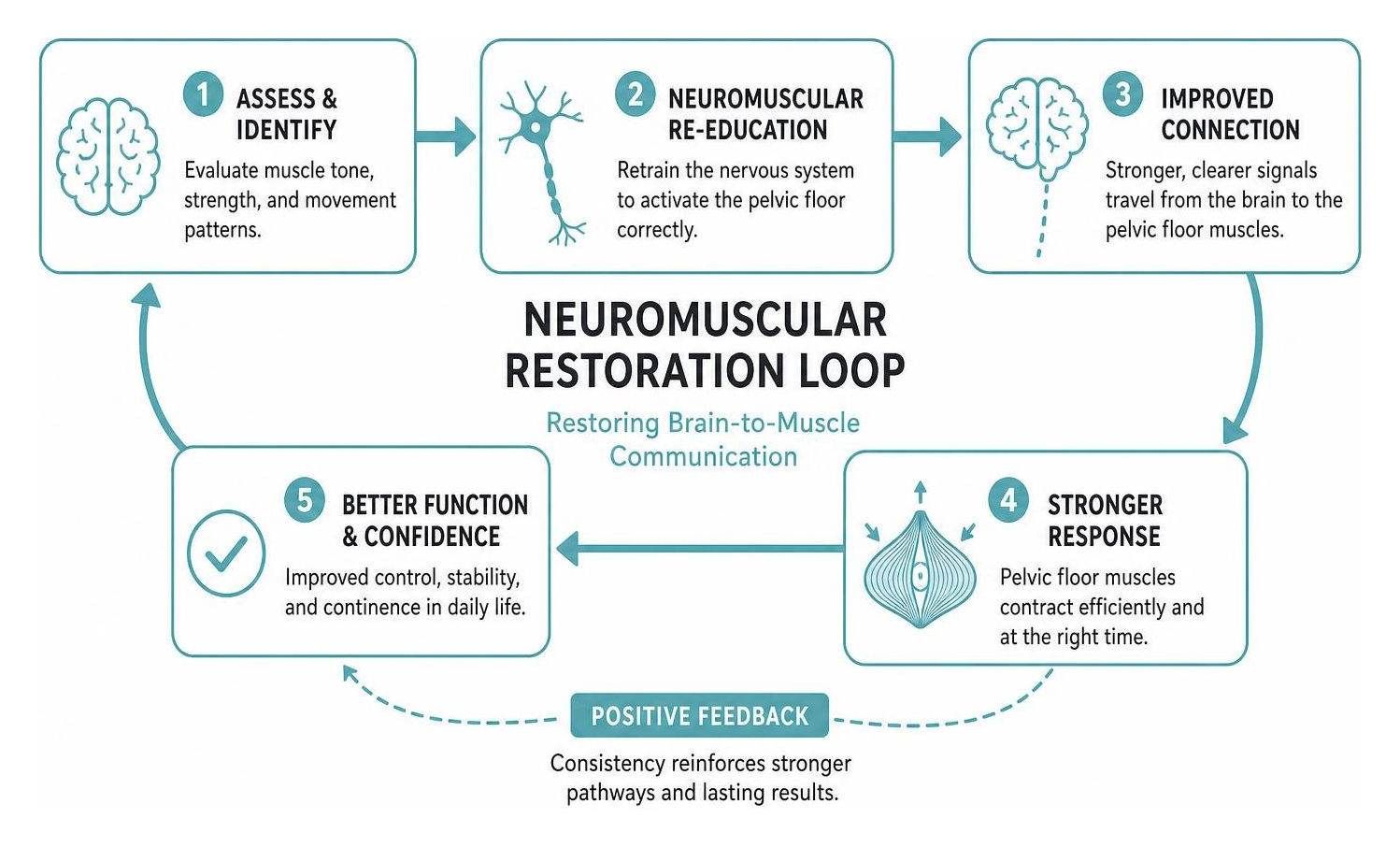
The body works in patterns. To restore the core, we must look beyond isolated squeezing and focus on comprehensive neuromuscular re-education.
The Benefits of Natural Pelvic Floor Therapy Boise
Choosing a natural, non-invasive path to pelvic health offers profound benefits that extend far beyond simply dry underwear. By working with your body's innate healing mechanisms, you can restore a stable foundation for your entire core.
Restoring the Foundation
Natural pelvic therapy aims to improve local blood circulation, reduce deep tissue inflammation, and re-educate the muscles to contract and relax at the appropriate times. When the pelvic floor is functioning optimally, it works in tandem with your diaphragm and deep abdominal muscles to stabilize your lower back and pelvis. Many of our patients find that as their bladder control improves, their chronic lower back and hip discomfort naturally dissipates as well.
To read real stories from women in Eagle, Meridian, and Boise who have reclaimed their active lifestyles, take a look at our Testimonials page.
Supporting the Body Through Postpartum Recovery
Pregnancy and childbirth place immense physical demands on a woman's body. Carrying a growing baby for nine months alters your posture and stretches the pelvic tissues, regardless of whether you deliver vaginally or via C-section.
Your body isn’t failing you. It has performed an incredible feat, and now it simply needs the proper support to heal.
Postpartum recovery often involves addressing core weakness and diastasis recti (separation of the abdominal muscles). Natural pelvic therapy helps rebuild the deep muscular coordination required to heal these tissues safely, supporting your body's natural healing process as you transition back into your active daily life.
Navigating Menopause and Hormonal Shifts with Natural Pelvic Floor Therapy Boise
As women transition through perimenopause and menopause, estrogen levels naturally decline. Estrogen plays a vital role in maintaining the elasticity, thickness, and blood supply of the pelvic floor tissues and urethral lining.
When estrogen drops, many women in Boise notice a sudden onset of bladder leaks, increased frequency, or pain. This is often referred to as genitourinary syndrome of menopause.
Natural pelvic floor therapy is highly effective during this transition. By using targeted technologies and therapies that stimulate blood flow and cellular regeneration, we can improve tissue elasticity and restore muscle tone without relying solely on hormone replacement therapies.
What to Expect from Natural Pelvic Therapy in Boise
If you have never experienced pelvic therapy before, it is completely normal to feel a bit hesitant or unsure of what to expect. We prioritize your comfort, privacy, and peace of mind at every step of your journey.

The Initial Evaluation
Our process begins with an in-depth, compassionate conversation. We sit down with you to map out your symptoms, discuss your history, and identify the specific patterns of imbalance in your body. We look at your lifestyle, posture, and goals.
You can learn more about our team and our clinical philosophy on our About Us page.
A Dual-Method Approach
At Boise Better Bladder, we utilize a unique, highly effective dual-method approach that combines advanced technology with time-tested holistic medicine:
FDA-Cleared HIFEM Technology: We use High-Intensity Focused Electromagnetic technology to gently deliver deep muscle stimulation to the pelvic floor. A single 30-minute session fully clothed on our specialized therapeutic chair induces thousands of supramaximal contractions — the equivalent of doing 25,000 perfect Kegels without any voluntary effort. This rapidly rebuilds muscle density and restores neuromuscular control.
Holistic Acupuncture & Nerve Stimulation: To support the muscular work, we integrate acupuncture and targeted nerve stimulation (such as tibial nerve stimulation). This helps regulate the autonomic nervous system, calms an overactive bladder, and improves the neurological pathways that coordinate bladder function.
What to Expect During a Natural Pelvic Floor Therapy Boise Session
Unlike traditional pelvic physical therapy, which often requires invasive internal manual exams, our signature therapy is entirely non-invasive.
During your session, you remain fully clothed. You sit comfortably in a private treatment room, reading a book or listening to relaxing music, while the therapeutic technology goes to work. You will feel a distinct, deep tingling and contraction of your pelvic floor muscles, but the process is gentle, comfortable, and completely pain-free. There is absolutely no downtime, allowing you to return to your daily Boise activities immediately.
Choosing the Right Pelvic Health Practitioner in Boise
When choosing a provider for your pelvic health, it is essential to find someone who aligns with your personal values and health goals.
If you are looking for a completely non-invasive, drug-free program that combines advanced muscle-strengthening technology with holistic nerve regulation, our team at Boise Better Bladder is here to provide a unique, integrated alternative. We focus on restoring the natural communication pathways of your body, allowing you to heal in a comfortable, supportive environment.
Frequently Asked Questions About Pelvic Therapy in Boise
How long does it take to see results from natural pelvic therapy?
Because the body works in patterns, healing is a cumulative process. While some of our patients notice a positive change in their bladder control after just two or three sessions, a typical therapeutic program consists of 8 to 9 sessions spaced over a 4-to-6-week period. This timeline allows the muscle tissue to build lasting density and gives the nervous system time to establish stable, new communication pathways.
Is pelvic floor therapy covered by insurance, and what are the typical costs?
Many traditional physical therapy clinics accept standard medical insurance, though patients may still be responsible for high deductibles, co-pays, or unexpected bills.
At Boise Better Bladder, we operate on a transparent, flat-rate program basis so you always know your exact investment upfront. Our comprehensive programs start at $2,550, and we offer flexible payment plans to fit your budget. While we do not bill insurance companies directly, our services are fully eligible for Health Savings Account (HSA) and Flexible Spending Account (FSA) funds, allowing you to use pre-tax dollars for your care.
Is natural pelvic floor therapy painful or uncomfortable?
Not at all. Whether we are using our advanced HIFEM chair or gentle acupuncture techniques, our treatments are designed to regulate and calm your nervous system, not stress it. The sensations you feel during muscle stimulation are unique but completely comfortable, and our acupuncture protocols are exceptionally gentle.
Conclusion
Your body is a wise, self-regulating system. When you experience bladder leaks, urgency, or core weakness, it is not a sign that your body is failing—it is simply a pattern of imbalance that is asking for your attention.
At Boise Better Bladder, we believe you deserve to live your life with complete confidence, whether you are walking along the Boise River Greenbelt, traveling, or playing with your kids. Through our unique combination of FDA-cleared HIFEM technology and holistic acupuncture, we help you restore your core naturally, comfortably, and effectively.
If you are ready to stop managing symptoms with pads and start restoring your health from the inside out, we invite you to take the next step:
Book an Appointment for a personalized clinical evaluation.
Claim your Free Demo Offer to experience our non-invasive technology firsthand.
Contact Us with any questions you may have about our programs.
Let us help you reclaim your freedom and restore your core at Boise Better Bladder.
