The Ultimate Guide to HIFEM Pelvic Therapy in Nampa
Why So Many Women in Nampa Are Finally Finding Relief from Bladder Leaks
HIFEM pelvic therapy in Nampa is a non-invasive, fully clothed treatment that uses high-intensity electromagnetic pulses to deeply contract pelvic floor muscles — delivering results that traditional exercises simply cannot match.
Here's what you need to know at a glance:
Question | Quick Answer |
|---|---|
What is it? | A chair-based electromagnetic therapy that triggers thousands of deep pelvic floor contractions per session |
Who is it for? | Women and men with urinary leakage, urgency, postpartum weakness, or post-surgical recovery needs |
How long is a session? | Approximately 28–30 minutes, fully clothed, no downtime |
How many sessions? | Typically 6 sessions over 3 weeks |
When do results show? | Most patients notice improvement by session 2 to 4 |
Is it safe? | Yes — FDA-cleared for stress and urge urinary incontinence |
If you have been quietly managing bladder leaks with pads, planning every outing around restroom locations, or skipping activities you love — you are not alone, and this is not something you simply have to accept.
Many women who come through our doors have already tried Kegel exercises, pelvic floor physical therapy, and medications. Some have even been told surgery is their only remaining option. What they haven't been told is that the pelvic floor is both a muscular and neurological system — and most conventional approaches only address part of that picture.
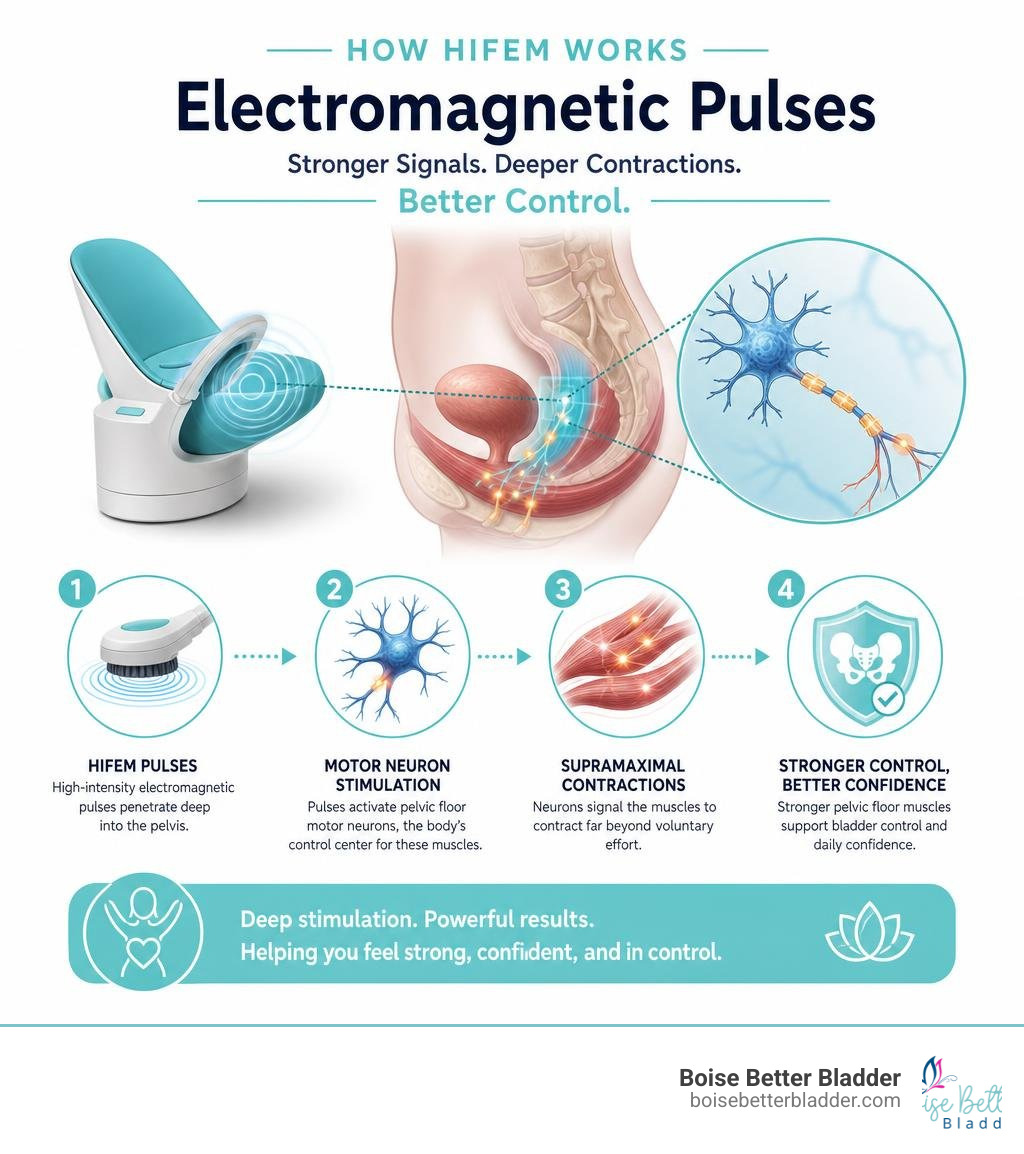
HIFEM therapy works differently. Instead of relying on voluntary muscle effort, it uses focused electromagnetic energy to stimulate the motor neurons that control your pelvic floor, triggering what are called supramaximal contractions — contractions far deeper and more complete than anything you can produce on your own. A single 28-minute session delivers more than 11,000 of these contractions, rebuilding muscle density and restoring neuromuscular control at a level that manual exercises cannot reach.
Your body isn't failing you. It's giving you signals. And those signals deserve a real answer.
I'm Dr. Kimberly Thompson, DACM, L.Ac., and over years of clinical practice specializing in women's pelvic health, I've helped hundreds of patients find lasting relief through an integrative approach that combines advanced HIFEM pelvic therapy in Nampa with acupuncture and holistic care to address both the muscular and neurological roots of bladder dysfunction. In this guide, I'll walk you through exactly how this works, who it helps, and what you can expect.
Understanding Pelvic Floor Dysfunction: Why Symptoms Are Signals
When we experience bladder leaks while laughing, a sudden uncontrollable urge to run to the restroom, or a feeling of heaviness in the lower abdomen, the standard advice we hear is simple: "Just do more Kegels."
However, this explanation is incomplete. It treats the pelvic floor as if it exists in isolation, disconnected from the rest of your biology. Squeezing a weakened, uncoordinated muscle repeatedly without addressing its structural support, blood circulation, or nerve pathways can actually worsen chronic tension or fail to produce any change at all.
To understand why traditional exercises often fall short, we must look at the deeper pattern of how the pelvic floor functions. The pelvic floor is a complex sling of muscles, ligaments, and connective tissues that support your bladder, uterus, and bowels. But muscles do not move themselves; they rely on clear, uninterrupted communication from the nervous system.
When nerve signals between the brain and the bladder become hyperactive or weak, the muscles cannot contract or relax in a coordinated sequence. This breakdown in communication is what leads to symptoms like stress urinary incontinence (leaking during physical exertion) or urge incontinence (the sudden, overwhelming need to go).
Symptoms are signals.
Your body isn't failing you.
The pelvic floor is communicating that its foundation has been disrupted. Whether that disruption came from childbirth, hormonal shifts, postural changes, or chronic stress, we must look at the whole system to restore balance. By focusing on both muscle density and neurological communication, we can help the body return to its natural state of coordination and strength.
What is HIFEM Pelvic Therapy Nampa and How Does It Work?
HIFEM stands for High-Intensity Focused Electromagnetic technology. It is a revolutionary, non-invasive treatment designed to restore structural strength and neurological coordination to the pelvic floor.
During a session, you sit fully clothed on a specialized therapeutic chair. The chair emits focused electromagnetic pulses that pass safely through your clothing and deep into the pelvic floor tissues. These pulses directly stimulate the motor neurons that control your pelvic muscles.
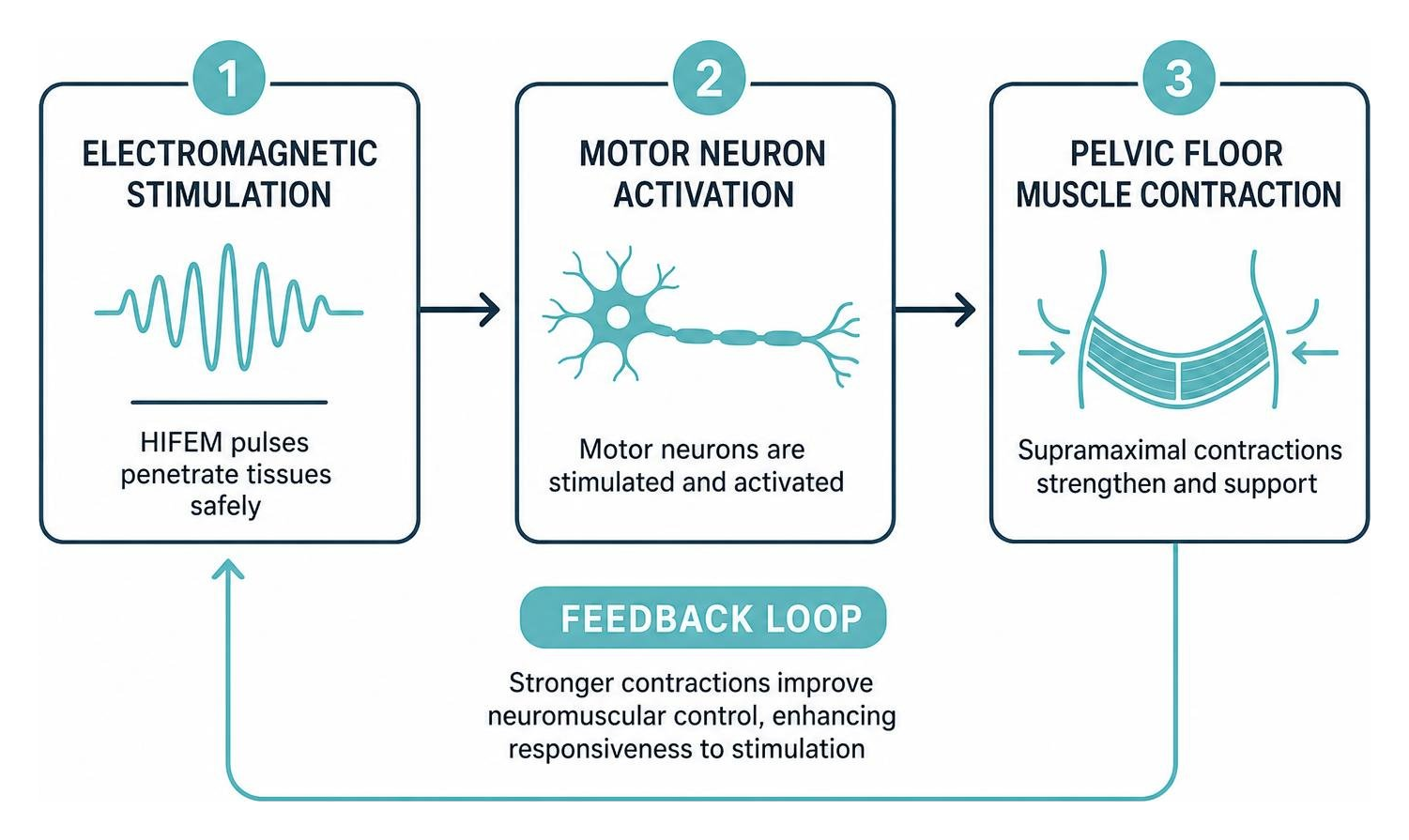
When these motor neurons are stimulated, they force the pelvic floor muscles to undergo "supramaximal" contractions. These are contractions that cannot be achieved through voluntary effort. If you try to perform a traditional Kegel, your brain only recruits a small percentage of your muscle fibers before fatigue sets in. HIFEM technology bypasses this mental and physical limit, recruiting virtually 100% of the muscle fibers simultaneously.
This deep, rapid stimulation retrains the muscles and the nerves, rebuilding neuromuscular control and restoring natural organ support. To learn more about the physical sensations and clinical science behind this process, you can read about How It Works.
The Science Behind HIFEM Pelvic Therapy Nampa
HIFEM technology is FDA-cleared and backed by extensive clinical research showing a 95% satisfaction rate among patients experiencing urinary incontinence. It has a remarkable safety profile, requiring no surgery, no medications, and absolutely no downtime.
At our clinic, our unique protocol delivers the equivalent of 25,000 supramaximal contractions in a single 30-minute session. These rapid contractions cause deep changes in the muscle tissue, increasing muscle density and restoring the structural framework that supports the bladder. For those interested in reviewing the clinical studies on how electromagnetic energy safely interacts with pelvic tissues, you can explore the Scientific research on electromagnetic pelvic restoration.
How HIFEM Compares to Traditional Voluntary Kegels
To truly appreciate the power of HIFEM therapy, it helps to compare it directly to voluntary exercises. When you perform a manual Kegel, you are limited by your brain's ability to send signals, your muscle endurance, and your physical form. In fact, studies show that up to 50% of women perform Kegels incorrectly, often squeezing the abdominal or gluteal muscles instead of the pelvic floor, which can actually increase pelvic pressure and worsen leaks.
HIFEM therapy provides active rehabilitation without the risk of improper form. Because the electromagnetic pulses target the motor nerves directly, the contractions are perfect every single time.
Feature | Traditional Voluntary Kegels | Clinical HIFEM Pelvic Therapy |
|---|---|---|
Contractions per Session | 50–100 (voluntary, limited by fatigue) | 25,000 (supramaximal, involuntary) |
Muscle Fiber Recruitment | Partial (only superficial layers) | Deep and complete (recruits 100% of fibers) |
Form and Accuracy | High risk of incorrect technique | 100% accurate, automated contractions |
Effort Required | High mental focus and physical effort | Passive (sit fully clothed and relax) |
Neuromuscular Re-education | Slow and inconsistent | Rapid and highly efficient |
Restoring the Pathways: Who Can Benefit from Pelvic Restoration?
The body works in patterns. When one part of the pattern is disrupted, it affects your entire daily life. We see patients from Nampa, Caldwell, Meridian, and Eagle who have spent years modifying their routines, avoiding exercise, or wearing pads "just in case."
HIFEM pelvic therapy is designed for anyone experiencing a disruption in their pelvic support system. This includes:
Stress Urinary Incontinence: Leaking when you laugh, cough, sneeze, jump, or run.
Urge Urinary Incontinence: A sudden, intense urge to urinate that is difficult to delay, often leading to leakage before reaching the restroom.
Mixed Incontinence: A combination of both stress and urge symptoms.
Pelvic Floor Weakness: A feeling of heaviness, pressure, or lack of support in the lower pelvis.
Addressing Postpartum Recovery and Hormonal Shifts in Women
Two of the most common phases of life that disrupt pelvic health are postpartum recovery and menopause.
During childbirth, the pelvic floor muscles and nerves undergo extreme stretching and, in some cases, tearing. Even after a cesarean section, the pressure of carrying a pregnancy for nine months can leave the pelvic floor weakened and uncoordinated. HIFEM therapy helps postpartum mothers rebuild that vital core coordination, restoring tissue elasticity and closing the gap in muscle strength.
As women transition into menopause, a natural drop in estrogen occurs. Estrogen is essential for maintaining the thickness, lubrication, and elasticity of pelvic tissues. When estrogen levels decline, the pelvic floor can become thin, dry, and weak, leading to sudden urge incontinence and pelvic discomfort.
By combining HIFEM therapy with holistic support, we address both the structural muscles and the systemic tissue health, helping women navigate these hormonal shifts with confidence. To read about the experiences of women who have walked this path and restored their pelvic health, visit our Testimonials page.
Supporting Active Lifestyles and Healthy Aging in Women
A weakened pelvic floor should not be the reason you stop living an active life. Many of our patients love hiking the local trails, attending fitness classes, traveling, or playing with their grandchildren. Yet, pelvic weakness often forces them to sit on the sidelines.
Restoring pelvic strength means reclaiming your freedom. Our goal is to help you return to the activities you love without the constant worry of bladder leaks, allowing you to age with strength, dignity, and vitality.
The Clinical Protocol: What to Expect During Your Treatment Journey
Your journey to a stronger pelvic floor is designed to be comfortable, respectful, and completely stress-free.
The Experience: You remain fully clothed throughout the entire 28-to-30-minute session. There is no need to undress, and there are no invasive internal exams during the treatment. You simply sit comfortably on our therapeutic chair, where you can read a book, scroll on your phone, or listen to music.
The Sensation: As the treatment begins, you will feel a localized, deep tingling sensation followed by rhythmic contractions of your pelvic floor muscles. It is a unique feeling, but it is entirely painless. We adjust the intensity of the device to match your comfort level, ensuring you always feel secure and relaxed.
The Schedule: A standard treatment protocol consists of six sessions scheduled twice a week for three consecutive weeks.
Downtime and Recovery: There is zero downtime. You can immediately return to your normal daily activities, exercise routines, and work right after your session.
The Results Timeline: While some patients begin to notice a subtle difference after their second or third session, the most significant changes unfold over time. Clinical studies show that peak effectiveness, including maximum muscle density and bladder control, is typically realized 8 to 12 weeks after completing the full six-session series, as your body continues to build new muscle fibers and collagen.
A Whole-Body Approach: Integrating HIFEM with Acupuncture and Holistic Care
At Boise Better Bladder, we believe that modern technology is most effective when paired with ancient wisdom. While HIFEM pelvic therapy is exceptional at rebuilding muscle tissue, we must also ensure that the nervous system is calm and the body's energy pathways are clear. This is why we integrate advanced electromagnetic therapy with acupuncture diagnostics and clinical treatments.
Acupuncture pathways, or meridians, run throughout the entire body, with several key pathways crossing directly through the pelvic floor and lower abdomen. When there is an energetic imbalance or chronic tension in these pathways, it can disrupt nerve communication and impair local circulation.
Using AcuGraph digital meridian analysis, we can map your body's energy systems to identify specific areas of imbalance. We then use gentle acupuncture techniques, including Tibial Nerve Stimulation (PTNS), to send calming signals back to the brain and bladder. This retrains the brain-bladder connection, effectively quietening an overactive bladder and improving overall pelvic coordination.
By combining muscle strengthening (HIFEM) with improved nerve communication and circulation (acupuncture), we address pelvic health from both a structural and systemic perspective, ensuring deep, long-lasting results.
Frequently Asked Questions About Pelvic Restoration in Nampa
Why is clinical HIFEM more effective than traditional voluntary Kegels?
Voluntary Kegels only engage the superficial layers of the pelvic floor and are limited by muscle fatigue and human error. Clinical HIFEM therapy targets the deep muscle layers and triggers involuntary, supramaximal contractions that recruit 100% of the muscle fibers. This rapid, complete recruitment leads to deep neuromuscular re-education and muscle thickening that is physically impossible to achieve on your own.
What is the cost of HIFEM pelvic therapy and is it covered by insurance?
Because HIFEM pelvic therapy is a specialized, non-invasive technology, it is typically not covered by traditional health insurance plans. However, we believe that investing in your pelvic health is an investment in your long-term quality of life. We offer transparent pricing, customized treatment packages, and flexible payment options. Many of our patients also successfully use their Health Savings Accounts (HSA) or Flexible Spending Accounts (FSA) to cover the cost of their care.
Are there local providers near Nampa offering this integrated therapy?
Yes. Boise Better Bladder is proud to serve the entire Treasure Valley, including Nampa, Caldwell, Meridian, Eagle, and Boise. We are dedicated to providing a comfortable, compassionate environment where women can find real solutions to pelvic floor dysfunction. To learn more about our philosophy, our team, and our clinical expertise, please visit our About Us page.
Conclusion

A weakened pelvic floor is not an inevitable consequence of aging or motherhood. It is simply a sign that your body's structural and neurological pathways need support and restoration.
By combining the muscle-building power of HIFEM technology with the neurological balancing of acupuncture, we help you address the root cause of your symptoms so you can reclaim your confidence, your freedom, and your active lifestyle.
If you are ready to stop planning your life around the nearest restroom and start living without the worry of bladder leaks, we invite you to take the first step. You can read more details on our website, reach out to us directly through our Contact Us page, or take action today by visiting our Book an Appointment page.
We look forward to welcoming you to Boise Better Bladder and supporting you on your journey to vibrant health.
