
A Natural Path to Relief with Caldwell Non Surgical Bladder Therapies
Why Caldwell Non Surgical Bladder Therapies Are Worth Knowing About

Caldwell non surgical bladder therapies offer real, evidence-backed options for women who want to restore bladder control — without surgery, medications, or invasive procedures.
Common non-surgical bladder therapies available in Caldwell include:
Pelvic floor muscle rehabilitation using HIFEM technology to deeply strengthen muscles beyond what exercises alone can achieve
Acupuncture to support nerve communication, circulation, and whole-body balance
Pelvic floor physical therapy guided by patient goals and symptom tracking
Pessary management for pelvic organ prolapse and stress urinary incontinence
Telehealth follow-up care to support non-surgical treatment between visits
Behavioral strategies including bladder training and lifestyle adjustments
These approaches are often overlooked — but for many women, they are the missing piece.
Many women quietly manage bladder leaks, urgency, and pelvic floor dysfunction for years before seeking help. And when they do seek help, they're frequently told one of two things: that their symptoms are normal for their age, or that surgery is their only real option.
Neither of those answers is complete.
Your body isn't failing you. It's communicating. Bladder control issues are often the result of weakened or poorly coordinated pelvic floor muscles, disrupted nerve signaling pathways, and hormonal changes that affect tissue integrity — patterns that can be identified and addressed without going under the knife.
Clinical evidence supports this. Research published in the International Urogynecology Journal shows that structured, evidence-based care pathways — ones that include patient-reported outcomes and shared decision-making — help women navigate non-surgical options more effectively before ever considering surgery. The goal isn't to avoid all intervention. It's to make sure conservative, non-invasive approaches are fully explored first.
I'm Dr. Kimberly Thompson, DACM, L.Ac., and over the years I've worked with hundreds of women experiencing exactly this kind of frustration — women who had tried Kegels, physical therapy, and medications, and still weren't getting results. My approach to Caldwell non surgical bladder care combines advanced HIFEM muscle rehabilitation with acupuncture and holistic techniques to address both the muscular and neurological roots of bladder dysfunction. In the sections ahead, I'll walk you through the evidence, the options, and what a truly comprehensive non-surgical path to relief can look like.
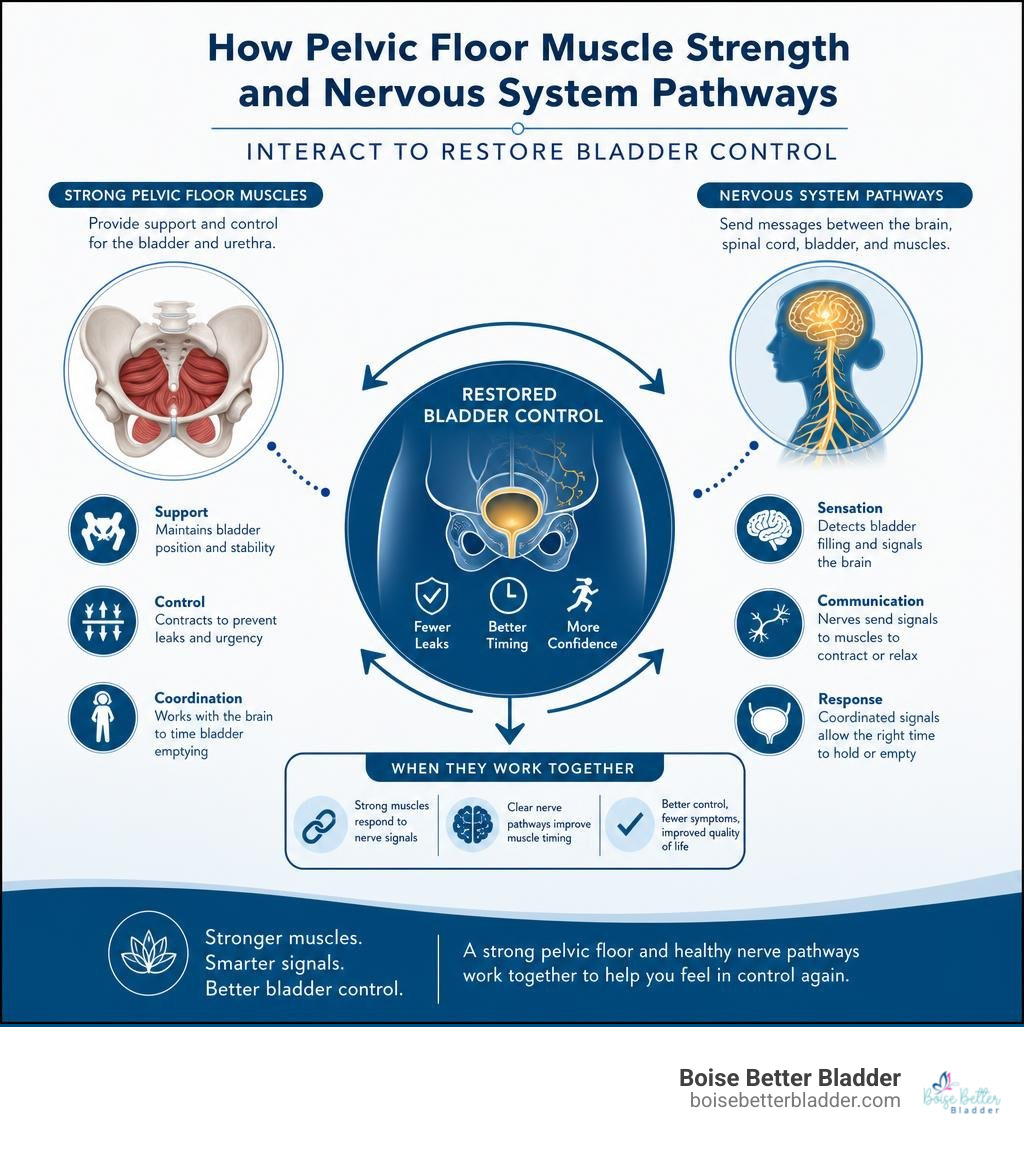
Understanding the Root Causes of Pelvic Floor Dysfunction
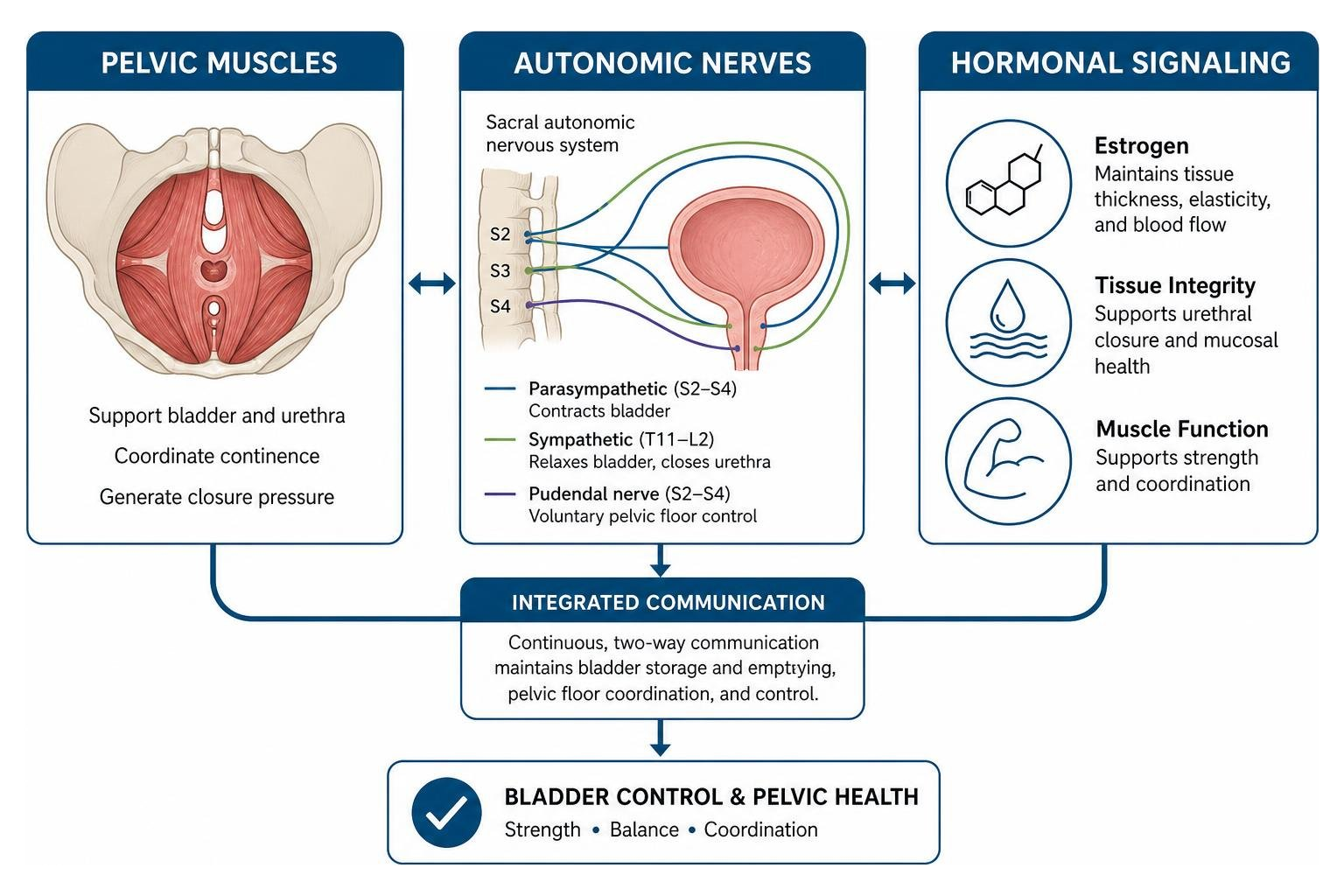
When we evaluate pelvic health, we have to look past the isolated symptom of a bladder leak or sudden urgency. The body works in patterns. When the bladder loses its ability to store or empty urine comfortably, it is usually responding to a breakdown in communication between three distinct systems: pelvic floor neuromuscular pathways, anatomical structural support, and hormonal signaling.
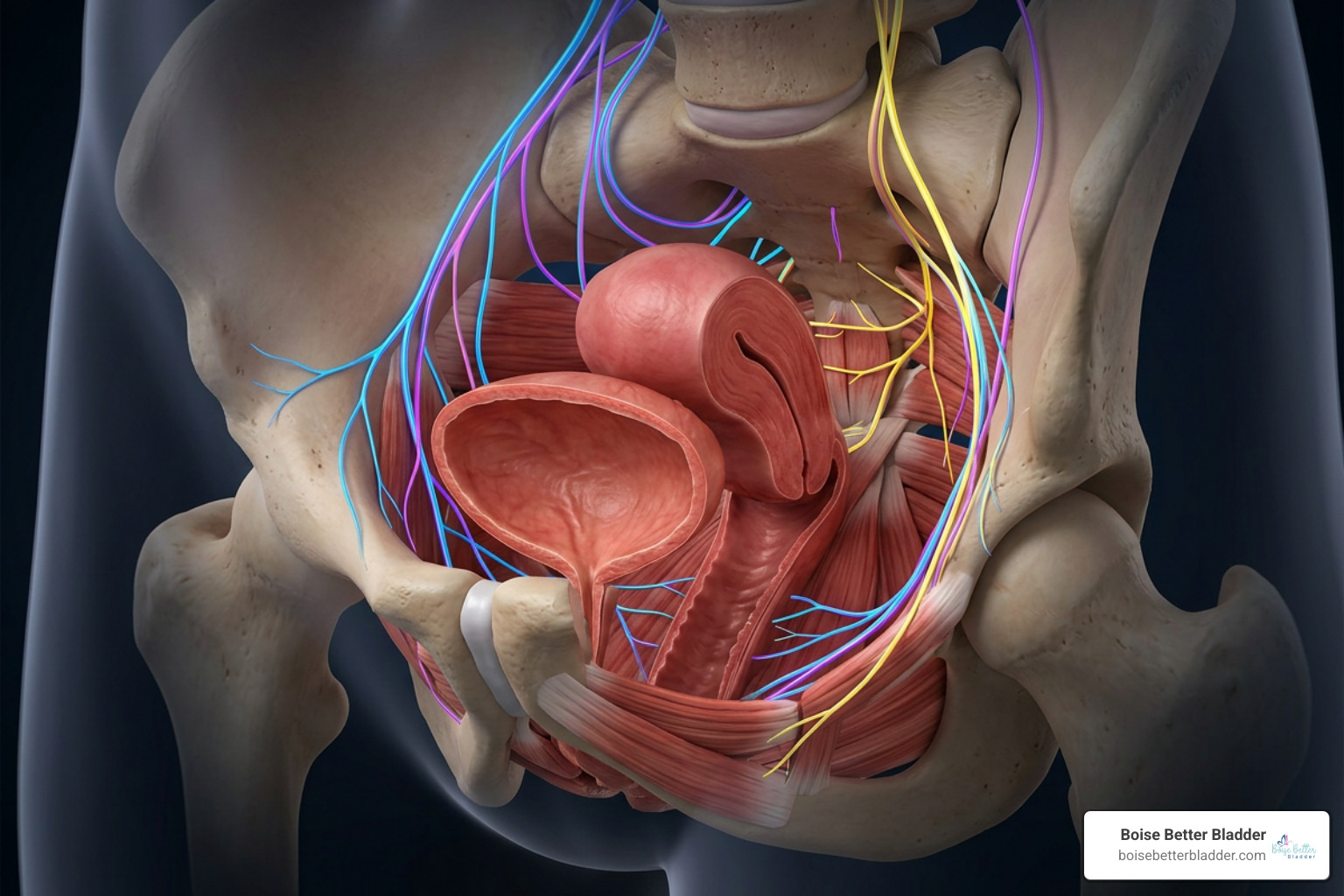
Symptoms are signals. To understand why bladder control changes over time, we evaluate three major underlying patterns:
Neuromuscular Pathway Disruption: The bladder and pelvic floor muscles rely on continuous, two-way feedback loops with the sacral nervous system. If the pudendal or autonomic nerves experience compression, inflammation, or diminished circulation, the brain and bladder stop talking clearly to each other. This can manifest as stress urinary incontinence (SUI), urge incontinence, or an inability to empty completely.
Structural Uncoupling and Prolapse: Pelvic organ prolapse (POP) occurs when connective tissues, fascial planes, and pelvic floor muscles weaken, allowing the bladder, uterus, or rectum to slip from their natural anatomical positions. When pelvic organs shift, mechanical pressure on the urethra alters voiding dynamics, often making bladder control unpredictable.
Hormonal Transition Patterns: Estrogen receptors line the urethra, bladder trigone, and vaginal mucosal lining. During childbirth recovery, perimenopause, and menopause, dropping estrogen levels lead to thinning tissue (vaginal atrophy), reduced microvascular blood flow, and diminished muscle tone.
Clinical research highlights that systematic evaluation of these interconnected factors leads to significantly better patient outcomes. According to evidence-based care pathways for pelvic floor disorders, establishing structured non-surgical triage systems helps patients clarify their goals and avoid unnecessary surgical procedures. You can learn how non-surgical care pathways work to restore stability without invasive measures.
Understanding Caldwell Non Surgical Bladder Care Pathways
A care pathway is not a rigid script; it is a structured, evidence-based map that prioritizes conservative, non-invasive therapies before considering invasive alternatives. In our clinical framework, non-surgical pathways begin with comprehensive, patient-centered evaluations.
Instead of jumping straight to pharmaceutical prescriptions or surgical referrals, advanced practice providers (APPs) and integrative clinicians utilize patient-reported outcome measures (PROMs) and validated symptom scales. This allows us to quantify how bladder leakage affects your quality of life, sleep, and physical activity.
Through personalized goal-setting and shared decision-making models, patients are empowered to select care paths that align with their daily lives. Shared decision-making ensures you understand every non-surgical tool available — from localized pelvic floor physical therapy and pessary fitting to non-invasive neuromuscular re-education and acupuncture.
Comparing Surgical and Non-Surgical Caldwell Non Surgical Bladder Care
When women explore options for caldwell non surgical bladder care, they are often surprised by how advanced non-surgical modalities have become. Historically, severe bladder dysfunction — such as refractory neurogenic bladder or chronic urine retention from an underactive bladder (UAB) — left patients with limited non-surgical options. Today, clinical research demonstrates that non-invasive and minimally invasive care pathways offer robust alternatives to complex open surgery.
For instance, in complex clinical situations like neurogenic bladder or severe lower urinary tract dysfunction, traditional surgical approaches such as abdominal bladder neck closure historically required an average hospital length of stay of 4 days with a 15% complication rate. Newer minimally invasive techniques, such as transvaginal bladder neck closure reinforced with cadaveric pericardial tissue (CPT), allow patients to be discharged on postoperative day 0 with far lower morbidity.
Similarly, for underactive bladder (UAB) and chronic urinary retention — where women struggle to empty their bladders effectively — innovative outpatient approaches combine ultrasound-guided botulinum toxin A (Botox) injections into the external urethral sphincter with transurethral incision of the bladder neck (TUI-BN). Clinical research on underactive bladder therapies reveals remarkable outcomes:
88% of patients experienced over 50% improvement in voiding function at both 1 and 3 months post-procedure.
Post-void residual (PVR) urine volume was dramatically reduced from an average of 358.1 mL pre-procedure down to 76.7 mL at 3 months.
Clean intermittent catheterization (CIC) dependence dropped from 3.4 times per day to just 0.5 times per day.
For the vast majority of women suffering from stress, urge, or mixed urinary incontinence, fully non-invasive, conservative pelvic restoration delivers exceptional outcomes without any surgical risks or recovery downtime.
Treatment Pathway Procedure / Modality Invasiveness & Recovery Primary Clinical Mechanism Typical Outcomes & Benefits Conservative Pelvic Restoration High-Intensity Focused Electromagnetic (HIFEM) + Targeted Acupuncture Non-invasive; zero downtime; fully clothed Deep supramaximal pelvic floor contractions combined with microvascular nerve stimulation Restores muscle tone, improves neural feedback, reduces leaks, 0% surgical risk Pessary Management Custom-fitted silicone mechanical support device Non-surgical outpatient fitting; minor maintenance Provides physical structural support to uplift prolapsed pelvic organs and bladder neck Immediate relief of mechanical pressure and SUI during exercise Minimally Invasive Outpatient Transvaginal Botox external sphincter injection + TUI-BN Outpatient procedure; minimal downtime Relaxes hypertonic urethral sphincter to lower bladder outlet resistance PVR reduced from 358 mL to 76 mL; 88% voiding improvement Major Surgical Reconstruction Abdominal Bladder Neck Closure / Urinary Diversion Invasive surgery; 4-day average hospital stay; catheterization Permanent surgical occlusion or rerouting of the urinary tract Reserved for refractory neurogenic bladder; higher risk of fistulas (15-30%)
Modern Advances in Caldwell Non Surgical Bladder Diagnostics
Modern non-surgical bladder care relies on advanced diagnostic frameworks that evaluate complete neuromuscular signaling rather than viewing the bladder as an isolated organ. By conducting thorough, non-invasive pelvic assessments, clinicians can pinpoint whether bladder leaks stem from localized muscular weakness, autonomic nervous system dysregulation, or mechanical outlet hypertonicity.
These diagnostic insights extend across the entire spectrum of urological health:
Neurogenic Bladder Care Pathways: Utilizing detailed urodynamic profiling allows clinicians to tailor bladder management — preserving renal function while restoring continence.
Integrative Pelvic Care Pathways: Combining diagnostic symptom tracking with non-invasive therapies ensures that every patient receives a customized care plan.
Post-Surgical Oncological Surveillance: In post-surgical care for conditions like muscle-invasive urothelial carcinoma (bladder cancer), cutting-edge non-surgical diagnostics — such as circulating tumor DNA (ctDNA) liquid biopsy assays (e.g., Signatera in the clinical MODERN trial) — track minimal residual disease (MRD) from a simple blood draw. This guides personalized immunotherapy decisions without requiring invasive exploratory biopsies.
You can learn more about our clinical approach to discover how non-invasive diagnostics form the cornerstone of effective care.
Pillars of Holistic Non-Invasive Pelvic Restoration
At Boise Better Bladder, our non-surgical treatment philosophy is rooted in a fundamental truth: lasting bladder control requires both strong muscles and healthy nerve communication. Restoring pelvic floor integrity requires re-educating the entire neuromuscular reflex arc.

Our signature non-surgical protocol relies on two complementary, evidence-backed pillars:
1. High-Intensity Focused Electromagnetic (HIFEM) Technology
Traditional Kegel exercises are often ineffective because most women cannot voluntarily isolate or deeply contract the deepest layers of the pelvic floor (the levator ani complex). HIFEM technology utilizes focused electromagnetic energy to induce thousands of supramaximal pelvic floor muscle contractions in a single, comfortable 30-minute session.
25,000 Kegel Equivalent: A single treatment delivers neuromuscular stimulation equivalent to 25,000 voluntary contractions.
Structural Hypertrophy & Density: The rapid contractions force pelvic muscle tissue to adapt, rebuilding muscle fiber density, structural support, and resting tone.
Reflex Re-education: HIFEM automatically retrains muscle memory, so your pelvic floor reacts instantly when you cough, sneeze, laugh, or lift.
2. Targeted Acupuncture & Neuromuscular Signaling
While HIFEM rebuilds the physical muscle, targeted acupuncture optimizes the electrical and vascular networks that supply those muscles.
Nerve Communication Enhancement: Acupuncture points located along sacral segment pathways (S2–S4) stimulate the autonomic nerves governing bladder storage and release.
Microvascular Circulation Enhancement: Acupuncture enhances pelvic blood flow, delivering essential oxygen, nutrients, and restorative signaling molecules to chronically fatigued pelvic tissues.
Calming the Overactive Bladder: For women with urge incontinence, acupuncture calms hyperactive detrusor muscle signals, extending intervals between voids and reducing sudden, panic-inducing bladder urges.
By uniting high-tech muscle strengthening with whole-body acupuncture support, we restore long-term pelvic floor coordination, stability, and control. You can read patient success stories from women across Caldwell, Boise, Meridian, Eagle, and Nampa who have regained their freedom through this integrative approach.
Frequently Asked Questions About Non-Surgical Bladder Care
How do non-surgical bladder care pathways support long-term pelvic health?
Non-surgical bladder care pathways support long-term pelvic health by treating the underlying root causes of dysfunction — specifically muscle atrophy, altered neural signaling, and poor blood circulation — rather than masking symptoms with pads or lifetime medications. By combining deep muscle re-education (such as HIFEM) with nerve-calming modalities (such as acupuncture), non-surgical care restores the natural reflex loops between the brain and bladder. This produces durable structural strength and long-lasting continence.
Can non-invasive techniques help when traditional Kegel exercises have failed?
Yes, absolutely. Many women struggle with traditional Kegels because weakened, stretched, or poorly coordinated pelvic floor muscles are difficult to isolate voluntarily. In fact, up to 50% of women perform Kegels incorrectly by pushing downward or straining breath, which can worsen symptoms. Non-invasive technology like HIFEM completely bypasses voluntary muscle control, delivering thousands of precise supramaximal contractions that deeply strengthen the entire pelvic floor floor. Combined with acupuncture to improve neural signaling, this approach succeeds even when standard home exercises have failed.
How do non-invasive therapies address the root cause of bladder control issues?
The body works in patterns. Bladder control issues are rarely just a "bladder problem" — they are a symptom of uncoordinated pelvic floor muscles, compromised nerve communication, and localized sluggish circulation. Non-invasive therapies address these root causes directly: HIFEM rebuilds muscle fiber density and structural support, while acupuncture stimulates sacral nerve pathways and restores vascular blood flow to vulnerable tissues. Together, they repair the neuromuscular feedback loop, allowing the bladder to store urine comfortably and empty efficiently.
Conclusion: Embracing a Holistic Path to Pelvic Wellness
Living with bladder leaks, urgency, or pelvic pressure can slowly shrink your world. You start planning trips around restroom stops, second-guessing workout classes, or avoiding social outings altogether. But it is vital to remember: your body isn't failing you. Symptoms are signals — clear invitations from your body asking for support, balance, and restorative care.
At Boise Better Bladder, serving women throughout Caldwell, Boise, Meridian, Eagle, and Nampa, we specialize in accurate pattern recognition and natural pelvic floor restoration. By bringing together advanced FDA-cleared HIFEM electromagnetic technology and centuries-old acupuncture principles, we help women regain structural stability and quiet confidence — completely free from surgery, prescription drugs, or uncomfortable internal procedures.
You don't have to settle for temporary fixes or live in constant worry. There is a proven, peaceful, non-invasive path forward. We invite you to discover non-surgical pelvic health solutions and take the first step toward reclaiming your freedom, energy, and quality of life today.
