
Ultimate Checklist for Bladder Control for Women
Bladder Leaks Are Not a Life Sentence — Here's What's Really Going On
_compressed.webp?alt=media&token=892c2557-7b7f-4923-8724-e5ca62d6cd16 "bladder control for women")
Bladder control for women is something millions struggle with silently — yet most are told it's just a normal part of aging, something to manage with pads, or something that only surgery can fix.
That's not the whole story.
Here's a quick overview of what actually helps:
Goal What Works Reduce stress leaks Pelvic floor muscle training, weight management Calm urgency Bladder retraining, nervous system regulation Support tissue health Topical estrogen (postmenopause), hydration balance Strengthen pelvic floor Kegel exercises (done correctly), HIFEM technology Reduce irritation Limit caffeine, alcohol, carbonated drinks Prevent constipation High-fiber diet, regular movement
The truth is, about 62% of women age 20 and older experience some form of urinary incontinence. You are not alone — and you are not broken.
Your body is sending signals. Leaks, urgency, and frequency are patterns the body uses to communicate that something in the muscular, hormonal, or nervous system needs support. Understanding why those signals are happening is the first step toward real, lasting change.
This isn't about managing symptoms forever. It's about getting to the root cause.
I'm Dr. Kimberly Thompson, DACM, L.Ac., and over years of clinical practice in women's pelvic health, I've helped hundreds of women reclaim their bladder control — many of whom had already tried Kegels, physical therapy, and medications without success. In this guide, I'll walk you through exactly what's happening in your body and what actually works.
Understanding the Patterns of Urinary Incontinence
When we look at bladder control for women, we must first understand that the bladder does not operate in a vacuum. It is part of an intricate, living system of muscles, nerves, fascia, and connective tissues. In our clinical practice in June 2026, we find that categorizing leaks simply as "leakage" misses the deeper patterns of physical and neurological tension.
Symptoms are signals.
To understand why your bladder is reacting, we must look at the specific patterns of how urine is lost.
Stress Incontinence: A Pressure Management and Structural Alignment Issue
Stress urinary incontinence is the involuntary loss of urine during physical exertion. If you leak when you cough, sneeze, laugh, jump, run, or lift something heavy, you are experiencing this pattern.
Many women are told this is simply because their pelvic floor is "weak." However, the typical explanation is incomplete. Stress incontinence is actually a failure of pressure management.
When you cough or sneeze, your intra-abdominal pressure spikes. Normally, your pelvic floor muscles and the urethral sphincter contract rapidly to counteract this downward force. If the supportive tissues of the urethra have lost their elasticity, or if the pelvic floor cannot contract with the fast-twitch muscle fibers required for rapid sphincter closure, the pressure wins, and urine escapes.
Urge Incontinence: A Nervous System Communication Breakdown
Urge incontinence is characterized by a sudden, intense, and unstoppable need to urinate, followed closely by involuntary leakage. This is often referred to as an overactive bladder (OAB).
This is not a structural failure of support; it is a communication breakdown between your brain, nervous system, and the detrusor muscle (the muscle that wraps around your bladder). Normally, the detrusor muscle remains relaxed as the bladder fills. When the bladder is full, the nervous system signals the brain, and you consciously decide to void.
In urge patterns, the detrusor muscle spasms or contracts prematurely, signaling emergency-level urgency even when the bladder only contains a small amount of urine. This can be triggered by simple sensory cues, such as putting your keys in the front door, turning on a running faucet, or stepping into a cool room.
The body works in patterns.
Mixed Incontinence: Overlapping Physical and Neurological Tension
Many women do not fit neatly into one category. They experience mixed incontinence, which is a combination of both stress and urge patterns. This occurs when there is both structural weakness in the pelvic support system and chronic tension or hyperarousal in the nervous system.
According to the Urinary incontinence overview, urinary incontinence affects twice as many women as men. This is largely due to our unique anatomical design, including a shorter urethra, and the profound physical transitions of pregnancy, childbirth, and menopause.
With approximately 62% of adult women experiencing some form of leakage, it is one of the most common pelvic health concerns in the United States. Yet, it remains highly undertreated because of the social stigma surrounding it.
Recognizing the Signals: When to Seek Clinical Guidance
Your body is highly communicative. When bladder health begins to decline, the signals start small and gradually interfere with your quality of life. Knowing how to read these signs can prevent temporary imbalances from becoming permanent structural changes.
Nocturia and Sleep Disruption: Waking up more than once or twice a night to urinate is a key signal. While many assume this is just a sign of drinking too much water before bed, frequent nighttime waking often points to a nervous system that is stuck in a sympathetic (fight-or-flight) state, preventing the bladder from relaxing fully during sleep.
Frequent Urination: A healthy bladder interval during the day is every 2.5 to 3.5 hours. If you find yourself voiding every hour, or peeing "just in case" before leaving the house, you are training your bladder to signal urgency at lower and lower volumes.
The Bladder Diary: One of the most effective ways to identify your unique pattern is to keep a bladder diary for three consecutive days. Note what you drink, when you urinate, and when leaks occur. This creates a clear map of your pelvic and nervous system habits.
If you find yourself mapping out bathroom locations every time you run errands in Boise or Meridian, wearing pads daily "just in case," or avoiding exercises and social events you once loved, it is time to seek a comprehensive pelvic and nervous system evaluation.
The Root Causes: Why Bladder Control for Women Changes Over Time
To truly restore bladder control for women, we must look beyond the bladder itself and explore the root causes of tissue and nerve changes.
Your body isn't failing you. It is adapting to physical, hormonal, and neurological shifts that occur over a lifetime.
Pregnancy and Childbirth: Structural Shifts and Ligamentous Changes
Carrying a child changes the physical landscape of the pelvic bowl. During pregnancy, the growing uterus places continuous downward pressure on the bladder and pelvic floor. Hormones like relaxin soften the ligaments and connective tissues to prepare the body for birth.
As many as 4 in 10 women experience urinary incontinence during pregnancy. For some, this resolves postpartum; for others, the structural changes of childbirth leave lasting impacts. Vaginal delivery, prolonged pushing, or perineal tearing can stretch or damage the levator ani muscle and the pudendal nerve, which controls the urethral sphincter. Without proper restoration, these tissues remain stretched and uncoordinated, leading to persistent stress leaks.
Pelvic Floor Weakness vs. Hypertonicity (Tightness and Stored Tension)
The standard solution offered to women is to "just do your Kegels." But this advice assumes that every bladder issue is caused by a weak, loose pelvic floor.
In many cases, the root cause is actually a hypertonic pelvic floor — muscles that are chronically tight, contracted, and unable to relax. When pelvic muscles are held in a state of constant tension (often due to stress, posture, or athletic training), they exhaust themselves. A muscle that cannot fully relax cannot contract with the strength or speed needed to prevent a leak when you sneeze. Tight muscles also compress the bladder, reducing its physical capacity and triggering intense feelings of urgency.
The Gut-Bladder Connection: How Digestive Pressure Impacts the Bladder
The pelvic bowl is a shared space. The bladder, uterus, and rectum sit in close proximity, supported by the same muscular floor. When you experience chronic constipation, the accumulation of stool in the rectum physically presses against the bladder.
Because the rectum and bladder share the same pelvic nerve pathways, chronic digestive pressure sends false signals of fullness and urgency to the brain. Straining to pass stool also repeatedly stretches and weakens the pelvic floor muscles, directly contributing to stress incontinence over time.
Nerve Communication and the Autonomic Nervous System
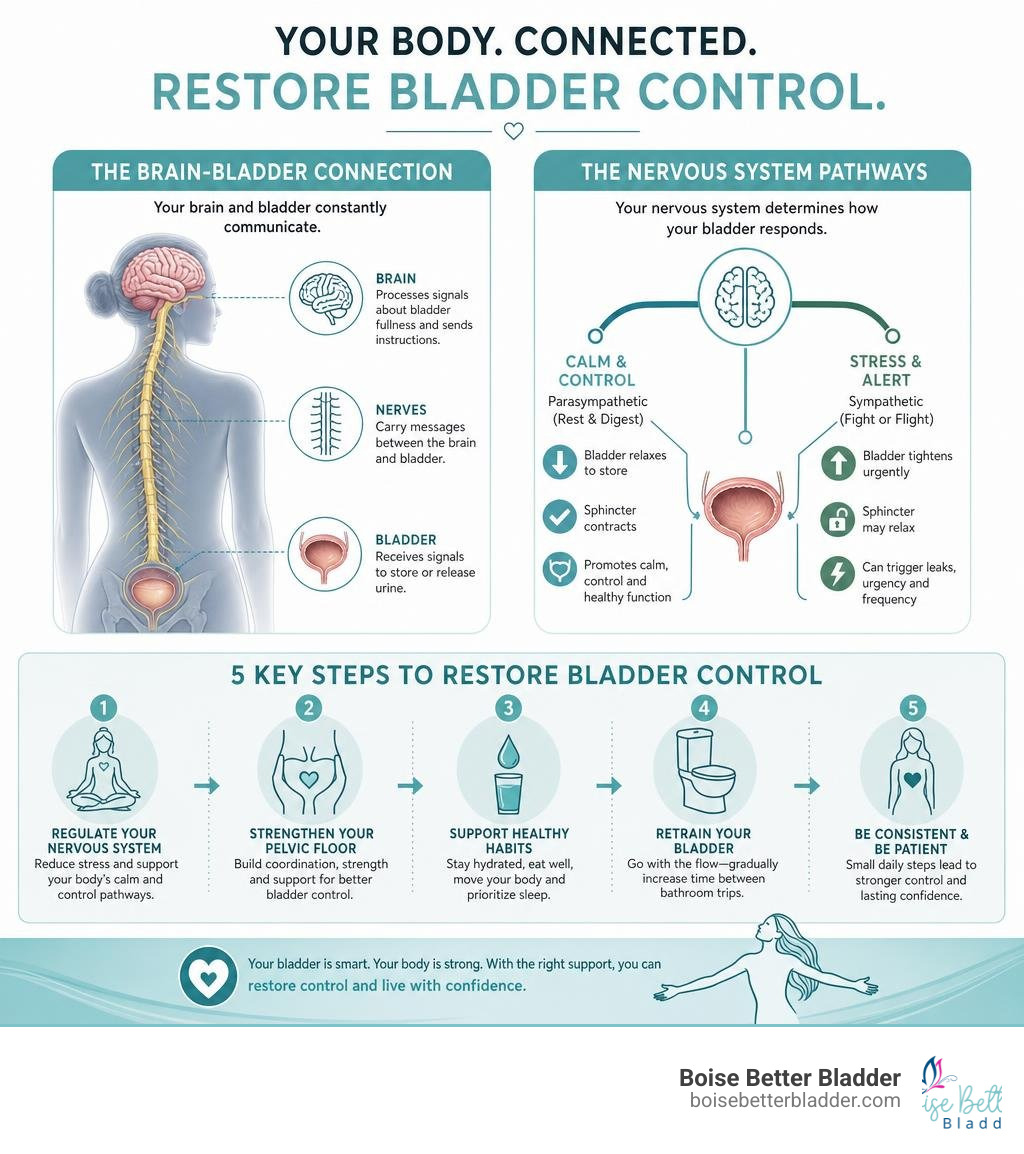
The bladder is controlled by a delicate balance between the sympathetic and parasympathetic branches of your autonomic nervous system. The sympathetic nervous system allows the bladder to fill and keep the sphincter closed, while the parasympathetic nervous system coordinates the contraction of the detrusor muscle for voiding.
If your nervous system is chronically dysregulated due to stress, trauma, or physical exhaustion, this delicate coordination fails. The bladder becomes hyper-reactive, contracting unpredictably and creating sudden, urgent leaks.
How Aging and Menopause Affect Bladder Control for Women
As women transition through menopause, the ovaries gradually produce less estrogen. Estrogen is the hormone responsible for keeping the tissues of the vulva, vagina, and urethra plump, elastic, and well-lubricated.
When estrogen levels drop, these tissues undergo atrophy. The lining of the urethra thins, reducing its natural ability to seal shut and prevent leaks. Additionally, the pelvic floor muscles lose muscle mass and tone as we age. More than 4 in 10 women aged 65 and older experience urinary incontinence.
According to the Treatments for Bladder Control Problems resource, addressing these tissue changes early through targeted, non-invasive therapies can significantly improve bladder support and restore comfort.
The Role of the Nervous System in Bladder Dysfunction
When we look at urge incontinence, we are often looking at an "anxious bladder."
The brain and the bladder are constantly communicating through the pelvic and hypogastric nerves. When you are under chronic stress, your body remains in a sympathetic state. This chronic tension can cause the detrusor muscle to become hyper-irritable.
Physical trauma, abdominal surgery scars (such as C-sections or hysterectomies), and emotional stress can store tension in the pelvic bowl. This restricted tissue mobility limits the bladder's ability to expand naturally, sending early and intense signals of urgency to the brain.
The Ultimate Checklist for Restoring Bladder Control
Restoring bladder control for women requires a holistic approach that addresses daily habits, physical coordination, and nervous system regulation.

Here is your comprehensive checklist for pelvic restoration:
1. Fluid Management: Quality, Temperature, and Timing
Do Not Restrict Fluids: Many women drink less water to avoid leaks. This is a mistake. When you dehydrate yourself, your urine becomes highly concentrated and acidic, which severely irritates the bladder lining and triggers intense spasms of urgency.
Calculate Your Needs: Aim to drink about half your body weight in ounces daily (for example, if you weigh 140 pounds, aim for 70 ounces of water).
Mind the Temperature: Cold liquids can shock the pelvic nervous system and trigger bladder spasms. Try drinking room-temperature or warm water to soothe the pelvic bowl.
Timing: Drink the majority of your fluids in the morning and afternoon. Taper your intake starting 2 to 3 hours before bedtime to reduce nighttime waking.
2. Identify and Eliminate Bladder Irritants
Certain foods and drinks act as chemical irritants to the bladder wall. Try eliminating these for two weeks, then slowly reintroducing them one at a time to identify your triggers:
Caffeine (coffee, energy drinks, black and green tea)
Alcohol (which acts as both a diuretic and a bladder irritant)
Carbonated beverages (even sparkling water can irritate a sensitive bladder)
Highly acidic foods (citrus fruits, tomatoes, vinegar)
Artificial sweeteners and spicy foods
3. Support Digestive Harmony
Increase Dietary Fiber: Eat plenty of whole grains, leafy greens, and fibrous vegetables to ensure soft, regular bowel movements.
Avoid Straining: Use a toilet footstool (like a Squatty Potty) to align your pelvis naturally, allowing the pelvic floor muscles to fully relax during bowel movements.
4. Gentle Movement and Breathwork
Diaphragmatic Breathing: Your diaphragm and your pelvic floor move together like a piston. When you inhale, your diaphragm drops and your pelvic floor naturally relaxes. When you exhale, both lift. Spending 5 minutes a day practicing deep belly breathing helps release chronic tension held in the pelvic floor.
Step-by-Step Guide to Pelvic Floor Muscle Training
While pelvic floor exercises are incredibly effective — with 4 in 10 women experiencing significant improvement in symptoms — they must be done with proper coordination. Squeezing a tight, uncoordinated muscle will only create more tension and worsen your symptoms.
Before you begin, remember: never perform Kegel exercises while urinating, as this can disrupt the brain-bladder signal and increase the risk of a urinary tract infection.
How to Perform a Correct Pelvic Floor Contraction
To learn more about proper pelvic floor mechanics, you can read the Kegel exercises how-to guide. Here is how to find and coordinate those muscles:
Find the Right Muscles: Imagine you are trying to stop the flow of urine or prevent yourself from passing gas. You should feel a distinct sensation of squeezing and lifting inward and upward within your pelvic bowl.
Isolate the Movement: Do not squeeze your buttocks, flex your thighs, or hold your breath. Your abdominal wall should remain relaxed.
The Coordination Cycle:
The Lift (Contraction): Gently squeeze and lift your pelvic floor muscles. Hold for 3 to 5 seconds.
The Release (Relaxation): This is the most important step. Slowly and fully release the contraction. Allow the muscles to drop back down to their resting state. Spend a full 5 to 10 seconds in this relaxed state before contracting again.
Repetitions: Perform 10 repetitions, 3 times a day. You can practice these lying down, sitting at your desk, or standing in line.
Bladder Retraining and Urge Suppression
If you suffer from sudden, overwhelming urges, you can retrain your brain-bladder communication pathway to wait longer between visits.
Timed Voiding: If your bladder diary shows you currently urinate every hour, set a timer for 1 hour and 15 minutes. Go to the bathroom only when the timer rings, even if you don't feel the urge. Once you comfortable manage this interval for a few days, increase the timer by another 15 minutes. Your goal is to gradually reach a healthy interval of 2.5 to 3.5 hours.
Freeze and Breathe (Urge Suppression): When a sudden urge strikes, do not run to the bathroom. Running increases intra-abdominal pressure and alerts your nervous system, making the urge stronger. Instead:
Stop and Stand Still: Sit down or stand quietly.
Take Deep Belly Breaths: Take 5 slow, deep diaphragmatic breaths to calm your sympathetic nervous system.
Perform Quick Flicks: Perform 5 to 6 rapid, moderate pelvic floor contractions (squeezes). These quick contractions send a reflex signal to your detrusor muscle, telling it to relax.
Walk Calmly: Once the wave of urgency passes, walk slowly to the bathroom.
Holistic and Non-Invasive Pathways to Recovery
Many women come to us after trying traditional options like daily pads, medications with unpleasant side effects, or intense physical therapy without seeing the results they hoped for. Some are told that surgery, such as a synthetic mesh sling, is their only remaining option.
But invasive surgeries and temporary chemical blocks are not the only answers.
At Boise Better Bladder, we believe in restoring the foundation of your pelvic health. Rather than just managing your symptoms, our goal is to rebuild the structural strength, tissue vitality, and neurological coordination of your pelvic floor naturally.
Our unique, non-surgical pelvic restoration program is designed to be completely comfortable, private, and highly effective.
Rebuilding Cellular Communication and Tissue Strength
To help women regain control without uncomfortable manual physical therapy or invasive procedures, we use advanced, FDA-cleared HIFEM (High-Intensity Focused Electromagnetic) technology.
This modern technology works by sending targeted electromagnetic energy into the pelvic floor muscles while you remain fully clothed, sitting comfortably in our specialized therapeutic chair. In a single 30-minute session, this technology delivers the equivalent of 25,000 perfectly coordinated Kegel exercises.
This deep muscle stimulation does something traditional exercises cannot: it recruits 100% of the pelvic floor muscles, rebuilding both the fast-twitch fibers needed to stop stress leaks and the slow-twitch fibers needed for long-term support. It also stimulates local blood flow, promoting collagen and fibroblast production to naturally restore tissue elasticity and strength.
You can learn more about how this advanced technology restores pelvic vitality by visiting our How It Works page.
A Comprehensive Approach to Bladder Control for Women
What makes our approach at Boise Better Bladder truly unique is that we combine this modern pelvic strengthening technology with the time-tested restorative power of acupuncture.
The body works in patterns.
By integrating gentle, targeted acupuncture techniques, we are able to regulate the autonomic nervous system, calming the overactive nerve pathways that cause an "anxious bladder" to spasm. Acupuncture helps transition your body from a state of fight-or-flight into a parasympathetic state of rest and recovery, improving nerve communication, reducing pelvic inflammation, and restoring natural circulation to the entire pelvic bowl.
We serve women throughout the entire Treasure Valley, including Boise, Meridian ID, Eagle, ID, Nampa, ID, and Caldwell, ID. Our patients often tell us they feel a renewed sense of freedom and confidence after just a few short weeks of treatment.
To hear from other women who have successfully reclaimed their active lifestyles, read their stories on our Testimonials page.
Frequently Asked Questions About Bladder Control
Is urinary incontinence an inevitable part of aging?
No. While physical transitions like menopause and aging do change our tissues, urinary incontinence is a treatable medical condition, not an inevitable consequence of getting older. You do not have to accept leaks as a normal part of life. By addressing the root structural, hormonal, and nervous system imbalances, you can restore bladder control at any stage of life.
How long does it take to see improvements in bladder control?
Many women begin to notice a difference in their bladder patterns within a few weeks of starting a comprehensive, consistent pelvic restoration program. However, complete tissue healing and muscle rebuilding operate on a cellular cycle, typically taking 8 to 12 weeks of structured care to achieve lasting, stable results.
Can drinking less water help reduce bladder leaks?
No, restricting your water intake actually makes bladder leaks and urgency worse. When you drink less water, your urine becomes highly concentrated and acidic. This concentrated urine severely irritates the sensitive lining of your bladder, triggering sudden, painful spasms of urgency and increasing your risk of developing a urinary tract infection.
Reclaiming Your Confidence and Freedom
Your body is not failing you.
The leaks, the sudden urges, and the disrupted sleep are simply signals that your pelvic support systems and nervous pathways are out of balance. With the right clinical approach, your body has an incredible capacity to heal, adapt, and rebuild.
At Boise Better Bladder, we are here to guide you through a comfortable, non-invasive path to recovery. You don't have to navigate this journey alone, and you don't have to plan your life around the nearest restroom.
If you are ready to address the root cause of your symptoms and restore your pelvic vitality, we invite you to Book an Appointment with us today. Let us help you return to the activities you love with complete confidence.
For more information about our clinic, our team, and our specialized programs, visit Boise Better Bladder.
